Career & Professional Fields | Booknibs
Career & Professional Fields
Explore focused learning nibs in Career & Professional Fields on Booknibs.
Border Wars and Desert No-Mans-Lands: The Fight for Bir Tawil and the Hala'ib Triangle

Bir Tawil is a landlocked desert territory that sits as a unique legal paradox: it is one of the only places on Earth that no nation claims. While it sounds like an invitation for amateur explorers to establish micro-nations, the reality is a high-stakes game of diplomatic chicken. Egypt and Sudan refuse the land to avoid invalidating their sovereignty claims over the nearby, resource-rich Hala'ib Triangle. By analyzing this colonial-era border dispute, readers will discover how the mechanics of cartographic treaties create artificial scarcity and uncover why international law treats land claims as inseparable, all-or-nothing packages.
Why Hagoromo Fulltouch Chalk is better: The science of materials and the psychology of touch
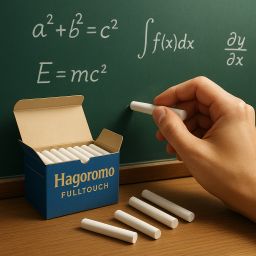
This nib explores why the world’s top mathematicians panicked when a small Japanese chalk factory nearly closed. You will learn how the "Rolls-Royce of chalk" uses crushed oyster shells and a secret wax coating to create a writing experience that feels more like butter than stone. The nib explains the science of haptic feedback, showing how the physical resistance of a tool actually helps the human brain anchor complex thoughts and stay in a state of flow. By looking at the chemistry of friction and the biology of touch, you will discover why the best tools for high-level thinking are often tactile rather than digital. This nib is a fascinating look at how a simple sticks of "white gold" can bridge the gap between abstract genius and the physical world.
The history and biology of segmented sleep: Understanding first and second sleep patterns to tackle modern insomnia

This nib reveals that waking up in the middle of the night is not a medical failure, but a natural return to an ancient human rhythm. You will learn about "biphasic sleep," a forgotten pattern where our ancestors rested in two distinct blocks separated by a peaceful midnight gap. By exploring the research of historian A. Roger Ekirch and the biological experiments of Thomas Wehr, you will discover how modern electricity and the Industrial Revolution forced us into a rigid eight-hour block that often conflicts with our biology. This nib helps you reframe nighttime wakefulness as a period of creative clarity rather than a disorder. Understanding the role of prolactin, a hormone that promotes relaxation during these quiet hours, allows you to shed sleep anxiety and reclaim the midnight interval as a productive, stress-free space for reflection.
How to Fix a Total Blackout: Black Start Procedures and the Hurdles of Rebuilding the Power Grid

When a total blackout strikes, life doesn't just pause; the very machines we use to generate power can actually freeze in place. This hib warns of a hidden vulnerability in our modern world, explaining why you cannot simply flip a switch to restart a dead electrical grid. You will learn about "Black Start" procedures, the high-stakes maneuvers engineers use to jump-start the planet using nothing but gravity and small diesel engines. This nib breaks down the delicate physics of frequency and load, showing how small "islands" of light are carefully knit back together to prevent a system-wide collapse. By mastering these concepts, you will understand the immense human effort required to keep our civilization synchronized and why the transition to green energy makes this balancing act harder than ever.
Underground Cities: The Secret History and Hard Science of Buried Infrastructure

Explore the hidden world beneath our feet in this nib, where modern cities sit atop a chaotic, unmapped puzzle of industrial history. You will learn why "ghost" pipes and abandoned Victorian infrastructure pose a multi-billion-dollar threat to current technology, and how a leak in a century-old sewer can trigger a modern blackout. Understand the "proximity problem" that forces freezing data cables and scorching steam mains to share the same cramped soil. Finally, see how engineers use ground-penetrating radar and digital twins to decode this accidental machine. By understanding these invisible layers, you will gain a fresh perspective on the complex, fragile systems that keep our world running every day.
Saving the Citicorp Center: How a Design Flaw and a Secret Repair Job Defined Professional Ethics

This nib explores the narrow escape of a Manhattan icon and the student who spotted a math error that could have leveled a neighborhood. You will learn how minor cost-cutting changes, such as swapping welds for bolts, can turn a brilliant structure into a public hazard. The nib breaks down the physics of "quartering winds" and why many engineers of the 1970s missed a fatal flaw in the way air hits corner joints. By following the secret, late-night repairs of the Citicorp Center, you will see how professional ethics and "naive" questions from an outsider can save thousands of lives. This nib shows that even the most impressive systems are only as strong as the assumptions behind them.
The Physics of 9/11: Debunking Myths and Uncovering Engineering Realities at the Pentagon and WTC 7

This nib investigates the technical mysteries and persistent myths surrounding the events of September 11, 2001. You will learn the physics behind the collapse of WTC 7, the mechanical reasons for the "explosive" sounds reported by witnesses, and why wreckage at the Pentagon behaved unexpectedly. By breaking down complex engineering concepts like thermal expansion and proportionality bias, this nib helps you separate viral theories from documented reality. Understanding these facts is essential for anyone who wants to navigate a world of misinformation with a clear, science-based perspective. It offers a grounded look at how massive structures react to extreme stress, ensuring you can honor history by sticking to the truth.
Leonid Rogozov and the Mind of a Surgeon: Self-Surgery at Novolazarevskaya Station

Learn how Soviet doctor Leonid Rogozov maintained surgical precision under the ultimate test of nerves. This nib breaks down the psychological tools he used to perform a life-saving appendectomy on himself during a frozen Antarctic winter. You will discover the "chunking" method to handle overwhelming stress, the value of taking micro-breaks to preserve focus, and how to treat a crisis as a technical problem rather than a tragedy. It is a gripping study in mental grit that shows how to shrink a massive challenge into manageable steps when everything is on the line.
The 1961 Goldsboro nuclear accident: a breakdown of safety failures and structural flaws

This nib uncovers the chilling 1961 Goldsboro incident, where a B-52 breakup nearly detonated two hydrogen bombs over North Carolina. You will learn how five of six safety triggers failed during the fall, leaving only a cheap, low-voltage switch to prevent a nuclear disaster 250 times more powerful than Hiroshima. By exploring the "weak link" engineering that followed, you will understand why modern weapons require specific human codes rather than just mechanical sensors to fire. It is a gripping look at how a design flaw actually saved millions of lives, offering a vital lesson in why complex systems need more than just simple backups to stay safe.
Vivien Thomas and the Heart Surgery that Saved Blue Babies

This nib reveals the incredible true story of the 1944 medical breakthrough that solved "blue baby syndrome," a once-fatal heart defect. You will learn how a janitor with no medical degree used his skills as a master carpenter to invent the surgical tools and techniques that made modern heart surgery possible. The nib tracks the tense first operation at Johns Hopkins, where this unsung genius had to stand on a stool to coach a famous surgeon through the procedure. By exploring the "Blalock-Thomas-Taussig" shunt, you will understand how creative problem solving and manual precision can overcome systemic barriers to save thousands of lives.
How Beatrice Shilling Saved the Spitfire: Solving the Engine Fuel Crisis with the RAE Restrictor
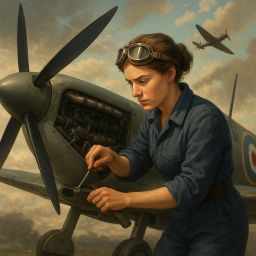
This nib tells the gripping story of how a critical flaw in the Spitfire's engine nearly cost Britain the skies in World War II. You will discover the physics behind why these powerful fighter planes would suddenly stall during dogfights, leaving pilots helpless in mid-air. The focus is on Beatrice Shilling, a trailblazing engineer and motorcycle racer who bypassed a massive mechanical overhaul with a simple, low-tech hack. By learning about her "subtractive engineering" approach, you will see how a tiny brass washer, installed in minutes, solved a multi-million-pound problem. This nib offers a masterclass in practical problem-solving, showing how a deep understanding of a machine’s limits can lead to elegant, life-saving innovations under pressure.
Keeping the City Warm: An Engineering History and Technical Guide to Manhattan’s Steam System

This nib explores the invisible world beneath New York City, where a massive, 140-year-old steam network pulses under the sidewalks at 120 miles per hour. You will learn how this Gilded Age engineering marvel evolved from a way to prevent boiler explosions into a modern "cogeneration" system that heats the Empire State Building and sterilizes hospital tools. By understanding how waste heat from electricity is recycled to warm the city, you will see why this 100-mile labyrinth is more efficient and eco-friendly than modern electric alternatives. This nib explains the practical science behind those iconic orange-and-white street chimneys, transforming how you view the "breath" of Manhattan’s streets.
Elisha Otis and the Safety Elevator: The Invention That Built the Modern Skyscraper
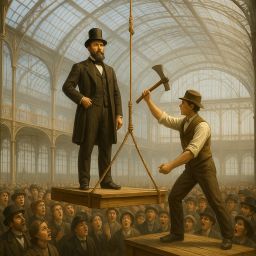
Discover how one man’s daring stunt in 1854 completely flipped the world’s social and architectural order. This nib explains why the wealthy once lived on the ground floor while the poor were relegated to the attic, and how a mechanical safety brake turned the sky into the world’s most expensive real estate. You will learn the simple physics behind the "fail-safe" mechanism that prevents elevators from falling and why engineering trust is just as important as engineering hardware. It is a fascinating look at how we overcame a primal fear of heights to build the modern megacity, proving that progress often depends on having a safety net when the rope snaps.
The Invention of the Yellow Light: Garrett Morgan and the First Three-Way Traffic Signal

This nib explores how Garrett Morgan transformed the chaotic, soot-stained streets of the 1920s by solving a lethal flaw in urban design. You will learn how the early "stop-go" binary ignored the laws of physics and human reaction time, creating a deadly "dilemma zone" for drivers. The nib explains the mechanical intuition behind Morgan's T-shaped signal and how his "all-stop" position paved the way for the modern yellow light. By the end, you will understand why the best engineering thrives on empathy, and how one inventor’s refusal to ignore a tragic accident turned the modern intersection from a battlefield into a choreographed dance.
The inverted siphon: Pressure engineering in ancient Roman aqueducts

This nib reveals how ancient engineers conquered impossible terrain using the inverted siphon, a sophisticated technique that forced water to flow down valleys and back up hills without modern pumps. You will learn how the Romans mastered fluid dynamics and water pressure to bypass deep gaps where stone bridges would have collapsed under their own weight. The nib explores the practical physics behind these high-pressure lead pipe systems and the logistical power required to build them. By uncovering these hidden masterworks, you will gain a new appreciation for the simple, elegant principles that still underpin our modern plumbing today.
The Apgar Score: History, Purpose, and Clinical Signs in Newborn Health Assessment

In this nib, you will discover how a simple five-point checklist created on a coffee break revolutionized emergency medicine. You will learn how Dr. Virginia Apgar transformed the chaotic delivery rooms of the 1950s by turning "gut feelings" into hard data, a move that slashed infant mortality rates worldwide. This nib explains the practical power of using "heuristics," or mental shortcuts, to make better decisions under extreme pressure. By understanding how to identify the few metrics that actually matter, you can apply Dr. Apgar’s systems thinking to any high-stakes project. This is a story of how one outsider’s perspective and a scrap of paper changed the definition of life itself.
How Pianos Work: The Physics and Engineering of the Escapement Mechanism

This nib explores the hidden mechanical genius that turned a rigid wooden box into the world’s most expressive instrument. You will discover how an 18th-century inventor solved a seemingly impossible physics puzzle to allow for a "free-flight" hammer strike, giving musicians the power to play both whisper-quiet and thunderously loud. By tracing the evolution of the escapement and the jack, you will learn how these tiny levers decouple the player's touch from the string to prevent muffled notes. This nib is essential for anyone who wants to understand how complex engineering can be used to translate human emotion into pure, uninhibited sound.
Why Things Go Wrong: The History and Design Logic of Murphy’s Law

This nib reveals the surprising engineering origins of Murphy’s Law, transforming it from a pessimistic shrug into a powerful tool for success. You will learn the history of the "Gee Whiz" rocket sled tests and how a team of daring researchers used near-fatal mistakes to revolutionize aviation safety. By shifting your perspective from "bad luck" to "defensive engineering," this nib teaches you how to design systems that make human error physically impossible. Master the art of mistake-proofing your own life, moving past the habit of just trying harder to create environments where you simply cannot fail.
The Zipper: How a Failed Fastener Became a Masterpiece of Precision Engineering
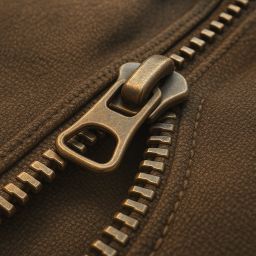
This nib explores the surprising engineering saga behind the zipper, an everyday tool that was once considered a mechanical impossibility. You will learn the geometric secrets of "nesting" that allow two rows of tiny teeth to lock together under pressure and why the slider is actually a precision-engineered wedge. By following the journey from clunky hook-and-eye failures to the modern, high-tech fasteners used by NASA, you will gain a new appreciation for how mass manufacturing turns complex physics into a simple, one-handed motion. This nib is a must-read for anyone curious about how human persistence and clever geometry can transform a mundane frustration into an invisible masterpiece of modern life.
Stone building techniques and dry-masonry engineering at Great Zimbabwe

This nib reveals the sophisticated engineering secrets behind Great Zimbabwe, a medieval African capital built entirely without mortar or cement. You will learn how Shona stonemasons used thermal shock to harvest granite and how they harnessed gravity and friction to create eleven-meter walls that have stood for seven centuries. This nib explains why curved designs and "breathing" dry stone joints outperform modern chemical binders in harsh environments, offering a new perspective on sustainable, low-carbon architecture. By exploring these ruins, you will discover how a global trade hub thrived through a deep understanding of physics and hydrology, proving that ancient craftsmanship can still teach us how to build for the future.