Practical Life Skills | Booknibs
Practical Life Skills
Explore focused learning nibs in Practical Life Skills on Booknibs.
The Science of the Molcajete: Why Volcanic Stone Beats Modern Blenders at Food Chemistry and Engineering
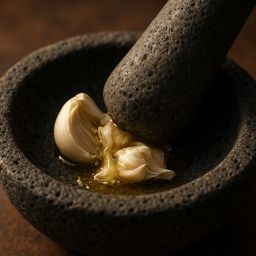
This nib reveals the surprising science behind the molcajete, a volcanic stone mortar and pestle that outperforms high-tech blenders. You will learn why the physical act of shearing cells, rather than slicing them with blades, unlocks deeper aromas and a stickier, more potent flavor from ingredients like garlic and peppers. The nib explains how the stone acts as a heat sink to protect delicate oils from friction damage, ensuring your salsas stay vibrant instead of turning bland and foamy. By understanding these principles of fluid dynamics and heat management, you will discover how to create richer, more stable emulsions for a professional culinary result.
Fast-Track Your Career Through Interdepartmental Connections and Unexpected Mentorship

This nib challenges the common mistake of relying only on your boss for career growth, showing you how to build a network that actually moves the needle. You will learn to identify non-obvious mentors across different departments who can offer "insider" knowledge about upcoming roles and strategic shifts. This nib also explains why "weak ties," or casual professional acquaintances, provide more diverse opportunities than your close-knit team. By moving past a narrow focus on your direct manager, you will gain the tools to stay visible to executives and protect your career against sudden restructuring or management changes.
The Maillard Reaction: How Kitchen Chemistry Creates Better Flavor
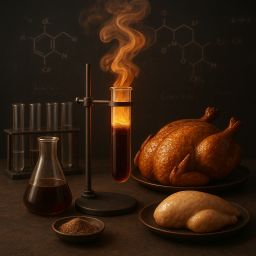
This nib explores the accidental 1912 discovery that transformed our understanding of flavor chemistry. You will learn the specific science behind why seared steaks and toasted bread smell and taste so much better than boiled foods. By understanding the "water barrier," you will gain the practical skill of moisture management to ensure your food browns perfectly every time. This nib also explains how to use kitchen hacks like pH adjustment to speed up flavor development. Mastering these molecular basics allows you to move beyond following recipes and start controlling the chemical reactions that create deeper, more savory meals.
The role of kioke cedar barrels and microbes in Shodoshima’s traditional soy sauce brewing
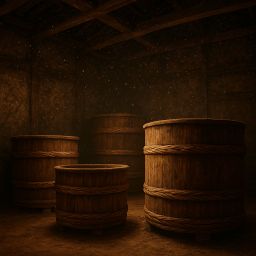
This nib takes you deep into the ancient warehouses of Shodoshima to reveal how massive cedar vats, or kioke, create the world’s most complex soy sauce. You will discover how a "living frost" of wild microbes settles into porous wood to form a microscopic city, turning simple ingredients into a rich symphony of flavor over several years. By exploring the science of microbial terroir, you will learn why traditional fermentation offers a depth that industrial steel tanks can never match. This nib is a persuasive look at how protecting a dying craft preserves an unbroken lineage of taste, showing you why the container is just as vital as the ingredients themselves.
The science of cheese crystals: How crunchy bites form in aged varieties
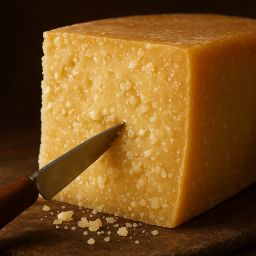
Discover the fascinating science behind that satisfying crunch in aged cheese. This nib explains how biological "scissors" dismantle milk proteins over time, transforming a simple dairy product into a complex structure of edible crystals. You will learn to distinguish between tyrosine grains found inside a wheel and the powdery calcium lactate often seen on the surface of cheddar. By understanding how these crystals release deep umami flavors, you will gain a new appreciation for the aging process as a form of culinary chemistry. It is the perfect guide for any food lover wanting to recognize the true marks of quality and maturity on a cheese board.
The History and Physics of the Wok: Engineering Heat, Motion, and the Breath of a Wok
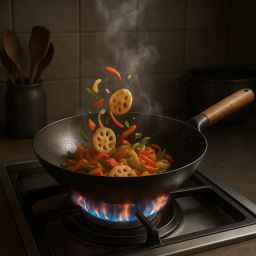
This nib reveals how a simple metal bowl became a masterpiece of ancient engineering. You will learn how the wok’s unique shape acts as a curved mirror to focus heat, allowing you to cook delicious meals with very little fuel. The nib explains the physics behind "wok hei"-the famous smoky breath of a stir-fry-and why skipping the "toss" in the air leads to soggy vegetables. By understanding these thermal zones and the chemistry of burning oil, you can replicate professional results on a standard home stove. This nib transforms a common kitchen tool into a high-speed physics experiment, helping you master heat control to unlock better textures and bolder flavors in every dish.
How Katsuobushi is Made: Turning Bonito into Bars of Pure Umami
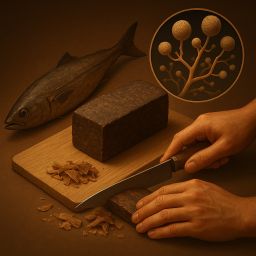
This nib explores the fascinating transformation of skipjack tuna into the hardest food on earth. You will discover the science of biological petrification, where Japanese artisans use wood smoke and specialized molds to turn perishable fish into a solid block of pure flavor. The nib explains how the Aspergillus fungus acts as a biological pump to remove moisture and fat, creating a natural preservative that lasts for decades. By learning these traditional techniques, you will understand how microbial ecosystems and patience produce the intense umami depth essential to world-class cuisine. This look into microscopic engineering shows why the best flavors cannot be rushed and how ancient methods still define modern sustainability.
The Science of Salt: How Geology and Chemistry Shape the World’s Finest Flavors
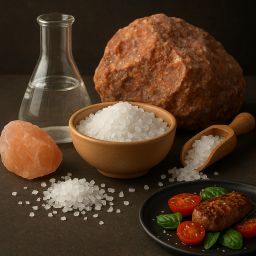
This nib reveals the hidden life of salt, the only rock humans eat daily and a mineral that has shaped the course of history. You will dive into the incredible chemistry of how a reactive metal and a poisonous gas bond to create a stable kitchen staple, and you will learn to distinguish between common varieties like Himalayan pink and coarse sea salt. By exploring the geological origins of these "fossilized oceans," you will understand why crystal shape and mineral content matter for both flavor and health. This nib is a practical guide to using salt effectively, helping you choose the right texture to enhance your cooking while making smarter choices for your heart and your palate.
The Science, History, and Culinary Evolution of Tempeh
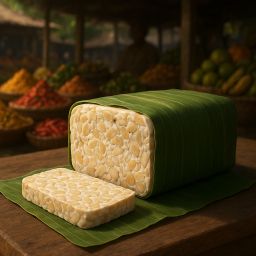
This nib reveals the sophisticated science behind tempeh, an ancient Indonesian staple transformed by the fungus Rhizopus oligosporus. You will learn how fungal mycelium creates a dense, structural lattice-binding whole beans into a solid cake-and how enzymatic alchemy unlocks nutrients for better digestion. By exploring the microbial competition that ensures a successful ferment, you will understand why this process effectively pre-digests proteins and fats, making tempeh a nutritional powerhouse. Far more than a simple meat substitute, this nib highlights how partnering with microbes offers a sustainable, "clean label" future for food production, turning humble legumes into culinary gold.
The Science and History of Blue Cheese: How Microbes Shape Its Production
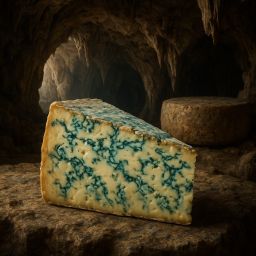
Explore the culinary alchemy of blue cheese, a masterpiece of controlled decay. This nib explains how Penicillium roqueforti functions as a microscopic architect, using enzymes to dismantle milk proteins and fats into creamy, complex textures. You will learn the precise science behind the "needling" process that creates blue veins, the chemistry of pungent aromas, and why this mold is remarkably safe to consume. Understanding these biological forces transforms how you appreciate every bite. By uncovering the evolution of these cheese-making fungi, you gain a deeper connection to the intersection of ancient history, industrial physics, and sophisticated flavor design.
The Maillard Reaction: The Science of Flavor, Browning, and Cooking
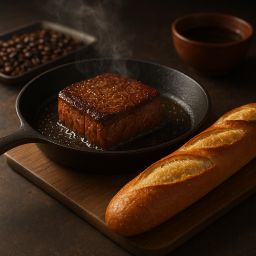
The "crust" on a perfectly seared steak or a toasted baguette is more than a texture-it is the Maillard reaction, a complex dance of sugar and protein. By mastering this fundamental chemical process, you will transform your cooking from routine to remarkable. This guide explains why browning is the secret to flavor and how you can manipulate heat, pH, and moisture to elevate your meals. You will learn to: - Troubleshoot and perfect your browning technique using heat and moisture control. - Use acidic and alkaline ingredients to accelerate or nuance flavor development. - Debunk common culinary myths about moisture retention. Become a better cook by understanding the science behind the sear.
The Science and Art of Dry-Aging Beef: How Biochemistry Creates Unforgettable Flavor
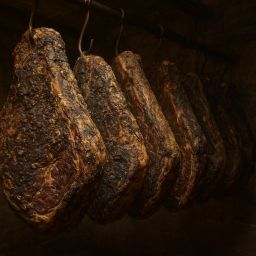
Dry aging is more than a culinary technique-it is a calculated act of controlled decay that elevates beef from a simple protein to a complex luxury. By reading this, you will learn the science behind molecular tenderization, how controlled evaporation concentrates flavor, and why specific fungi are essential for developing savory, nutty aromas. You will also gain practical insight into the "Goldilocks zone" of aging, ensuring you know exactly when a steak achieves peak flavor. This guide helps you move beyond the surface-level appreciation of food, equipping you to judge quality and understand the true value behind the process.
How Salt Kills Bitterness in Coffee: A Guide to Better Flavor Through Receptor Blocking
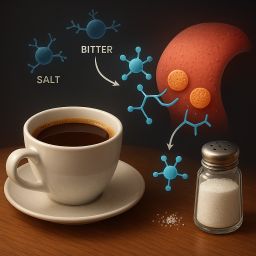
Stop drowning your coffee in sugar and cream. Whether you are dealing with a dark roast that burns or a brew that has been over-extracted, this guide explains how a simple pinch of salt can transform your daily cup. You will learn the neurobiology behind why salt suppresses bitterness at the receptor level, how to use it as a precise flavor modifier instead of an additive, and how to calibrate your palate for a smoother, more complex brew. By mastering this kitchen chemistry, you will gain the skills to balance acidity and sweetness without adding a single calorie.
The Science of Sticky Pans: Why Your Non-Stick Skillet Fails and How to Fix It
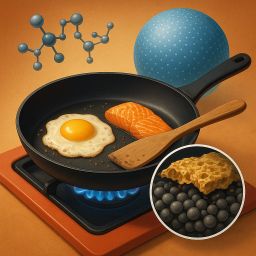
Is your once-slick non-stick skillet acting like industrial glue? Stop blaming the pan - you are actually battling an invisible, microscopic layer of burnt grease. This guide reveals the hidden chemistry behind your cookware, teaching you how to outsmart the physics of frying. You will learn to identify the real causes of surface buildup, distinguish which cooking fats destroy your pans, and restore your gear using effective, safe cleaning methods. Master these simple techniques to prevent future damage, stop wasting money on replacements, and keep your eggs sliding perfectly for years to come. Your kitchen routine just got a major upgrade.
The Chemistry of Texture: How Baking Soda Transforms Your Cooking
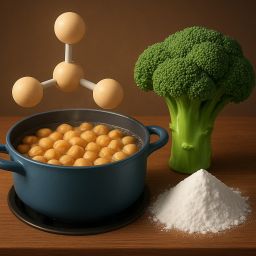
Stop relying on guesswork and timers to soften your food. This guide reveals how to use baking soda to manipulate the chemistry of your cooking, turning tough ingredients into culinary masterpieces. You will learn how to accelerate cooking times for beans by up to 50 percent, achieve the perfect velvety texture in purees, and troubleshoot why certain ingredients stay crunchy regardless of heat. By mastering pH levels, you gain control over the cellular structure of plants, ensuring your dishes achieve professional-grade results. This is essential knowledge for anyone looking to move beyond recipes and start cooking with true precision.
Wrapped to Perfection, The History and Culture of National Burrito Day

National Burrito Day is more than a clever marketing hook-it is a global celebration of culinary engineering and cultural history. By exploring this "little donkey" dish, you will learn to spot the difference between regional styles like the rice-heavy Mission wrap and the potato-filled California classic. You will also discover the science of "layering logic," where the order of ingredients dictates a perfect, spill-proof wrap. Whether you are hunting for digital coupons or mastering the art of the perfect tuck-and-fold at home, this guide transforms a simple meal into an appreciation of how history, migration, and flavor come together.
Inside the Oven: How Radiation, Convection, and Conduction Cook Your Food
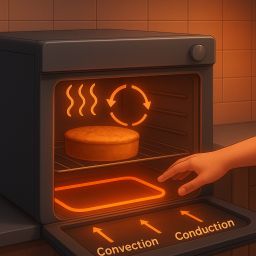
Master the hidden physics of your kitchen by looking beyond the temperature dial. This guide reveals why an oven functions more like a localized sun than a box of hot air, explaining the science of infrared radiation and "boundary layers" of air. You will learn how to eliminate cold spots by understanding "view factor," why preheating is about the oven walls rather than the air, and when to use convection fans to strip away a food's "thermal armor" for a perfect crunch. By mastering these energy types, you can stop following recipes blindly and start controlling exactly how your food cooks.
The Science of Sourdough: A Beginner’s Guide to Managing Microbes and Baking Better Bread
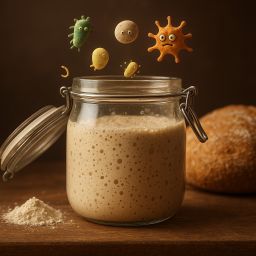
This guide transforms the intimidating science of sourdough into a manageable, rewarding craft. You will learn to cultivate a "starter" ecosystem from scratch, identify the visual signs of peak fermentation, and master the schedule adjustments that fit bread baking into a busy lifestyle. By understanding how wild yeast and bacteria interact, you can move beyond rigid recipes to bake by intuition. Practical takeaways include a day-by-day troubleshooting guide for new starters and professional techniques for achieving "oven spring" (the dramatic rise of a loaf in heat). These skills matter because slow fermentation makes bread more nutritious and easier to digest than store-bought loaves. Whether you want to reduce food waste using sourdough discard or master a crusty golden masterpiece, this resource provides the chemical shortcuts and rhythmic habits you need to succeed.
Beyond the Job Boards: Using Mutual Help and Human Connection to Tap into the Hidden Job Market

Modern hiring is broken. Sophisticated algorithms often toss out qualified resumes before a human ever sees them, leaving talented people stuck behind a digital wall. You will learn how to bypass these automated gatekeepers by mastering the "hidden job market," where up to 80% of roles are filled through personal connections rather than public listings. This guide reveals how to use informational interviews to build social capital and rapport. You will gain practical skills in "reciprocity networking," learning how to exchange industry insights for insider knowledge without feeling awkward or transactional. By the end, you will know how to turn a brief conversation into a powerful referral, transforming you from a faceless applicant into a trusted peer.
The Star Strategy: How Connecting Diverse Social Circles Unlocks Hidden Career Pathsugether

Most people spend their careers huddled around a single "campfire," sharing the same stale ideas with the same familiar faces. While comfortable, these closed loops often lead to professional stagnation. This guide introduces the Star-Shaped strategy, a networking method that focuses on "structural holes" - the empty spaces between disconnected social groups. You will learn how to identify these gaps and position yourself as a broker who links different worlds, such as tech and the arts. By becoming a "bridger," you gain early access to hidden job leads and develop "contextual intelligence," the ability to translate jargon across industries. You will discover why a diverse network of 100 casual acquaintances - known as weak ties - is far more valuable than thousands of identical followers. Transitioning from a tribe member to a strategic gatekeeper does not require charisma; it simply requires the curiosity to step away from the familiar. This approach builds professional resilience, ensuring that when one industry falters, your connections in others keep you moving forward.