History & Historical Analysis | Booknibs
History & Historical Analysis
Explore focused learning nibs in History & Historical Analysis on Booknibs.
Greek Fire: The Secrets and History of Byzantium’s Deadliest Weapon
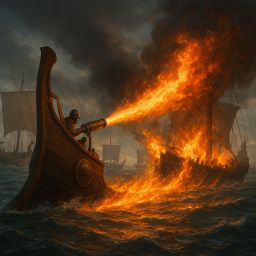
This nib explores how the Byzantine Empire used secret chemistry and hardware to hold back historical shifts for centuries. You will learn about the "siphon," a specialized bronze pump that acted as a medieval flamethrower, and discover why this weapon stayed a secret through extreme government compartmentalization. By understanding the science behind the flames, you will see how a smaller nation used high-tech ingenuity to defeat massive fleets and protect its borders against overwhelming odds. This nib offers a fascinating look at how a single invention can change the course of history and why some of the world's most effective tools eventually vanish into legend.
Operation Barbarossa and why the German invasion failed on the Eastern Front

Discover the massive scale and fatal mistakes of Operation Barbarossa, the largest land invasion in history. By reading this nib, you will understand how overconfidence can blind a leader to basic realities like distance, climate, and supply chains. You will learn to identify the turning points that transformed a "lightning war" into a desperate struggle for survival, and explore why geographical hurdles like the Russian winter proved more powerful than any tank. This nib offers a clear look at the logistical nightmares and strategic blunders that shifted the momentum of World War II, providing timeless lessons on the danger of underestimating an opponent.
Engineering the Venice of the Pacific: The History and Culture of Pohnpei's Ancient Stone City

Explore the mystery of Nan Madol, a massive stone city built atop a coral reef in the remote Pacific. This nib reveals how ancient builders moved thousands of tons of volcanic rock without metal tools or pack animals to create roughly 90 artificial islands. You will discover the clever engineering behind these "floating" structures and learn how the Saudeleur Dynasty used the city to unite Pohnpei through a mix of religious ritual and political control. By separating local legends from modern archaeology, this nib shows how a sophisticated society mastered water management and seafaring to build a lasting monument in the open ocean.
Exploring Cusco: History, Architecture, and Culture in the Heart of the Inca Empire

This nib explores how the Inca transformed a small village into a sprawling imperial capital designed in the shape of a sacred puma. You will learn how ancient engineers carved massive stones to survive powerful earthquakes and discover how indigenous artists hid their own cultural secrets inside colonial Spanish masterpieces. By understanding these architectural and artistic layers, you will gain a deeper appreciation for the resilience of a city that functions as a living link between the 13th century and the modern day. This nib reveals why Cusco remains the spiritual and cultural heart of the Andes, offering practical insights into its unique traditions, world-class food scene, and the enduring customs of the Quechua people.
Liane Russell and the Mouse House: Genetic Radiation Risks and a History of Hidden Science

This nib chronicles the hidden history of Liane Russell, the geneticist who shook the Cold War establishment from her laboratory in Tennessee. You will explore how "The Mouse House" replaced fruit fly studies with mammalian models to prove that radiation damage is cumulative, a breakthrough that led to the "10-day rule" for medical X-rays. The nib explains how Russell’s data dismantled the myth of "safe" radiation thresholds, highlighting the biological costs of the nuclear age. Beyond the science, you will learn how institutions use selective citation and gender bias to sideline inconvenient voices. It is a compelling look at the courage required to defend an unpopular truth when it threatens those in power.
The Sogdians: Architects of Global Trade on the Silk Road from Antiquity to the Middle Ages
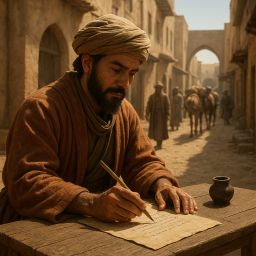
This nib explores the fascinating world of the Sogdians, the Central Asian merchants who built the first global trade engine. You will discover how this small group of traders used linguistic skills and innovative financial tools, such as early paper credit, to bridge the gap between China and Rome. This nib highlights two vital takeaways: how trust and reputation function as the ultimate currency in any market, and why "middlemen" are often the most influential architects of world history. By looking at their "ancient internet" of desert outposts, you will learn how these cultural translators turned a collection of warring empires into a single, unified marketplace without ever firing a shot.
Water from the Waste: The History and Technology of Nabataean Engineering

In this nib, you will discover the brilliant water-harvesting secrets of the Nabataeans, the ancient desert masterminds behind the city of Petra. You will learn how they built a hidden empire by "hacking" flash floods through precise underground plumbing and clay piping that outperformed Roman engineering. This nib explores the practical logic of using subtle slopes and silt-trapping pools to create lush gardens in the middle of a wasteland. By seeing how these "Water Kings" thrived in the harshest heat without modern power, you will gain a new perspective on sustainable design and the importance of passing down technical knowledge before it disappears into the sand.
The Roots of Robotics and Coding in the Islamic Golden Age: How Bagdad and Al-Jazari Engineered Early Automata
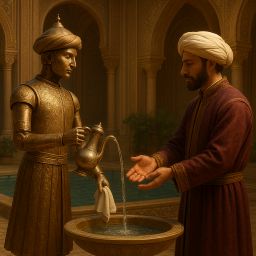
This nib explores the surprising origins of the digital age in ninth-century Baghdad, where engineers built the world’s first programmable machines. You will discover how medieval inventors used water pressure and metal cams, or rotating cylinders with pegs, to create lifelike robots that could pour drinks and play music. By examining the work of the Banu Musa brothers and al-Jazari, you will learn the mechanics of feedback loops and sequential logic, proving that computer programming existed long before electricity. This nib reveals why these "ingenious devices" are the direct ancestors of modern software and how a forgotten golden age of engineering shaped our automated world.
The Savior of Mothers: Ignaz Semmelweis, Germ Theory, and the Fight for Hand-washing

This nib explores the tragic life of Ignaz Semmelweis, the doctor who discovered that simple hand-washing could stop a deadly epidemic in its tracks. You will learn how to spot the Semmelweis Reflex, a psychological blind spot that causes people to reject new facts when they clash with established habits. By following his journey through the delivery wards of 19th-century Vienna, you will understand why even the best data often fails to change minds without a dose of humility. This nib provides a vital lesson in overcoming ego and institutional bias, showing how you can stay open to breakthroughs that challenge the status quo.
The Science and Business of Garum: Biochemistry, Mass Production, and the Role of Ancient Rome’s Favorite Fish Sauce
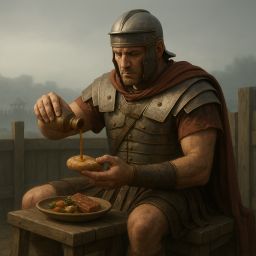
In this nib, you will discover why a pungent fermented fish sauce was the secret engine behind the Roman Empire's power. You will learn the science of autolysis, a process that uses salt and natural enzymes to turn raw fish into a shelf-stable protein concentrate packed with umami. The nib explains how Rome used this liquid to feed millions across three continents, providing essential nutrients to soldiers on the frontier and flavor to the urban poor. By exploring these ancient production and branding secrets, you will see how the Romans pioneered the world's first global food industry and why your own pantry favorites, like Worcestershire and soy sauce, are actually direct descendants of this two thousand year old technology.
Battlefields to Braille: The Design, Science, and Story of a Global Writing System
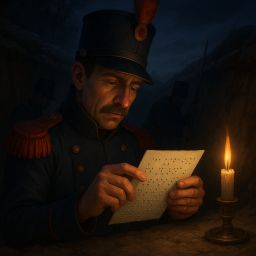
This nib explores the high-stakes origins of an invention that moved from the Napoleonic battlefields to the fingertips of the blind. You will learn how a failed military code, once rejected for being too bulky and complex, was reimagined into a global standard for literacy. The nib details the critical design flaw that nearly buried this technology and the simple, biological reason why a six-dot grid became the perfect match for human touch. By understanding the biology of the fingertip, you will see how Louis Braille turned a discarded secret into a tool for independence. This is a story of how narrowing a focus can lead to a massive breakthrough, offering practical insights into how constraints and a deep understanding of human limits drive true innovation.
The 1983 Stanislav Petrov incident: how human judgment stopped a false nuclear alarm triggered by a machine error
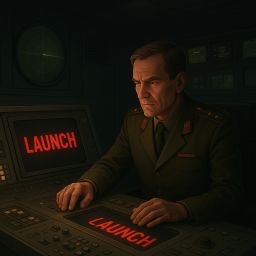
In 1983, a single Soviet officer stood between a computer glitch and a global nuclear holocaust. This nib reveals how Lieutenant Colonel Stanislav Petrov used sharp logic to ignore a false alarm, teaching you the vital difference between data and context. You will learn to spot the "strategic nonsense" that automated systems often miss and why human intuition remains our most important safety net. By exploring the technical flaws of the Oko satellite network, this nib explains how to maintain critical thinking under immense pressure, showing why the bravest choice is often the refusal to follow a broken protocol.
Measuring a Subcontinent: The History and Legacy of India's Great Trigonometrical Survey
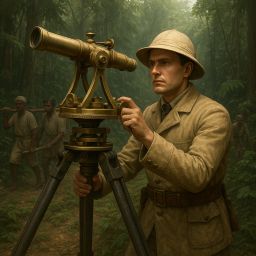
Explore the grueling 70-year trek to map an entire subcontinent in this nib, which follows the scientists and mathematicians who defined India’s modern borders. You will learn how the science of geodesy - the study of the Earth’s actual shape - revealed that our planet is not a perfect sphere but bulges at its center. This nib explains how 19th-century teams used a massive, 500-kilogram brass instrument to measure land with such precision that their math remained accurate within inches over hundreds of miles. You will also discover the hidden figures behind these feats, including the local scholars and undercover explorers who calculated the height of the world’s tallest peaks. Understanding this massive project reveals how mapping is a tool for power, math can bridge diverse cultures, and a single accurately drawn line can help forge a nation’s identity.
Al-Biruni and the Trigonometric Measure of the Earth’s Circumference at Nandana Fort
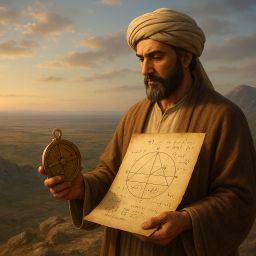
Discover how a lone genius measured the world with nothing but a brass tool and a mountain view. This nib follows the 11th-century scholar Al-Biruni to a fort in modern-day Pakistan, where he calculated the Earth's size to within 1% of today’s satellite data. You will learn the logic of the "horizon dip," a clever geometric shortcut that replaced an army of surveyors with simple trigonometry. By seeing how Al-Biruni avoided the logistical errors of ancient Greek methods, you will gain a new appreciation for how elegant math can solve massive problems. This nib proves that a sharp mind and a clear eye are more powerful than any expensive technology.
The Marib Dam: From Sabaean Engineering to the Fall that Reshaped Ancient Yemen
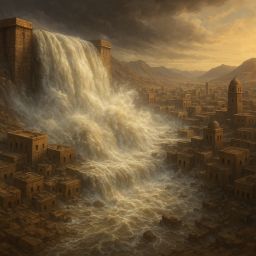
This nib explores the rise and fall of the Marib Dam, an ancient engineering marvel that transformed the Yemeni desert into a lush superpower for over a millennium. You will learn how the Kingdom of Saba mastered flash-flood irrigation using stone masonry and lead seals, and why the collapse of this "social contract in stone" triggered a massive wave of migration. By understanding the link between infrastructure and political stability, you will see how a single broken dam reshaped the demographic map of the Middle East and set the stage for the birth of Islam. It is a persuasive look at how our survival depends on the invisible systems we often take for granted.
How the Fresnel lens shaped 19th-century navigation, the global economy, and political power
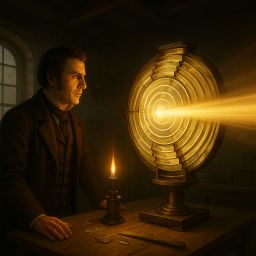
This nib reveals how a single breakthrough in glass engineering stabilized the chaotic world of 19th-century seafaring. You will discover how Augustin-Jean Fresnel’s "cathedral of glass" captured light more efficiently than ever before, turning deadly night voyages into predictable trade routes. The nib explains the transition from bulky, ineffective lenses to precision-cut prisms and shows how this technical leap lowered insurance rates, fueled imperial expansion, and created the first global standards for maritime safety. By the end, you will understand how light became a form of political power, dictating which nations thrived in the global market and which were left in the dark.
Harvesting the Cold: The History and Industrial Rise of the 19th-Century Natural Ice Trade

This nib explores the unlikely birth of the global "cold chain" through the story of Frederic Tudor, the man who spent a lifetime trying to ship New England winter to the tropics. You will learn how Tudor transformed a seasonal nuisance into a global necessity by repurposing industrial waste, like sawdust, into high-performance insulation. The nib breaks down the precise logistics of harvesting frozen ponds and explains how Tudor used ruthless marketing to hook the world on chilled drinks and ice cream. More importantly, you will discover how this icy gamble laid the groundwork for modern food safety, global trade, and medical transport. It is a compelling look at how one person’s persistent, supposedly "insane" vision eventually taught humanity to control temperature and time.
Inca engineering at Machu Picchu: strategic geological faults and the secrets of earthquake resistance

Discover how the Incas turned a geological danger zone into a fortress of survival in this nib. You will learn why building directly on a tectonic fault line was a stroke of engineering genius that provided ready-made building materials and a natural drainage system. See how "dancing" stone walls allow these structures to endure violent earthquakes that would level modern buildings, and learn the clever landscape tricks that kept the city hidden from invaders for four centuries. By understanding these practical innovations, you will see how ancient builders worked with the Earth’s natural cracks to create an invincible sanctuary that still stands today.
Marie-Madeleine Fourcade and the Alliance Network: How a Leading Figure of the French Resistance Built a Resilient Underground Organization
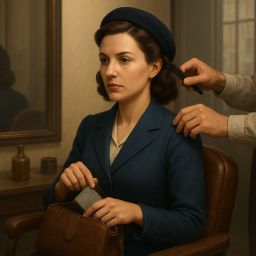
Discover how Marie-Madeleine Fourcade, a young mother turned master spy, built the largest intelligence network in occupied France. By reading this nib, you will learn how to turn social biases into a tactical shield and use everyday locations, like beauty salons, to hide complex operations in plain sight. You will explore her "Noah's Ark" system, a brilliant method of decentralizing a team to ensure that if one part fails, the rest survives. This nib reveals why Fourcade was the Third Reich's greatest logistics nightmare, offering timeless lessons on resilience, creative problem-solving, and leading under extreme pressure without ever losing your cool.