Critical Thinking
The Socratic Method: How to Master Critical Thinking and Group Dialogue

What you will learn in this nib : You’ll learn how to use curiosity‑driven, strategic questions to uncover hidden assumptions, defuse conflict, and help others discover their own insights.

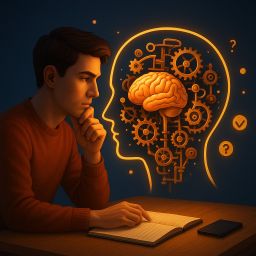
Introverted Thinking (Ti) Explained, Your Inner Logic Engine and How It Shows Up in Everyday Life
Ever catch yourself stopping mid-chat because something “doesn’t quite follow”? This story dives into introverted thinking (Ti), the inner logic engine made famous by Myers-Briggs and cognitive functions. You will see how Ti builds ideas from the inside out, why it can look slow from the outside, and how it differs from extraverted thinking (Te). With sharp everyday examples, it shows Ti at its best, how it can spiral into overthinking, and how to use it without turning into a robot. Learn to spot Ti in yourself and others without squeezing anyone into a four-letter box.


Curiosity First: A Practical Guide to Logical Thinking and Everyday Problem Solving
You stand in the laundry room with a lonely button-less sock and two choices: perform a melodrama, or run a tiny experiment and retrieve the mate from behind the machine. That small shift, curiosity first, logic second, is the heart of this book. Logical thinking is a friendly toolkit anyone can use: clarify the real problem, gather facts, break it down, generate hypotheses, test, and iterate. Backed by psychology and heroic stories like Apollo 13, these humane steps turn confusion into workable choices. Bite-sized exercises teach Bayes, bias checks, and creative fixes. Try it, your socks, meetings, and mood will thank you.


The Science of Silence: How Noise-Canceling Headphones Kill Sound with Anti-Noise
Ever wonder how your headphones make a roar into a whisper without using physical earplugs? Active Noise Cancellation does not block sound; it generates a mathematical mirror image of the incoming noise. By mapping sound as a series of pressure peaks and valleys, modern processors produce an anti-noise wave that hits your ear at the exact moment of the original intrusion, effectively flattening the air pressure into silence. You will explore the high-speed engineering and destructive interference principles that allow your devices to fight sound with sound and understand why this technology triumphs over engine hums but struggles with unpredictable human voices.


The Dunning-Kruger Effect: Why we overestimate our skills and how to cultivate intellectual humility
This nib explores the Dunning-Kruger effect, a fascinating quirk of the human brain where the least skilled people often feel the most confident. You will learn how to identify "Mount Stupid," the stage where a little bit of knowledge creates a dangerous illusion of mastery, and how to navigate the "valley of despair" that follows as you realize how much you truly have to learn. By understanding the role of metacognition-the ability to think about your own thoughts-you will gain the tools to spot your own mental blind spots. Discover why experts often doubt themselves while beginners feel invincible, and learn practical strategies to trade false certainty for genuine, hard-earned competence. Reading this nib will help you sharpen your self-awareness, improve your decision-making, and build the intellectual humility needed to become truly smarter.


Stanislav Petrov and Why Human Judgment Still Matters in Automated Systems
On September 26, 1983, a Soviet warning system falsely signaled that the United States had launched five nuclear missiles. Stanislav Petrov, the duty officer, chose to ignore the computer's alert, correctly betting that a real strike would involve hundreds of warheads. By examining this historic standoff, you will learn to spot automation bias, apply the "Petrov Principle" for reality-checking digital alerts, and master the art of contextual thinking. This guide teaches you why human intuition remains the ultimate safeguard against algorithmic failure. Read it to sharpen your decision-making, reclaim your judgment from automated systems, and stay grounded in logic.


Building a Better Argument: How the Steel Man Technique Strengthens Critical Thinking and Debate
Winning an argument feels good, but truly understanding an opponent is what changes minds. This guide introduces the "Steel Man" technique, a powerful communication tool used to break through conversational deadlocks and intellectual hostility. Instead of attacking weak points, you will learn how to build the strongest possible version of an opposing view before offering your own critique. By mastering this approach, you will gain three essential skills: building rapport by making others feel truly heard, sharpening your own reasoning by testing it against high-level logic, and identifying the core values - such as fairness or security - that drive most conflicts. Whether you are navigating a tense workplace meeting or a heated personal debate, these strategies help you move past shallow victories toward meaningful, high-resolution solutions. This isn't just about being polite; it is about becoming a more precise, persuasive, and intellectually resilient thinker.


The Illusion of Explanatory Depth: Why We Think We Understand More Than We Do
Discover the hidden gap between what you think you know and what you can actually explain. This text explores the Illusion of Explanatory Depth - a mental shortcut where our brains mistake the ability to use a tool for a genuine understanding of how it works. You will learn how to identify your own knowledge gaps, why our brains rely on a "community of knowledge," and how to use the "humility response" to become a better learner. By grasping these concepts, you can avoid overconfidence in complex debates, spot real experts more easily, and build a more accurate, curious view of the world around you.


The Secret Logic of Success: How to Spot and Overcome Survivorship Bias
Stop following the "secrets of success" and start seeing the full picture. Using the famous World War II story of mathematician Abraham Wald and his missing bullet holes, this guide reveals how survivorship bias distorts your reality. You will learn to identify why "hustle culture" advice often fails, how to separate genuine skill from pure luck, and why "they don't build them like they used to" is a logical trap. By mastering the concept of silent data, you will gain a competitive edge in making smarter decisions. This is an essential read for anyone who wants to avoid reckless risks and build a strategy grounded in facts, not fairy tales.
Introverted Thinking (Ti) Explained, Your Inner Logic Engine and How It Shows Up in Everyday Life
Ever catch yourself stopping mid-chat because something “doesn’t quite follow”? This story dives into introverted thinking (Ti), the inner logic engine made famous by Myers-Briggs and cognitive functions. You will see how Ti builds ideas from the inside out, why it can look slow from the outside, and how it differs from extraverted thinking (Te). With sharp everyday examples, it shows Ti at its best, how it can spiral into overthinking, and how to use it without turning into a robot. Learn to spot Ti in yourself and others without squeezing anyone into a four-letter box.
Curiosity First: A Practical Guide to Logical Thinking and Everyday Problem Solving
You stand in the laundry room with a lonely button-less sock and two choices: perform a melodrama, or run a tiny experiment and retrieve the mate from behind the machine. That small shift, curiosity first, logic second, is the heart of this book. Logical thinking is a friendly toolkit anyone can use: clarify the real problem, gather facts, break it down, generate hypotheses, test, and iterate. Backed by psychology and heroic stories like Apollo 13, these humane steps turn confusion into workable choices. Bite-sized exercises teach Bayes, bias checks, and creative fixes. Try it, your socks, meetings, and mood will thank you.
The Science of Silence: How Noise-Canceling Headphones Kill Sound with Anti-Noise
Ever wonder how your headphones make a roar into a whisper without using physical earplugs? Active Noise Cancellation does not block sound; it generates a mathematical mirror image of the incoming noise. By mapping sound as a series of pressure peaks and valleys, modern processors produce an anti-noise wave that hits your ear at the exact moment of the original intrusion, effectively flattening the air pressure into silence. You will explore the high-speed engineering and destructive interference principles that allow your devices to fight sound with sound and understand why this technology triumphs over engine hums but struggles with unpredictable human voices.
The Dunning-Kruger Effect: Why we overestimate our skills and how to cultivate intellectual humility
This nib explores the Dunning-Kruger effect, a fascinating quirk of the human brain where the least skilled people often feel the most confident. You will learn how to identify "Mount Stupid," the stage where a little bit of knowledge creates a dangerous illusion of mastery, and how to navigate the "valley of despair" that follows as you realize how much you truly have to learn. By understanding the role of metacognition-the ability to think about your own thoughts-you will gain the tools to spot your own mental blind spots. Discover why experts often doubt themselves while beginners feel invincible, and learn practical strategies to trade false certainty for genuine, hard-earned competence. Reading this nib will help you sharpen your self-awareness, improve your decision-making, and build the intellectual humility needed to become truly smarter.
Stanislav Petrov and Why Human Judgment Still Matters in Automated Systems
On September 26, 1983, a Soviet warning system falsely signaled that the United States had launched five nuclear missiles. Stanislav Petrov, the duty officer, chose to ignore the computer's alert, correctly betting that a real strike would involve hundreds of warheads. By examining this historic standoff, you will learn to spot automation bias, apply the "Petrov Principle" for reality-checking digital alerts, and master the art of contextual thinking. This guide teaches you why human intuition remains the ultimate safeguard against algorithmic failure. Read it to sharpen your decision-making, reclaim your judgment from automated systems, and stay grounded in logic.
Building a Better Argument: How the Steel Man Technique Strengthens Critical Thinking and Debate
Winning an argument feels good, but truly understanding an opponent is what changes minds. This guide introduces the "Steel Man" technique, a powerful communication tool used to break through conversational deadlocks and intellectual hostility. Instead of attacking weak points, you will learn how to build the strongest possible version of an opposing view before offering your own critique. By mastering this approach, you will gain three essential skills: building rapport by making others feel truly heard, sharpening your own reasoning by testing it against high-level logic, and identifying the core values - such as fairness or security - that drive most conflicts. Whether you are navigating a tense workplace meeting or a heated personal debate, these strategies help you move past shallow victories toward meaningful, high-resolution solutions. This isn't just about being polite; it is about becoming a more precise, persuasive, and intellectually resilient thinker.
The Illusion of Explanatory Depth: Why We Think We Understand More Than We Do
Discover the hidden gap between what you think you know and what you can actually explain. This text explores the Illusion of Explanatory Depth - a mental shortcut where our brains mistake the ability to use a tool for a genuine understanding of how it works. You will learn how to identify your own knowledge gaps, why our brains rely on a "community of knowledge," and how to use the "humility response" to become a better learner. By grasping these concepts, you can avoid overconfidence in complex debates, spot real experts more easily, and build a more accurate, curious view of the world around you.
The Secret Logic of Success: How to Spot and Overcome Survivorship Bias
Stop following the "secrets of success" and start seeing the full picture. Using the famous World War II story of mathematician Abraham Wald and his missing bullet holes, this guide reveals how survivorship bias distorts your reality. You will learn to identify why "hustle culture" advice often fails, how to separate genuine skill from pure luck, and why "they don't build them like they used to" is a logical trap. By mastering the concept of silent data, you will gain a competitive edge in making smarter decisions. This is an essential read for anyone who wants to avoid reckless risks and build a strategy grounded in facts, not fairy tales.
Introverted Thinking (Ti) Explained, Your Inner Logic Engine and How It Shows Up in Everyday Life
Ever catch yourself stopping mid-chat because something “doesn’t quite follow”? This story dives into introverted thinking (Ti), the inner logic engine made famous by Myers-Briggs and cognitive functions. You will see how Ti builds ideas from the inside out, why it can look slow from the outside, and how it differs from extraverted thinking (Te). With sharp everyday examples, it shows Ti at its best, how it can spiral into overthinking, and how to use it without turning into a robot. Learn to spot Ti in yourself and others without squeezing anyone into a four-letter box.
Curiosity First: A Practical Guide to Logical Thinking and Everyday Problem Solving
You stand in the laundry room with a lonely button-less sock and two choices: perform a melodrama, or run a tiny experiment and retrieve the mate from behind the machine. That small shift, curiosity first, logic second, is the heart of this book. Logical thinking is a friendly toolkit anyone can use: clarify the real problem, gather facts, break it down, generate hypotheses, test, and iterate. Backed by psychology and heroic stories like Apollo 13, these humane steps turn confusion into workable choices. Bite-sized exercises teach Bayes, bias checks, and creative fixes. Try it, your socks, meetings, and mood will thank you.
The Science of Silence: How Noise-Canceling Headphones Kill Sound with Anti-Noise
Ever wonder how your headphones make a roar into a whisper without using physical earplugs? Active Noise Cancellation does not block sound; it generates a mathematical mirror image of the incoming noise. By mapping sound as a series of pressure peaks and valleys, modern processors produce an anti-noise wave that hits your ear at the exact moment of the original intrusion, effectively flattening the air pressure into silence. You will explore the high-speed engineering and destructive interference principles that allow your devices to fight sound with sound and understand why this technology triumphs over engine hums but struggles with unpredictable human voices.
The Dunning-Kruger Effect: Why we overestimate our skills and how to cultivate intellectual humility
This nib explores the Dunning-Kruger effect, a fascinating quirk of the human brain where the least skilled people often feel the most confident. You will learn how to identify "Mount Stupid," the stage where a little bit of knowledge creates a dangerous illusion of mastery, and how to navigate the "valley of despair" that follows as you realize how much you truly have to learn. By understanding the role of metacognition-the ability to think about your own thoughts-you will gain the tools to spot your own mental blind spots. Discover why experts often doubt themselves while beginners feel invincible, and learn practical strategies to trade false certainty for genuine, hard-earned competence. Reading this nib will help you sharpen your self-awareness, improve your decision-making, and build the intellectual humility needed to become truly smarter.
Stanislav Petrov and Why Human Judgment Still Matters in Automated Systems
On September 26, 1983, a Soviet warning system falsely signaled that the United States had launched five nuclear missiles. Stanislav Petrov, the duty officer, chose to ignore the computer's alert, correctly betting that a real strike would involve hundreds of warheads. By examining this historic standoff, you will learn to spot automation bias, apply the "Petrov Principle" for reality-checking digital alerts, and master the art of contextual thinking. This guide teaches you why human intuition remains the ultimate safeguard against algorithmic failure. Read it to sharpen your decision-making, reclaim your judgment from automated systems, and stay grounded in logic.
Building a Better Argument: How the Steel Man Technique Strengthens Critical Thinking and Debate
Winning an argument feels good, but truly understanding an opponent is what changes minds. This guide introduces the "Steel Man" technique, a powerful communication tool used to break through conversational deadlocks and intellectual hostility. Instead of attacking weak points, you will learn how to build the strongest possible version of an opposing view before offering your own critique. By mastering this approach, you will gain three essential skills: building rapport by making others feel truly heard, sharpening your own reasoning by testing it against high-level logic, and identifying the core values - such as fairness or security - that drive most conflicts. Whether you are navigating a tense workplace meeting or a heated personal debate, these strategies help you move past shallow victories toward meaningful, high-resolution solutions. This isn't just about being polite; it is about becoming a more precise, persuasive, and intellectually resilient thinker.
The Illusion of Explanatory Depth: Why We Think We Understand More Than We Do
Discover the hidden gap between what you think you know and what you can actually explain. This text explores the Illusion of Explanatory Depth - a mental shortcut where our brains mistake the ability to use a tool for a genuine understanding of how it works. You will learn how to identify your own knowledge gaps, why our brains rely on a "community of knowledge," and how to use the "humility response" to become a better learner. By grasping these concepts, you can avoid overconfidence in complex debates, spot real experts more easily, and build a more accurate, curious view of the world around you.
The Secret Logic of Success: How to Spot and Overcome Survivorship Bias
Stop following the "secrets of success" and start seeing the full picture. Using the famous World War II story of mathematician Abraham Wald and his missing bullet holes, this guide reveals how survivorship bias distorts your reality. You will learn to identify why "hustle culture" advice often fails, how to separate genuine skill from pure luck, and why "they don't build them like they used to" is a logical trap. By mastering the concept of silent data, you will gain a competitive edge in making smarter decisions. This is an essential read for anyone who wants to avoid reckless risks and build a strategy grounded in facts, not fairy tales.