Design & Architecture | Booknibs
Design & Architecture
Explore focused learning nibs in Design & Architecture on Booknibs.
Sacred Geometry and the Spiritual Secrets of the Buddhist Stupa: The Architecture of Dissolution

This nib explores the sacred architecture of the Buddhist stupa, revealing how these ancient monuments serve as practical maps for the human mind. You will learn to decode the hidden symbols within their geometry, from the square foundations of "earth" to the soaring spires of "fire," and see how each level represents a stage of emotional healing. By following the ritual of clockwise walking, you will discover a physical method for grounding yourself and processing grief. This nib shows why these structures are not just religious landmarks, but sophisticated tools for transforming loss into wisdom and finding steady ground when life feels uncertain.
How Placebo Buttons Trick Us into Feeling in Control of Modern Tech

Discover why your world is full of "placebo buttons" that offer the feeling of power without actually being connected to anything. This nib explores the fascinating engineering and history behind dead elevator buttons, silent crosswalk signals, and honorary office thermostats. You will learn how the Americans with Disabilities Act (ADA) changed how skyscrapers function and why designers use "the illusion of control" to keep you calm in high-stress spaces. By understanding these hidden tricks of urban design, you will see how cities manage your mood using clever psychology rather than physical wires. It is an eye-opening look at why a button that does nothing is often more important than one that works.
Building Derinkuyu: Engineering and Daily Life in the World’s Deepest Underground City

Discover how a homeowner’s DIY renovation led to the accidental uncovering of Derinkuyu, a massive 18-story underground city hidden for centuries. This nib explores the brilliant engineering behind the city’s ability to house 20,000 people in total secrecy. You will learn how ancient builders used volcanic rock that hardens when exposed to air and how they designed a natural air-conditioning system to keep the deep tunnels breathable. Insights into innovative defensive tactics, such as hidden stone doors and poisoned-well protection, show how this society thrived in the face of invasion. It is a fascinating look at how human grit and clever design can create a functioning world beneath the surface.
The Baskerville Effect: Why Typography Makes Information Feel More Truthful
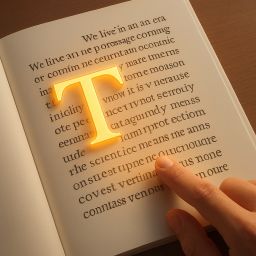
This nib explores the hidden psychological power of typography through a famous 2012 experiment by filmmaker Errol Morris. You will learn how different fonts, from the scholarly Baskerville to the playful Comic Sans, can boost or burn your credibility without the reader even noticing. By understanding "cognitive fluency," you will discover how the brain uses visual shortcuts to decide if a statement is true based on how easy it is to read. These practical takeaways explain why matching your "visual voice" to your message is vital for anyone who wants to write persuasively. Knowing these secrets helps you spot when you are being nudged by design and shows you how to choose the right font to make your own ideas carry more weight.
Designing Highway Signs: How Typography and Information Design Solve Glare to Make Night Driving Safer

At seventy-five miles per hour, your safety depends on how quickly your brain can decode a sign in the dark. This nib explores the high-stakes world of highway typography, where design meets physics to save lives. You will learn about halation - a visual trick where bright reflections "eat" the holes in letters - and how engineers use "word shapes" to help you recognize destinations from hundreds of feet away. By comparing the classic Highway Gothic to the modern Clearview font, the nib reveals how small tweaks to negative space give drivers precious extra seconds to react, proving that even the curve of a lowercase "e" is a vital piece of safety engineering.
Shadow and Light: The Art of Traditional Japanese Design

This nib explores the traditional Japanese aesthetic that finds beauty in the dark rather than the light. You will learn how architectural features like paper screens and long eaves turn harsh sun into a soft, calming glow, and why materials like gold leaf and lacquer are designed to shine only in dim corners. By contrasting Western preferences for clarity with the Japanese "aesthetic of gloom," this nib reveals how shadows can create a sense of mystery and peace in your daily life. You will walk away with a fresh eye for the textures and quiet spaces around you, discovering why less visual data often leads to a deeper, more meditative experience.
Hidden depths: the architecture and engineering of Cappadocia’s underground cities and scribal chambers

This nib explores the hand-carved wonders of Cappadocia, Turkey, where ancient civilizations turned volcanic rock into a sprawling underground metropolis. You will discover how "survival engineering" allowed thousands of people to thrive in hidden cities, using massive rolling stone doors for defense and vertical shafts for advanced ventilation. The nib explains why this soft stone was the perfect building material and how it acted as a natural thermostat, maintaining a steady temperature year-round regardless of the weather outside. Beyond the physical architecture, you will learn how these caves became vital "stone libraries," preserving the knowledge of the ancient world through secret writing rooms and frescoes. By understanding how these inhabitants managed water, waste, and communication in a labyrinthine world, you will see how architecture can serve as a powerful tool for cultural resistance. This nib reveals a masterful lesson in sustainability and ingenuity, showing how humanity has historically secured its most precious ideas in the face of total collapse.
The Musgum Mud Huts: How Traditional African Architecture Uses Fractal Geometry, Aerodynamics, and Thermal Design for Sustainability

Discover the sophisticated engineering hidden within the "Teleuk" homes of Cameroon, where the Musgum people used advanced physics long before modern machinery existed. This nib explores how these beehive-shaped structures use catenary arches and natural chimneys to stay cool in blistering heat without electricity. You will learn the logic of fractal geometry, a mathematical concept of repeating patterns used to build growing communities, and see how decorative exterior ribs serve as vital scaffolding and drainage systems. By comparing earth construction to modern concrete, the nib reveals why local, biodegradable materials are often the superior choice for a warming planet. Readers will walk away with a fresh perspective on sustainable design, realizing that "high-tech" solutions are often found in nature and ancient wisdom rather than expensive gadgets.
The Space Between: How the Japanese Art of Ma Uses Intentional Pauses to Transform Design and Daily Life

This nib explores the Japanese concept of Ma, a transformative way of looking at empty space not as a void, but as a structural tool for mental clarity. You will learn how to use "threshold rituals" and intentional gaps to lower cortisol levels and trigger the brain's restorative rest-and-digest state. By shifting your focus from objects to the space between them, you can break the cycle of constant digital overstimulation and reduce mental fatigue. This nib offers a practical psychological blueprint for turning everyday transitions into meditative moments, helping you reclaim your attention and foster "soft fascination" in a cluttered world.
Singapore's Sand-to-Sky Model: Building Urban Density and Nature Together

Explore how Singapore transforms high-density living into a thriving, nature-integrated ecosystem through the innovative "Sand-to-Sky" model. This nib unveils how vertical forests cool cities, how stacked infrastructure fosters community, and why clever water management turns flood risk into public space. You will learn to view urban environments as living organisms, understand the mechanics of passive cooling, and discover how dense cities can boost biodiversity. This nib is essential for anyone interested in sustainable design or future-proof living, as it proves that you can harmonize dense human population with nature to foster a greener, more resilient urban future.
Engineering, Architecture, and Community: The Hidden World of Indian Stepwells
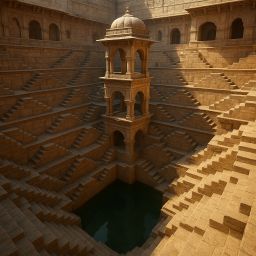
By exploring the ingenious architecture of Indian stepwells, this nib reveals how ancient designers solved complex water crises through subterranean engineering. You will learn how to balance structural integrity against lateral earth pressure, implement natural cooling techniques using thermal mass, and design spaces that foster both public utility and spiritual calm. Understanding the logic of these inverted spires demonstrates how to maximize resources in arid environments while maintaining ecological harmony. These lessons matter because they offer resilient, climate-conscious blueprints for modern sustainable building, proving that smart, human-centered design often requires deep observation of the earth beneath our feet.
Architectural Alchemy: How Sacred Geometry, Math, and Neuroaesthetics Shape Design

This nib reveals how ancient builders used geometry to bridge the gap between mathematics and human emotion. You will explore how core concepts like the Golden Ratio, fractal symmetry, and harmonic proportions stabilize structures while grounding the viewer. You will learn to identify these hidden patterns in world-famous landmarks and understand how specific ratios influence our neurochemistry to induce awe and relaxation. Reading this nib helps you recognize why balanced, natural geometry matters, moving beyond simple aesthetics to explain how the spaces we inhabit can fundamentally improve our mental well-being and sense of connection to the world.
Fractal Geometry and Proportional Design in the 9th Century: The Architectural Logic of the Great Mosque of Kairouan

Discover how the 9th-century builders of the Great Mosque of Kairouan used advanced mathematics to turn stone into a site of profound visual harmony. This nib explores the principles of fractal geometry, explaining how repeating, self-similar patterns create structures that feel natural rather than forced. By studying this architectural marvel, you will learn to spot the recursive logic behind the building's design, understand the role of the Golden Ratio in human-centric aesthetics, and see how historical architects used "living math" to transform rigid materials into fluid, resonant spaces. It is a masterclass in blending ancient craftsmanship with timeless geometric precision.
Shibam, the Engineering Secrets and Sustainable Lessons of the World's Oldest Mud Skyscraper City
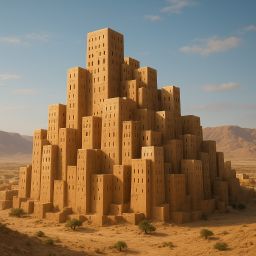
Discover the ancient engineering secrets of Shibam, the world’s oldest skyscraper city made entirely of mud. Through this nib, you will master the principles of natural climate control, which uses architectural design rather than electricity to cool buildings in extreme heat. You will also learn how sustainable, circular construction methods enable structures to endure for over five centuries while maintaining zero-carbon footprints. Understanding these lost techniques offers a vital framework for modern urban planning. By studying this desert marvel, you gain a new perspective on how simple, place-based materials and community-focused maintenance can solve complex infrastructure challenges today.
Shikinen Sengu: The Art of Constant Renewal at Ise Grand Shrine

This nib explores the Shinto tradition of Shikinen Sengu, where the Ise Grand Shrine is demolished and rebuilt every twenty years to ensure the survival of sacred architectural knowledge. You will learn why embracing planned renewal sustains skills better than preservation, how professional mentorship cycles create resilient communities, and why centering tradition on collective craft rather than physical artifacts prevents decay. By shifting your perspective from the museum-style obsession with original materials, you will discover how to keep vital practices alive through active participation. This nib offers a compelling argument for why human experience is the only true vessel for immortality.
How Filippo Brunelleschi Used Geometry and Innovation to Raise the Great Dome of Florence
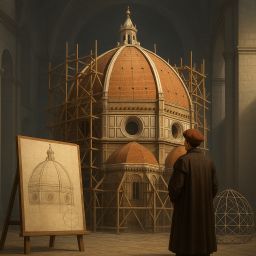
For decades, the Florence Cathedral stood unfinished, a massive hole where a dome should have been. Experts claimed it was physically impossible to build, yet Filippo Brunelleschi succeeded by defying traditional engineering. This overview explores how a brilliant, abrasive misfit transformed construction through systemic innovation. You will learn how to: - Use self-locking patterns to manage structural weight. - Design for redundancy, like the double-shell dome, to balance strength and aesthetics. - Invent practical machinery to overcome logistical bottlenecks. This story matters because it proves that true progress requires challenging long-held traditions. Master these lessons to solve your own "impossible" problems.
Persian Windcatchers: Engineering Ancient Passive Cooling for Arid Climates

Discover how ancient Persian engineers mastered natural climate control using nothing but wind, physics, and earth. By studying the sophisticated design of *Badgirs* - or windcatchers - you will learn how these architectural marvels harness pressure differentials and thermal mass to cool buildings without electricity. This guide reveals three core strategies for sustainable design: - Using passive airflow to replace mechanical HVAC systems. - Leveraging thermal mass to regulate indoor temperatures naturally. - Integrating water systems for evaporative cooling. These principles offer a blueprint for modern builders to reduce energy consumption, proving that the most advanced solutions often rely on understanding nature rather than fighting it.
Fortress Homes and Social Rules in Albania

Discover how the traditional Albanian Kulla transformed from a residential home into a tactical masterpiece of survival. This exploration of defensive architecture reveals how, under the strict social code of the Kanun, every stone was placed to mitigate the threat of blood feuds. You will learn the mechanics of splayed loopholes for optimal defense, the strategic hierarchy of vertical floor plans, and how hearths and airflows were engineered for long-term survival. Understanding these structures offers a unique look at how physical design can moderate intense social conflict, providing a compelling bridge between rigorous engineering and the complex psychology of human history.
The Tata Somba: Sustainable Design and Defensive Architecture in Batammariba Homes

Discover the extraordinary engineering of the Tata Somba- Africa’s "living" mud fortresses. By exploring these ancient structures, you will learn how the Batammariba people mastered the art of passive climate control, built impenetrable defensive systems using only local earth, and integrated spiritual philosophy into everyday architecture. This guide reveals how these master builders transformed simple homes into tactical bunkers that regulate heat, protect food supplies, and provide total 360-degree security. These lessons in resilience prove how sustainable, low-tech materials can outperform modern synthetic designs- offering a timeless blueprint for creating secure, comfortable, and environmentally harmonious living spaces today.
Soviet Closed Cities and Secret Underground Bunkers: Architecture and Design

Explore the hidden world of Soviet "Atomograds"-purpose-built, invisible cities engineered to survive the apocalypse. This account peels back layers of concrete and secrecy to reveal how a superpower used subterranean design as a tool for social control and strategic survival. Readers will learn the "nested shell" construction techniques used to withstand nuclear blasts, the psychological design tricks meant to sustain residents in windowless environments, and how to identify "tell-tale" clues of underground infrastructure in modern cityscapes. Understanding these ghost cities exposes the intimate link between architecture and state power, transforming how you perceive the hidden, iron-clad history beneath our feet.