Journalism & Media | Booknibs
Journalism & Media
Explore focused learning nibs in Journalism & Media on Booknibs.
How Wikipedia Stays Accurate Through Crowdsourced Fact-Checking and AI teamwork

Once dismissed as a chaotic digital Wild West, Wikipedia has evolved into one of the world's most reliable sources of information. This guide reveals the "virtuous cycle" behind that transformation, teaching you how to navigate the modern information landscape with confidence. You will learn to evaluate the accuracy of any article by spotting the "reliability gradient," interpreting the "Talk" pages, and understanding how crowd-sourced scrutiny creates a self-correcting defense against misinformation. By mastering these skills, you will transition from a passive reader to an informed researcher, learning exactly when to trust a source and why popular topics often offer the highest precision.
Beyond the Gutenberg Parenthesis: Digital Orality and the End of the Print Age
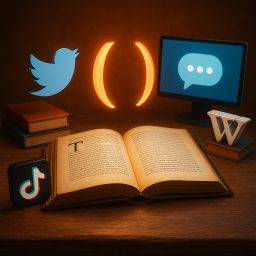
For five centuries, the printing press defined how we think, making truth feel like a permanent, finished object. This insightful look at the "Gutenberg Parenthesis" argues that the era of the physical book was actually a historical detour. You will discover how our digital habits - from editing Wikipedia to sharing memes - are shifting us back to a "medieval" way of processing information through community conversation rather than top-down authority. By exploring this shift, you will learn to navigate a world where news is fluid, authorship is shared, and "facts" are constantly negotiated. These lessons help you understand why modern media feels so chaotic and how to build new mental filters for an age without gatekeepers. It is an essential guide for anyone looking to trade a rigid, print-era mindset for the flexibility needed to thrive in our collaborative digital future.
Semantic Fingerprinting: The Science of Spotting Narrative Bias and Linguistic Framing

Discover how news organizations are using "semantic fingerprinting" to expose the hidden shortcuts and emotional triggers in modern reporting. You will learn how to spot "framing," a technique where specific verbs and adjectives are used to nudge your opinion without your knowledge. This guide reveals how data scientists turn words into measurable points on a map to detect ideological leanings that human editors might miss. By understanding these "linguistic signatures," you can sharpen your critical thinking and avoid being swayed by subtle, subconscious bias. It is a must-read for anyone who wants to take control of their news feed and see the "hidden brushstrokes" behind every headline.
The Gell-Mann Amnesia Effect: Why we trust the news even after catching them in a lie

Discover why even the most critical thinkers fall for the Gell-Mann Amnesia Effect, a strange mental glitch where we ignore a news outlet's past blunders the moment we switch topics. You will learn to recognize the "halo effect," which uses professional design to mask poor reporting, and see how our brains swap active knowledge for passive belief. By mastering "triangulation," you can verify facts across multiple sources and spot when a consensus is actually an illusion. This guide helps you build a consistent shield of skepticism, ensuring you never let a polished tone overrule your common sense again.
Digital Brain Drain and the Attention Economy: Why Bad Information Drives Out the Good
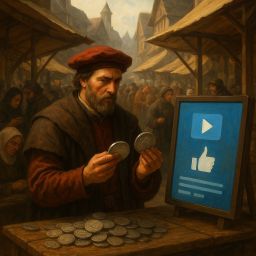
Modern digital life often feels like a crowded market where quality is hard to find. You will learn how a 16th-century economic principle called Gresham’s Law explains why sensationalist clickbait and loud opinions naturally push out nuance and expertise. By treating your attention as a precious currency, this guide shows you how "bad money" in the form of emotional outbursts and ten-second clips devalues the truth. You will gain practical skills to build an "information sanctuary," including the "Wait and See" rule to filter out viral rumors and strategies for curated reading. By choosing depth over speed, you can protect your mental energy and develop a sharper, more informed perspective in a world of constant noise.
Propaganda Unpacked: How States Shape What You Think and How to Resist
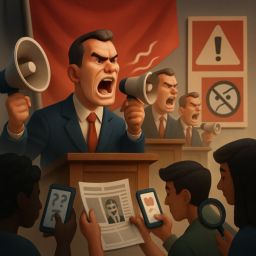
Wake up to the invisible force shaping your thoughts and choices in this compact, clear guide to state messaging and propaganda. From wartime posters to viral social-media campaigns, the book reveals common techniques - repetition, framing, scapegoating, bots - and why our brains fall for them. Packed with vivid historical snapshots, practical detection tools, and everyday habits you can use immediately, it teaches you how to spot manipulation without becoming paranoid. Short reflection prompts and checklists turn theory into action, helping you think more deliberately about what you share, believe, and teach. Read it to reclaim your attention and sharpen your civic instincts.