Meta-Knowledge & Interdisciplinary Studies | Booknibs
Meta-Knowledge & Interdisciplinary Studies
Explore focused learning nibs in Meta-Knowledge & Interdisciplinary Studies on Booknibs.
How the World Connects Under the Deep Sea Floor

We often mistake the cloud for a remote celestial entity, but the foundation of our digital lives is buried deep in the abyss. This nib explores the physical reality of the subsea fiber-optic network, a sprawling infrastructure of glass wires that carry 99 percent of global internet data. By examining the physics of signal latency, the anatomical necessity of copper-powered repeaters, and the extreme engineering required to survive bottomless pressure, you will realize why this delicate web of steel and glass is far superior to satellite connectivity for massive global data throughput.
Survival of the Fittest: How Our Bodies Balance Spending and Saving Energy
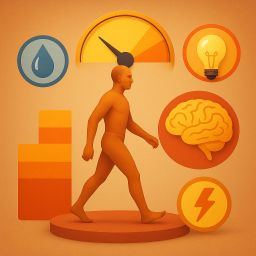
This nib shatters the popular myth that exercise is a simple tool for weight loss. By exploring the lives of the Hadza people, a hunter-gatherer group in Tanzania, you will discover why people who trek miles each day burn no more heart-pumping energy than office workers in the city. You will learn about the constrained energy model, which shows that our bodies operate on a strict, fixed daily budget. This nib explains that while we cannot "outrun a bad diet," physical activity is still vital because it forces the body to divert energy away from harmful internal processes like chronic inflammation. Ultimately, you will gain a new perspective on how to manage your health by focusing on food for weight and movement for longevity.
Measuring the Universe: How Henrietta Swan Leavitt Discovered the Cosmic Distance Ladder

This nib tells the story of Henrietta Swan Leavitt, a "human computer" whose overlooked work at Harvard changed our map of the cosmos forever. You will learn how Leavitt used rhythmic, pulsing stars to find a "standard candle," a reliable way to measure the true distance of objects in deep space. This discovery provided the essential yardstick that scientists like Edwin Hubble used to prove the universe is much larger than just our own galaxy. By following her logic, you will see how humble pattern recognition can solve massive scientific deadlocks, turning a flat sky into a three-dimensional map. This nib reveals why Leavitt’s Law remains the foundation for how we measure the scale of existence today.
The Mystery of Sandy Island: How Map Errors and Data Systems Spread Fake Information
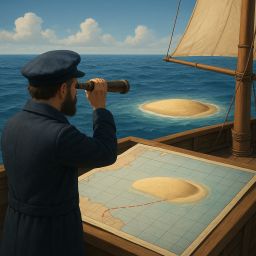
This nib reveals how a single mistake by a whaling captain in 1876 created a "ghost island" that haunted world maps for 136 years. You will learn how modern information systems actually work, why prestigious institutions often repeat errors rather than fixing them, and how digital tools like Google Earth can accidentally turn myths into facts. By exploring the life and eventual "undiscovery" of Sandy Island, the nib teaches you how to spot "inherited errors" in your own life. It is an essential guide to surviving the digital age, showing you why a consensus is often just a circle of mirrors and how to find the truth when the experts are wrong.
The Dunning-Kruger Effect: Why we overestimate our skills and how to cultivate intellectual humility
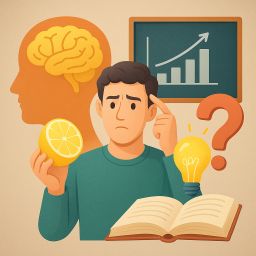
This nib explores the Dunning-Kruger effect, a fascinating quirk of the human brain where the least skilled people often feel the most confident. You will learn how to identify "Mount Stupid," the stage where a little bit of knowledge creates a dangerous illusion of mastery, and how to navigate the "valley of despair" that follows as you realize how much you truly have to learn. By understanding the role of metacognition-the ability to think about your own thoughts-you will gain the tools to spot your own mental blind spots. Discover why experts often doubt themselves while beginners feel invincible, and learn practical strategies to trade false certainty for genuine, hard-earned competence. Reading this nib will help you sharpen your self-awareness, improve your decision-making, and build the intellectual humility needed to become truly smarter.
A Definitive Ranking of the World's Best Superpowers Based on Physics and Logic

This nib explores the fascinating science and logic behind superhuman abilities to determine which one truly reigns supreme. By applying real-world physics to legends like super strength and flight, you will learn why most "classic" powers would actually fail in practice due to friction and inertia. The nib then guides you through the hierarchy of elite abilities, from the atomic precision of matter manipulation to the terrifying influence of mind control and reality warping. You will discover how these powers function as the "root access" to our universe, teaching you to weigh raw cosmic force against practical influence. By the end, you will understand the heavy trade-offs between total control and the human experience, giving you a sharp, analytical perspective on the true cost of god-like power.
How Human Teleportation Works: Its Ethical Costs and Impact on the Global Economy
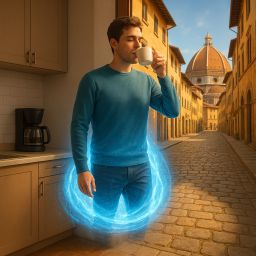
This nib explores the mind-bending reality of instant travel, moving past science-fiction tropes to examine how teleportation would reshape human existence. You will learn the mechanics behind folding space-time and why your physical identity might be at risk during a "scan and transmit" transfer. The nib breaks down practical strategies for managing your internal body clock when time zones become irrelevant and shows you how to "de-bundle" your life to live, work, and socialize in the best locations on Earth simultaneously. By understanding these technical and philosophical hurdles, you will discover how to harness this god-like power to gain ultimate control over your time and perspective.
The Future of Humanity: Biological, Cybernetic, and Digital Paths of Evolution
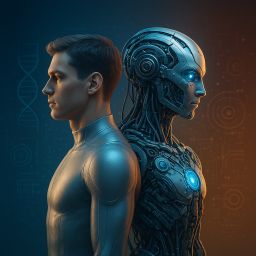
This nib explores the fascinating bridge between natural evolution and a future where we design our own biology. You will learn how emerging technologies like gene editing and brain-computer links are shifting us from accidental survivors to intentional creators. By breaking down the three paths of human development, this nib explains how we might soon overcome aging, upgrade our senses, and even preserve consciousness beyond the physical body. Understanding these shifts is vital for anyone curious about the next stage of our species, as current breakthroughs are already turning science fiction into the blueprints for our descendants. If you want to see how today's tools are redefining what it means to be human, this nib offers a clear and compelling look at the road ahead.
How The Limits to Growth and World3 computer modeling created the modern idea of sustainability
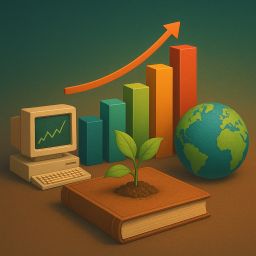
This nib explores the 1972 MIT study that used a room-sized computer to predict the future of human civilization. You will learn the mechanics of systems thinking, a method for understanding how interconnected feedback loops drive everything from population booms to climate change. The nib breaks down the logic of overshoot and collapse, showing why growth that seems manageable today can become an uncontrollable crisis tomorrow. By revisiting this controversial forecast, you will gain a clear lens to view modern debates on sustainability and resource limits. It is a vital guide for anyone who wants to look past short-term headlines and understand the deep, mathematical currents shaping our planet’s survival.
The Hydraulic City: Lessons in Water Engineering, Climate Adaptation, and the Collapse of the Khmer Empire

Deep in the Cambodian jungle, the ruins of Angkor reveal how one of history's greatest empires engineered its own downfall. This nib uncovers the sophisticated -yet rigid- water management systems that fueled an unprecedented population boom while creating a fatal dependency on environmental stability. By exploring the rise and decay of this hydraulic superpower, the reader learns to identify the risks of tightly coupled systems and the dangers of path dependency. It is a cautionary look at how human ingenuity can forge traps of complexity. Reading the nib helps you apply lessons in resilience and adaptability to our modern, interconnected world.
Adapting to Life in a Blind World

This nib explores a hypothetical world where humanity collectively loses its sight, forcing us to abandon our reliance on visual technology and embrace a new sensory reality. By studying this scenario, you will learn how the brain’s neuroplasticity allows for rapid sensory adaptation, how urban architecture would shift from aesthetic design to resonant soundscapes, and how social hierarchies would reorient around oral communication and tactile navigation. Read this to discover how human ingenuity transforms catastrophe into resilience, providing you with a compelling new perspective on the intersection of modern infrastructure, human social evolution, and the untapped potential of our secondary senses.
The Talmudic Method, Mastering the Art of Collaborative Debate and Rigorous Inquiry

Master the ancient, high-stakes art of Talmudic debate to elevate your own critical thinking. This book moves beyond stagnant rules to share a collaborative logic system that transforms intellectual friction into a powerful tool for growth. You will learn to: - Master the "Kushya," a technique for identifying hidden inconsistencies in any argument. - Implement "Havruta," a partnership model that bypasses personal bias by leveraging a devil's advocate. - Apply granular distinctions to avoid overgeneralization in complex real-world problems. Stop settling for superficial sound bites. Instead, adopt a methodology that turns every disagreement into a productive opportunity for clarity, nuance, and deeper insight.
Nuclear Semiotics: Warning Future Generations About Radioactive Waste
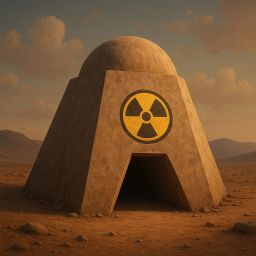
How do you warn a civilization 10,000 years from now about radioactive waste when your language, culture, and borders have long since vanished? This book explores the strange, high-stakes world of nuclear semiotics, where engineers and linguists attempt to bridge the gap of deep time. You will discover how to design landscapes that trigger universal human instincts like fear and repulsion, the art of building "passive" warning systems that survive without maintenance, and the strategy of embedding warnings into folklore. Learn to create messages that transcend spoken language, ensuring your legacy is one of safety, not a lethal surprise.
Lessons from Ant Colonies: Using Pheromone Trails to Master Data Management and Information Decay

Do you ever feel overwhelmed by outdated emails, useless files, and stale to-do lists? We are hoarders of information, clinging to past data that no longer serves us. This book reveals the secret to ant colonies, which thrive by practicing "biochemical forgetting." You will learn to apply these biological principles to your own life by mastering three core skills: identifying when to delete rather than update, designing systems that prioritize current relevance, and balancing the need for routine with the urge for exploration. Stop drowning in digital clutter and start building a smarter, more agile workflow that clears the way for innovation.
Stanislav Petrov and Why Human Judgment Still Matters in Automated Systems

On September 26, 1983, a Soviet warning system falsely signaled that the United States had launched five nuclear missiles. Stanislav Petrov, the duty officer, chose to ignore the computer's alert, correctly betting that a real strike would involve hundreds of warheads. By examining this historic standoff, you will learn to spot automation bias, apply the "Petrov Principle" for reality-checking digital alerts, and master the art of contextual thinking. This guide teaches you why human intuition remains the ultimate safeguard against algorithmic failure. Read it to sharpen your decision-making, reclaim your judgment from automated systems, and stay grounded in logic.
The Shannon Number: How Complexity and Heuristics Shape Strategic Thinking

Mastering the mechanics of chess reveals a powerful secret for navigating complex real-world decisions. Because the game offers more potential moves than there are atoms in the universe, trying to calculate every outcome leads only to analysis paralysis. This book teaches you to master the art of pruning, helping you replace endless data gathering with strategic shortcuts. You will learn to identify high-value goals, discard irrelevant noise, and trust your intuition against overwhelming odds. By applying these lessons, you can simplify your most difficult choices, conserve your mental energy, and focus exclusively on the paths that lead to success.
The Lindy Effect: Why time makes some ideas and technologies last longer
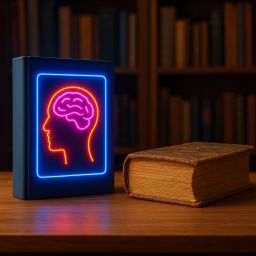
Discover the Lindy Effect, a powerful mental model that explains why the oldest ideas are often the most reliable. While humans and milk cartons have a clear expiration date, non-perishable things like books, technologies, and melodies actually gain "life expectancy" as they age. This guide teaches you how to distinguish between "perishable" noise and "Lindy" signal, helping you choose tools and habits that will stand the test of time. By the end, you will know how to: - Predict the longevity of a technology or idea based on its current age. - Identify "Lindy" skills, like clear writing and logic, that never go out of style. - Filter out "neomania," the fragile obsession with brand-new trends that likely won't last a year. Stop chasing every fleeting update and start investing in the enduring principles that have already survived centuries of chaos.
The Lindley Paradox: Why statistical significance does not equal the truth

You will master the art of looking past "proven" facts to find the actual truth. This guide explains the Lindley Paradox, a logical trap where data seems statistically important but might actually be meaningless. You will learn to distinguish between a "significant" result and a useful one, and why a single striking fact rarely tells the whole story. By comparing how different experts judge evidence, you will gain the skills to spot misleading headlines and flawed business plans. These practical takeaways help you avoid being swayed by small flukes or complex theories. Ultimately, you will become a more skeptical and thoughtful reader, capable of weighing context against raw numbers to make better daily decisions.
The Principle of Explosion: Why Contradictions Break Logic and Reality

Discover a startling rule of logic where a single mistake can destroy your entire sense of reality. This guide introduces the Principle of Explosion, a concept showing how one internal contradiction allows a person to "prove" absolutely anything, no matter how absurd. You will learn the mechanics of a logical meltdown, the difference between "explosive" and stable thinking, and how to use consistency checks to "fireproof" your mind. By mastering these rules, you can protect your beliefs from error and gain the clarity needed to build a more grounded, reliable worldview.
Root Causes and Real Solutions: How to Master Problem-Solving with the 5 Whys technique

Stop settling for quick fixes and start solving problems for good. This guide introduces the "5 Whys," a powerful technique used by industry leaders like Toyota to look past surface symptoms and find the true source of any failure. You will learn how to bypass the "band-aid" trap, shift your focus from blaming people to fixing broken systems, and use the "Therefore" test to ensure your logic is airtight. By mastering this habit of persistent curiosity, you can stop reacting to recurring headaches and start building lasting solutions that actually stick.of