Logic & Philosophy of Science | Booknibs
Logic & Philosophy of Science
Explore focused learning nibs in Logic & Philosophy of Science on Booknibs.
Measuring the Universe: How Henrietta Swan Leavitt Discovered the Cosmic Distance Ladder

This nib tells the story of Henrietta Swan Leavitt, a "human computer" whose overlooked work at Harvard changed our map of the cosmos forever. You will learn how Leavitt used rhythmic, pulsing stars to find a "standard candle," a reliable way to measure the true distance of objects in deep space. This discovery provided the essential yardstick that scientists like Edwin Hubble used to prove the universe is much larger than just our own galaxy. By following her logic, you will see how humble pattern recognition can solve massive scientific deadlocks, turning a flat sky into a three-dimensional map. This nib reveals why Leavitt’s Law remains the foundation for how we measure the scale of existence today.
A Definitive Ranking of the World's Best Superpowers Based on Physics and Logic

This nib explores the fascinating science and logic behind superhuman abilities to determine which one truly reigns supreme. By applying real-world physics to legends like super strength and flight, you will learn why most "classic" powers would actually fail in practice due to friction and inertia. The nib then guides you through the hierarchy of elite abilities, from the atomic precision of matter manipulation to the terrifying influence of mind control and reality warping. You will discover how these powers function as the "root access" to our universe, teaching you to weigh raw cosmic force against practical influence. By the end, you will understand the heavy trade-offs between total control and the human experience, giving you a sharp, analytical perspective on the true cost of god-like power.
The Lindley Paradox: Why statistical significance does not equal the truth

You will master the art of looking past "proven" facts to find the actual truth. This guide explains the Lindley Paradox, a logical trap where data seems statistically important but might actually be meaningless. You will learn to distinguish between a "significant" result and a useful one, and why a single striking fact rarely tells the whole story. By comparing how different experts judge evidence, you will gain the skills to spot misleading headlines and flawed business plans. These practical takeaways help you avoid being swayed by small flukes or complex theories. Ultimately, you will become a more skeptical and thoughtful reader, capable of weighing context against raw numbers to make better daily decisions.
The Principle of Explosion: Why Contradictions Break Logic and Reality

Discover a startling rule of logic where a single mistake can destroy your entire sense of reality. This guide introduces the Principle of Explosion, a concept showing how one internal contradiction allows a person to "prove" absolutely anything, no matter how absurd. You will learn the mechanics of a logical meltdown, the difference between "explosive" and stable thinking, and how to use consistency checks to "fireproof" your mind. By mastering these rules, you can protect your beliefs from error and gain the clarity needed to build a more grounded, reliable worldview.
Buridan's Bridge and the Logic of Self-Reference: Understanding Why Systems Fail and How Paradoxes Work

Step into a high-stakes logic puzzle where a single sentence can paralyze a system. By exploring the classic riddle of Buridan's Bridge, you will learn how "self-reference" creates paradoxes that can crash computer programs and stall legal systems. This guide breaks down complex concepts like circular dependencies and deadlocks, showing you how to spot the "infinite loops" in your own life and work. You will discover why absolute rules often fail in the real world and how to design better "fail-safes" to prevent a total system collapse. Whether you are interested in software engineering, philosophy, or simple problem-solving, you will gain the tools to identify logical traps and find the exit strategy when a set of rules fails to make sense. Read on to learn why the smartest way to win a rigged game is to understand how the bridge was built.
The Brain as a Filter: Science 2.0 and the Mystery of Consciousness
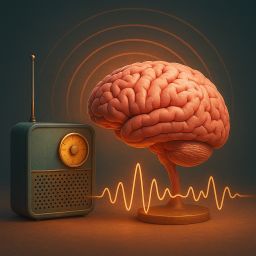
Modern science usually treats the brain as a computer that "creates" your mind. In this compelling look at the work of physicist Àlex Gómez-Marín, you will explore a radical alternative: the brain as a filter, not a factory. You will learn why current theories fail to explain human experience, how a 400-year-old mistake by Galileo sidelined the study of consciousness, and how phenomena like near-death experiences challenge our grasp of reality. By shifting from a "science of objects" to one that values inner experience, you can gain a deeper understanding of your connection to the universe.
The Bridge of Buridan: How Logical Paradoxes and Self-Correction Shape Complex Systems

Master the art of the "logical loop" with the story of Buridan’s Bridge, a centuries-old puzzle that can topple even the most rigid rules. You will learn how to identify self-referential paradoxes, which occur when a statement comments on itself to create a glitch in reasoning. By exploring these "strange loops," you will understand why binary systems - like law, computer science, and social contracts - often freeze or fail when faced with contradictory commands. This guide teaches you to recognize the limits of language and use "lateral thinking" to navigate impossible choices. You will gain a practical toolkit for spotting "Catch-22" scenarios in daily life, helping you dismantle unfair rules and find creative exits from no-win situations. Whether you are a programmer or a deep thinker, you will discover why the most powerful systems are often the most vulnerable to a few well-chosen words.
Is Our Reality Virtual? The Science and Logic of the Simulation Hypothesis
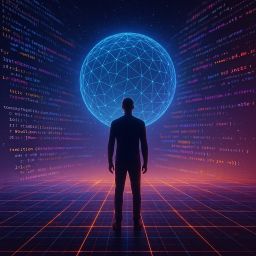
If you have ever felt a strange sense of "glitchy" deja vu, you might be closer to the truth than you think. This exploration of the Simulation Hypothesis bridges the gap between science fiction and cutting-edge physics to examine whether our universe is actually a high-level piece of software. By reading this, you will: - Grasp the "Simulation Argument," a logical framework suggesting that digital minds likely outnumber biological ones. - Discover how quantum mechanics and "lazy loading" mirror the way video games save processing power. - Identify "pixelated" limits in space and time that suggest our world has a maximum resolution. - Evaluate why the universe’s physical laws seem perfectly tuned, like deliberate developer settings. Understanding these concepts will help you view the mysteries of daily life - from the Mandela Effect to the speed of light - through the lens of logic and engineering. Whether we are made of atoms or bits, this perspective turns the study of physics into the ultimate act of hacking the source code of reality.
Thinking Like Newton: How His Laws, Calculus, and Experimental Habits Explain the World
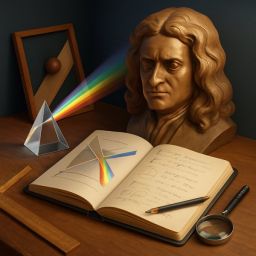
Newton still feels like a secret superpower in daily life, explaining why apples fall, how planets dance, and why your coffee swirls when you stir. He gave us a language that turns guesswork into prediction, uniting bridges, satellites, and smartphones under the same rules. This isn’t a dry biography; it’s a guided tour of his workshop, drawers of experiments, neat notes, and an unyielding curiosity that turned observation into mathematics. It debunks myths, shows how collaboration shaped his ideas, and reveals practical habits you can steal: a working notebook, daily deep work, tiny experiments, and order-of-magnitude checks. Try a micro Newton cycle this week.