Learning Techniques | Booknibs
Learning Techniques
Explore focused learning nibs in Learning Techniques on Booknibs.
Why We Think We Know More Than We Do and the New Science of Intellectual Humility
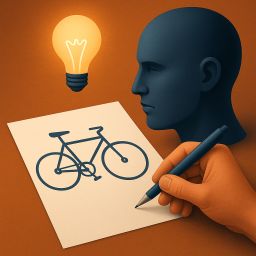
This nib reveals the surprising gap between what you think you know and what you can actually explain, a mental glitch known as the Illusion of Explanatory Depth. By attempting a simple task like drawing a bicycle, you will see how your brain takes shortcuts, mistaking mere familiarity for true understanding. You will learn why we evolved to be "cognitive misers" who outsource knowledge to our community, and how this mental habit fuels overconfidence in everything from home repairs to complex politics. Most importantly, you will gain practical tools, such as the Feynman Technique, to test your own knowledge and trade stubborn certainty for genuine intellectual humility.
Why We Choke: How Overthinking Wrecks Performance According to Neuroscience

This nib reveals why your skills can suddenly fail when the stakes are high, a frustrating phenomenon known as choking. You will learn the difference between your analytical brain and your automatic "muscle memory," discovering why micromanaging your own movements often leads to disaster. By understanding how anxiety disrupts your mental flow, you can use simple tricks, like specific routines or "cue words," to stay in the zone. This nib provides the tools to trust your training and stop overthinking, helping you perform at your best when it matters most.
Mastering YouTube Transcripts: A Guide to Smarter Research and Active Learning

Discover how to turn a passive viewing habit into a high-speed learning strategy with this nib. You will learn how to locate hidden video scripts, skip directly to the most relevant moments using interactive timestamps, and clean up raw text for your personal notes. These skills are essential for students and researchers who need to find specific facts without sitting through hours of footage. By mastering these simple navigation tools, you can bypass the fluff, capture technical details with clinical precision, and transform a fleeting stream of images into a searchable, permanent library of knowledge.
Booknibs: A Guide to Active Learning, Intellectual Grazing, and Better Retention
Feeling overwhelmed by digital noise? Booknibs is a curiosity engine designed to turn your limited free time into meaningful growth. By distilling complex science, history, and psychology into bite-sized "nibs" and transformative book summaries, this platform helps you master big ideas without the slog of textbooks. You will learn to bridge disparate fields of knowledge, retain complex concepts through narrative, and use interactive AI to deepen your understanding. Stop being a passive consumer of cluttered feeds and start building a sharper, more versatile mind. It is the most efficient way to gain wisdom-one short, profound lesson at a time.
How Myelin Drives Learning, Mastery, and Skill Building

Mastery is not just a mental exercise. It is a physical transformation of your brain. By exploring the role of myelin, the fatty insulation that wraps your neural pathways, this guide reveals how to stop struggling and start performing with ease. You will learn to bypass the frustration of the "clunky phase," deploy "Deep Practice" to trigger elite-level mental speed, and move skills from conscious effort into permanent, automatic habit. Stop wasting time on distracted repetition and start physically sculpting your brain for excellence. This is your blueprint for turning high-effort practice into high-speed, intuitive skill.
Beyond the Library: How to Adapt, Evolve, and Rethink Everything You Know
Stop treating your brain like a static filing cabinet. True intelligence isn't about memorizing facts, but about your ability to dismantle old ideas and adapt to new challenges. This book teaches you how to shift from crystallized knowledge - the rigid reliance on past experience - to adaptive plasticity, the high-speed engine of cognitive growth. You will learn to recognize when your expertise has become a liability, master the art of intellectual disassembly, and develop the mental agility to thrive in unpredictable environments. Stop clinging to outdated certainty and start building a brain that evolves as quickly as the world around it.
Learning From Failure: The Science Behind How Your Brain Spots Mistakes
Mastering a new skill is less about "perfect practice" and more about how you handle your mistakes. This guide explores the neuroscience of error-driven learning, specifically how the cerebellum-a high-speed processing hub in your brain-uses failures to fine-tune your performance. You will learn how to trigger this biological "flight stabilizer" by intentionally focusing on the gap between what you intended to do and what actually happened. By moving away from mindless repetition, you will discover how to use variable practice and sensory weighting to prune away bad habits. These techniques help you break through performance plateaus by teaching your brain to prioritize the specific neural pathways that lead to success. Ultimately, you will learn to view frustration not as a sign of failure, but as a biological signal that your brain is primed to improve. Turn every missed shot or wrong note into a data point for faster, more permanent mastery.
The Science of Surprise: How the Brain Uses Reward Prediction Errors to Build Intelligence and Learn

Discover the secrets of "Reward Prediction Error," the biological engine that drives how we think and grow. This guide explains why true learning only happens when you make a mistake, forcing your brain to "wake up" and rewire its internal maps. You will learn the real role of dopamine as a teaching signal, the reason why passive studying fails, and how to find the "sweet spot" of difficulty to master new skills faster. By shifting your mindset, you can turn the sting of being wrong into a powerful tool for self-improvement and mental sharpess.
The Power of Interleaving: Why Mixing Skills Beats Repetition for Long-Term Mastery
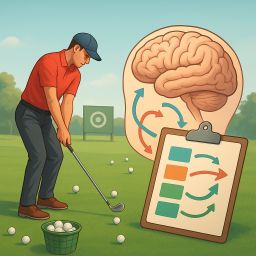
You will discover why conventional "blocked practice" - repeating one skill until it feels easy - is actually a mental trap that creates a false sense of mastery. This guide explains how to use "interleaving," a strategy that forces you to mix different topics or movements to build deeper, more durable memories. You will learn to identify the "fluency heuristic," which tricks your brain into thinking it has learned a skill when it is actually just coasting on autopilot. By the end, you will have the tools to design a custom practice schedule that mirrors real-world challenges. You will gain the ability to discriminate between complex problems, ensuring you don't just know how to use a solution, but exactly when to apply it. This approach trades short-term comfort for "desirable difficulty," turning temporary gains into high-performance expertise that sticks when the pressure is on.
The Cerebellum and Case for Failure: How the Brain Turns Mistakes into Mastery
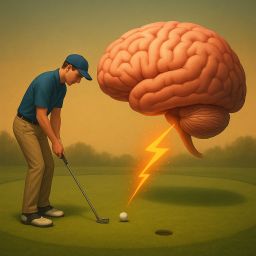
Unlock the biological secrets of mastery by learning how your brain actually builds physical skills. You will discover why "perfect practice" often leads to plateaus and how a small structure called the cerebellum uses your mistakes as a high-speed data stream to rewire your movements. This guide teaches you how to trigger "error-driven learning" through varied routines and intentional challenges, transforming frustration into rapid progress. By understanding the "sensory prediction error" - the brain's internal alarm bell - you can stop practicing for temporary results and start building flexible, durable skills that hold up under pressure. Use these science-backed techniques to turn every missed shot or stumble into a blueprint for success.
The Science of Expert Intuition: How the Brain Turns Experience into Instant Action

Ever wonder how a veteran firefighter "knows" a floor is about to collapse or why a grandmaster sees a winning move in seconds? This guide demystifies the mechanics of expert intuition, revealing it not as a lucky guess, but as a high-speed biological database. You will learn how to build "chunks" of information to process complex situations instantly and identify "kind" environments where your gut feelings are actually reliable. By distinguishing between valid patterns and "wicked" distractions, you will gain the practical skill of knowing exactly when to trust your instincts and when to rely on slow, deliberate logic. Consolidate years of experience into split-second mastery and turn your internal "gut" into a precision tool.
Slaying the Myths: Using Refutation Texts to Kill Misconceptions and Update the Human Mind
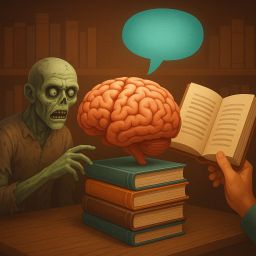
We often think of learning as simply adding new facts to our mental library, but our brains are actually crowded with "zombie facts" - stubborn, intuitive myths that refuse to leave. This guide introduces you to refutation texts, a powerful communication tool designed to dismantle these misconceptions. You will learn how to identify common "folk theories" that stall progress, apply a three-step method to trigger productive curiosity, and use cognitive conflict to anchor new information. By mastering this approach, you can transform passive reading into active investigation, ensuring that the truth sticks long after the lesson ends. Whether you are an educator or a lifelong learner, these insights will help you rebuild your knowledge on a foundation of evidence rather than instinct.
The Compound Knowledge Lab: How Your Mental Networks Drive Faster Learning
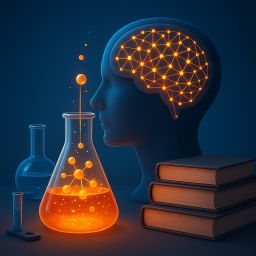
Discover how to transform your mind from a static filing cabinet into a high-energy chemistry lab. You will learn to move beyond rote memorization by building "schemas," or mental blueprints, that allow you to snap new facts into place instantly. This guide reveals how the world’s most effective learners use "combinatorial innovation" to link unrelated fields, turning a broad range of hobbies and trivia into a massive unfair advantage. By mastering these "hooks," you will increase your intellectual surface area, making it easier to grasp complex subjects like physics or economics through the lens of what you already know. You will gain a practical strategy for "orthogonal learning" to spark creative breakthroughs and see the hidden connections between art, history, and technology. Stop struggling to remember isolated facts and start building a mental web that grows more powerful with every new idea you add.
From Overload to Mastery: How Faded Examples Help Students Bridge the Learning Gap

Master the art of high-level learning by overcoming the blank-page problem. This text explains how to manage your brain's working memory, which acts as a tiny whiteboard that can only hold a few pieces of information at once. You will learn how to use "faded examples," a technique that replaces stressful trial and error with a guided hand-off from expert to beginner. By slowly removing support as you build a mental map, you can avoid cognitive overload and master complex skills like coding, math, or even cooking. Discover how to stay in the "Goldilocks zone" of learning, where tasks stay challenging but never become impossible.
The Power of Interleaving: Why Mixing Topics Leads to Mastery and Long-term Learning
Stop practicing in circles and start building a brain that can handle real-world challenges. This guide introduces "interleaving," a powerful learning strategy that swaps boring, repetitive drills for a mix of varied topics. You will learn why traditional study methods often create a false sense of mastery and how "desirable difficulty" actually speeds up your progress. By the end, you will know how to organize your study sessions to sharpen your problem-solving skills and improve long-term memory. This approach clears the mental fog, helping you choose the right tools for any task when it matters most.
The curse of knowledge: how this mental blind spot ruins communication and hands-on expertise

Have you ever struggled to explain a simple task to a friend, only to be met with blank stares? This guide explores the "curse of knowledge," a biological glitch where mastering a subject actually makes it harder to teach. You will learn how your brain "deletes" the memory of being a beginner and why experts often skip crucial steps without realizing it. By reading this, you will gain practical tools to bridge communication gaps. You'll master the art of using everyday analogies to ground complex ideas and learn "reverse teaching" to spot hidden misunderstandings. These techniques will help you cut through jargon, boost your team's productivity, and transform your expertise into a tool for connection rather than a barrier to others.
Think About Your Thinking: How to Use Metacognition to Master Your Mind

Unlock your mental potential by mastering metacognition - the "inner supervisor" that helps you think about your own thinking. This guide reveals how to move past the illusion of competence, where familiarity mimics true understanding, and teaches you to catch errors before they happen. You will learn to build a personal mental toolkit by balancing self-knowledge with active regulation, using practical steps like the K-W-L technique to set goals and monitor progress. By training your brain to recognize internal "whoops" signals, you can replace passive habits with sharp, efficient strategies. These skills turn every challenge into a repeatable success, shifting you from mental autopilot to total cognitive mastery.
The Power of Putting It into Words: Solving Hard Problems with Rubber Ducking and Explained Logic

Struggling with a complex problem that just won't click? This guide introduces "rubber ducking," a powerful mental hack used by top performers to break through logical deadlocks. You will learn why your brain relies on "lazy" mental shortcuts and how to override them by converting fuzzy thoughts into clear, spoken language. By explaining your work out loud to a simple object, you skip the "illusion of depth" and force your mind into a rigorous, step-by-step mode. You will gain a practical technique to spot hidden gaps in your logic, boost your error-detection skills, and solve frustrations in minutes rather than hours. Whether you are debugging code, balancing a budget, or planning a project, this low-tech trick turns your internal monologue into a foolproof auditing tool. Find out why the best way to find an answer is to simply start talking.
The Mental Funnel: How to Use Cognitive Load Theory for Better Learning

Our brains have a strict physical limit on how much new information they can hold at once, acting more like a narrow funnel than a vast sponge. This guide explores Cognitive Load Theory to reveal why we forget things and how to fix it. You will learn to identify the three types of mental strain, including "extrinsic load," the hidden distractions that leak your mental energy and cause burnout. By mastering the art of "chunking," you can group complex data into familiar patterns, allowing you to bypass your brain's natural bottlenecks. These strategies help you build permanent knowledge in your long-term memory rather than letting facts slip away. Whether you are studying a new language or presenting to a team, understanding these mental "hardware" rules turns frustrating, slow progress into effortless, lasting mastery.
More Than an IQ Score: A Guide to the Many Ways Humans Are Smart
Forget the myth that you are born with a fixed amount of brainpower. This guide flips the script on "genius," showing that intelligence is a flexible set of skills you can grow and strengthen like a muscle. You will learn how to use neuroplasticity to rewire your brain, why emotional intelligence (EQ) is often more valuable than a high IQ, and how to use metacognition-the art of thinking about your own thinking-to avoid common mental traps. By understanding these concepts, you can sharpen your problem-solving skills and adapt to new challenges with ease. This isn't about memorizing facts; it is about mastering the practical habits that help you connect ideas, manage your emotions, and stay sharp throughout your life. Whether you want to lead a team more effectively or simply broaden your horizons, this overview provides the mental tools to help you thrive in an unpredictable world.