Anthropology | Booknibs
The Disappearance of John Reed and the Legend of the Fake City of Akakor
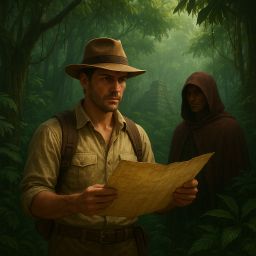
In this nib, you will journey into the heart of the 1980s Amazon to uncover the chilling disappearance of John Reed, a young seeker who vanished while hunting for a mythical underground city. You will learn how to spot the red flags of a charismatic con man and understand the psychological traps that lead even intelligent people to ignore reality in favor of a beautiful lie. By examining the "Prince of Akakor" and the trail of missing explorers he left behind, you will gain a deeper perspective on the dangers of toxic idealism and the importance of balancing a thirst for adventure with grounded skepticism. This nib is a haunting study of what happens when the desire for a miracle meets the unforgiving law of the jungle.
Structure and Function of the Khipu: The Inca Empire’s System for Data Management and Accounting
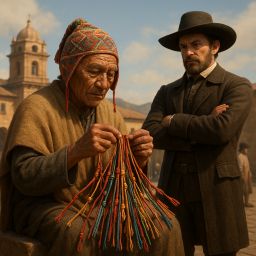
This nib explores the khipu, a sophisticated system of knotted strings that served as the primary data storage for the Inca Empire. You will discover how these ancient masters used color, texture, and 3D space to record complex census data and imperial taxes with a precision that rivaled modern spreadsheets. By understanding this tactile code, you will learn how a massive civilization managed twenty-five hundred miles of territory without ever using a single drop of ink. This nib reveals a brilliant alternative to the written word, proving that human intelligence can organize the world through touch and memory rather than just lines on a page.
Human Echolocation and Brain Plasticity in Iran's Blind Musicians: Navigating Traditional Architecture Through Sound
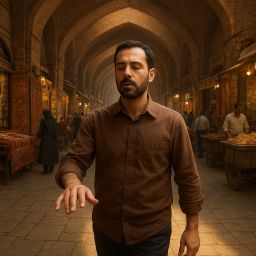
Through this nib, you will discover the incredible science of human echolocation and how Iranian street musicians use sound to "see" through solid walls. You will learn how the brain rewires itself to turn hearing into a visual map, a process known as neuroplasticity, and how traditional Persian architecture acts as a natural navigation system. This nib explains why these skills are not a miracle but a practical use of biological radar that anyone can understand. By exploring these acoustic secrets, you will gain a new perspective on human potential and learn how to pay closer attention to the hidden signals in your own environment.
Nowruz: The History and Rituals of the Persian New Year
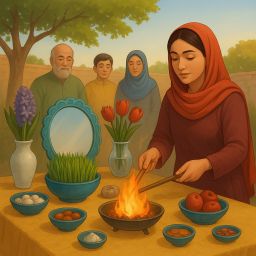
Discover how a 3,000-year-old tradition survived every attempt to erase it, from ancient invasions to modern revolutions. This nib explores the fascinating rituals of Nowruz, the Persian New Year, and reveals how its deep ties to the spring equinox made it impossible to ban. You will learn the hidden meanings behind the "Seven S’s" on the ceremonial table and why jumping over bonfires is considered a vital act of spiritual cleansing. By the end, you will understand how simple family traditions can become powerful tools of cultural resistance, proving that some customs are more resilient than the empires that try to control them.
Ancient Indigenous Stories Offer Scientifically Accurate Records of Rising Seas Since the Ice Age
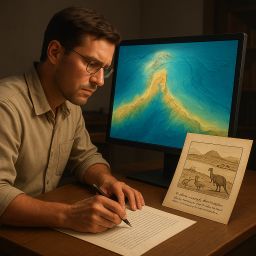
This nib explores the staggering accuracy of Indigenous oral traditions, proving that human memory can preserve factual geographical data for over 10,000 years. You will learn how the Narrangga and Tiwi people recorded the end of the last Ice Age, documenting the exact moment rising seas turned local hills into islands long before the invention of writing. The nib breaks down the "hidden systems" of communal peer review and Songlines that acted as a prehistoric hard drive to keep these records precise across 300 generations. By the end, you will understand why modern geologists now treat ancient stories as reliable scientific reports, fundamentally changing how we date human history and value oral knowledge.
Turning the Bones: How the Famadihana Ritual Honors Ancestors in Madagascar
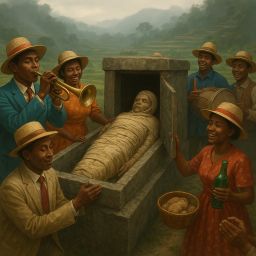
Discover the vibrant heart of Madagascar through the Famadihana, a joyful ritual where families reunite with their ancestors by literally bringing them home for the weekend. This nib explores the "turning of the bones," a practice where the living wrap their elders in fresh silk, dance with them to upbeat music, and share life updates with those who have passed. You will learn why the Malagasy people view death as a moving door rather than a final wall, and how this unique tradition settles family feuds while healing modern grief. By looking past the initial shock of the ceremony, you will see how a community turns the fear of being forgotten into an eternal celebration of family duty and love.
Death and Social Status in Tana Toraja: The Rituals, Costs, and Beliefs of the Way of the Ancestors
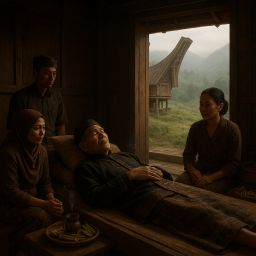
This nib explores the Highlands of South Sulawesi, Indonesia, to reveal a culture where death is a slow transition rather than a sudden end. You will learn how the Toraja people treat the deceased as "sick persons" for years, keeping them at home to allow the family time to process loss and save for elaborate rituals. The nib explains the practical side of these traditions, from the massive economic impact of buffalo sacrifices to the ledgers of debt that bind the community together. By looking at these customs, you will understand how a different approach to grief can foster deeper family bonds and replace the fear of death with a profound sense of continuity and belonging.
Arnold van Gennep and the Three Stages of a Rite of Passage: Separation, Transition, and Return
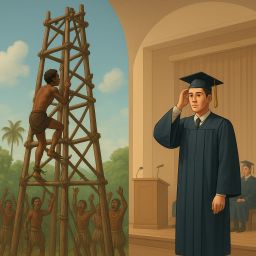
This nib reveals the invisible script that governs every major change in your life, from getting married to starting a new career. You will learn the three-step "social technology" that all cultures use to turn a child into an adult or a civilian into a soldier. By looking at the Naghol land divers of Vanuatu and modern graduation ceremonies, this nib explains why the "middle ground" of any transition feels so chaotic and stressful. You will discover why your brain needs specific rituals to kill off an old identity and lock in a new one. Understanding these phases helps you navigate life’s messy milestones with more confidence, ensuring you never feel stuck between who you were and who you are becoming.
The Pyramid Builders were Not Slaves - New Evidence of Healthcare and Nutrition in Ancient Egypt
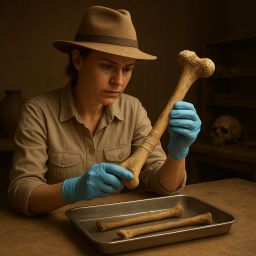
This nib dismantles long-standing myths about the Great Pyramids to reveal a surprising ancient welfare state. You will discover how forensic archaeologists used healed fractures and brain surgery scars to prove that pyramid builders were not disposable slaves, but highly valued citizens. The nib explains how the Egyptian state provided professional medical care, high-protein diets, and organized team structures to keep its workforce healthy and motivated. By looking at the "medical records" hidden in 4,500-year-old bones, you will learn how the Pharaohs used social security and expert logistics to complete the most ambitious construction project in history.
Shared Minds and Social Spaces in Talea de Castro: How Traditional Networks Create a Communal Brain
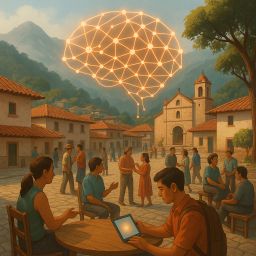
This nib explores the hidden genius of Talea de Castro, a Zapotec village in Mexico that functions as a single, collective brain. You will learn about "distributed cognition," a way of thinking where a community shares the burden of memory and attention rather than leaving it to the individual. By looking at how the town’s physical layout acts like a data center and how gossip serves as a vital filing system, you will discover how these social structures reduce stress and prevent burnout. This nib shows how "mental offloading" can build a more resilient society, offering a powerful alternative to our modern, isolated digital lives.
The science and psychology of professional mourners: the acoustic engineering of collective grief

This nib explores the sophisticated world of professional mourners and the vital role they played in ancient social engineering. You will learn how "wailing women" used the science of psychoacoustics to trigger emotional breakthroughs, helping the bereaved bypass mental blocks to process trauma safely. By looking at traditional Irish and Egyptian rituals, this nib explains why specific vocal frequencies act as a release valve for the human nervous system. You will discover why modern, silent funerals may actually hinder our ability to heal and how structured, collective noise serves as a biological tool for mental health. This is a fascinating look at how ancient cultures managed grief with the precision of modern psychologists.
The Subak System: Ancient Balinese Irrigation and the Ecological Cost of the Green Revolution

This nib reveals how the emerald rice terraces of Bali function as a sophisticated biological computer, outperforming modern machinery for over a thousand years. You will learn how ancient religious rituals actually serve as a decentralized algorithm to manage water and starve pests without chemicals. By exploring the disastrous "Green Revolution" of the 1970s, the nib demonstrates why top-down engineering often fails in complex ecosystems while traditional "bottom-up" cooperation thrives. It is a persuasive look at how culture can solve massive data problems, offering a proven model for sustainability that is more relevant today than ever.
The Hawala system: how traditional finance networks run on human trust

This nib reveals the inner workings of Hawala, an ancient, honor-based network that moves billions of dollars across the globe without money ever crossing a physical border. You will discover how "hawaladars" use simple ledgers and trade goods to settle debts, bypassing the high fees and red tape of traditional banks. The nib explains why this system is nearly indestructible and how it uses family reputation as a form of currency to ensure every payment arrives safely. By exploring this masterpiece of social technology, you will gain a deeper understanding of why trust and community ties are often more powerful than digital surveillance or legal contracts in the global economy.
Why we sing infants to sleep: The biological roots and shared sounds of the world's lullabies

This nib reveals the hidden biology behind why every parent on earth sings the same way to their children. You will learn how the "vocal umbilical cord" uses specific rhythms to sync a baby’s heart rate with their mother’s, and how falling melodies act as a physical exhale for the infant nervous system. By following the "acoustic blueprint" found in Harvard research, you will see how lullabies serve as a vital survival technology that manually lowers stress hormones. This nib explains why music is a universal language of safety, proving that despite our cultural differences, we are all hard-wired to find peace in the same gentle frequencies.
Potlatch: Social Status and the Spirit of Giving in Pacific Northwest Indigenous Cultures
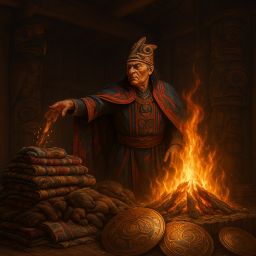
Step into the firelight of the Pacific Northwest and discover a world where burning a fortune is the ultimate power move. This nib explores the Potlatch, a fascinating legal and economic ritual where Indigenous leaders "fought" with property rather than weapons. You will learn how giving away mountains of blankets and breaking copper shields served as a high-stakes social contract, turning generosity into a form of debt that powered entire communities. By grasping the logic of "costly signaling," you will see why hoarding was once a social death sentence and how this system acted as a vital insurance policy against hunger. This nib offers a bold new look at how human status works, proving that true influence often comes from what you let go, not what you keep.
How Sitting by the Fire and Sharing Stories Built the Human Mind, Culture, and Society
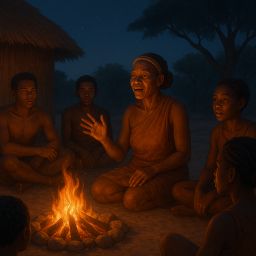
This nib explores how the invention of fire did much more than provide warmth; it physically rewired the human mind. You will discover the vital difference between daytime "logistical" talk, which focuses on survival and chores, and the "firelight hours" that gave birth to human culture. By following the research of an anthropologist living in the Kalahari, you will learn how the flickering light of a campfire reduces social tension and allows people to build trust through stories and myths. This nib explains why we still crave cozy, dim lighting for deep conversations and how shared imagination turned us into a species capable of massive cooperation. Once you see how fire "bought back" time for the human spirit, you will understand why our modern screens act as digital campfires that still drive our need for connection today.
Sacred Spills: The Global History of Pouring Drinks for the Dead and the Gods
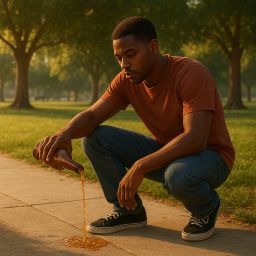
This nib explores why humans across thousands of years have shared the same strange habit: wasting a perfectly good drink by pouring it into the dirt. You will discover the hidden history of the libation, a ritual that connects modern street customs to the heroes of Ancient Greece and the families of West Africa. By looking at these global traditions, you will learn how "bloodless sacrifices" serve as a universal language for grief and how giving up a bit of nourishment helps people process loss. This nib explains why this simple act remains our most powerful way to speak to those we have lost, proving that a spilled drink is never truly a waste.
How Knitting Shapes Community, Culture, and Masculinity on Taquile Island
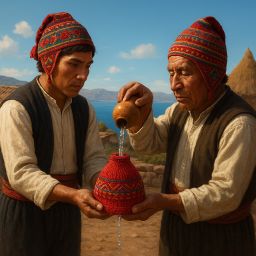
This nib explores the high-stakes cultural traditions of Taquile Island, where a man’s social standing is determined by his ability to knit wool so tightly it can hold water. You will discover how textiles serve as a silent language, using specific hat patterns and woven belts to communicate marital status, history, and political rank. By looking at knitting as a rigorous test of discipline rather than a simple hobby, this nib reveals why technical mastery is the ultimate requirement for community leadership. It offers a fascinating look at a society where character is worn on one’s sleeve, teaching you how shared rituals and craft can build a resilient, self-governing culture.
The ritual of the umbilical cord burial: A cultural anchor to the earth and human identity
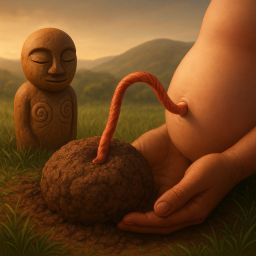
This nib explores the ancient ritual of grounding, a global practice where families bury umbilical cords to anchor a child’s identity to the earth. You will discover how the Māori concept of whenua treats the land as an extension of the body, and why modern psychology refers to our emotional bond with specific places as topophilia. By looking at traditions from the Navajo to the Igbo, you will learn how these physical connections provide a sense of belonging that protects against the rootlessness of modern life. This nib offers a persuasive look at how reclaiming a tangible link to our geography can improve our mental well-being and our commitment to the environment.
Neanderthal burial rites at Shanidar Cave and the scientific debate over the flower burial
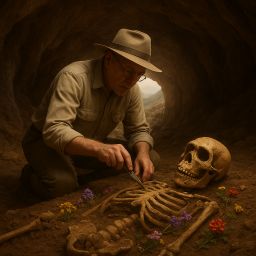
Step into the cool shadows of Iraq’s Shanidar Cave to uncover a find that shattered our views on human evolution. This nib explores the famous "Flower Burial," where the 75,000-year-old remains of a Neanderthal were found surrounded by ancient wildflower pollen. You will investigate the clash between two fascinating theories: did a grieving tribe offer a ritual floral tribute, or did a busy desert rodent accidentally stash the plants there? By weighing the scientific evidence, you will learn how archaeologists decode the past and why the capacity for empathy and care might be much older than we ever imagined. Long before the first city was built, our distant cousins were already facing life’s greatest mysteries with rituals that feel surprisingly modern.