Economics | Booknibs
Building M-Pesa: How Mobile Money Changed the Way Kenya Moves Cash and Fights Poverty
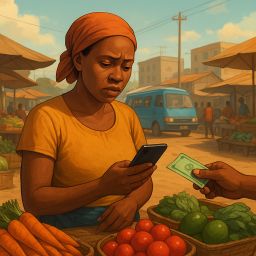
This nib explores how a simple text messaging tool accidentally revolutionized the Kenyan economy by solving the "friction" of physical cash. You will learn how a human network of local shopkeepers replaced traditional banks, providing a secure way for the poor to move money across vast distances. The nib explains why the ability to send small amounts instantly is a powerful tool against the poverty trap, helping families survive medical or weather crises without losing their livelihoods. By following the shift from physical cash to digital "liquidity," you will understand how removing small hurdles can create massive social change and financial independence for women. This is a practical look at how technology succeeds when it adapts to human culture rather than trying to change it.
Stone Money: How the ancient Rai stones of Yap Island work and what they teach us about modern economics
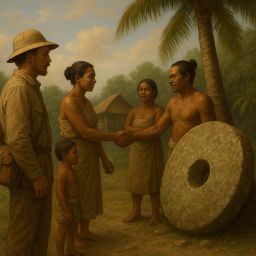
This nib explores the fascinating history of the Rai stones on the island of Yap, revealing how giant, immovable limestone discs became one of the world's most sophisticated currencies. You will learn the principles of social accounting, where money functions as a shared mental ledger rather than a physical object to be swapped. The nib explains the concept of proof of work, showing how value is tied to the risk and effort spent creating a currency, much like modern bitcoin mining. By tracing these ancient traditions to today’s digital age, you will see why all money is essentially a social contract built on memory and consensus. This nib is a vital look at how human trust, rather than gold or paper, truly drives the global economy.
Peak Child: How the World is Swapping Population Growth for a Stable Future

This nib explains why the global population is still rising even though the number of children on Earth has already peaked. You will discover the "fill-up effect" and learn why today's growth is driven by longer lifespans rather than a baby boom. By exploring the shift from a population pyramid to a stable "box" shape, you will see how better healthcare and women's education have naturally capped the number of newborns at two billion. This nib offers a refreshing, data-driven perspective on why the "population bomb" never went off and what a more balanced, mature humanity means for our planet's resources.
Why Using Resources Better Often Leads to Using More: The Jevons Paradox and the Rebound Effect
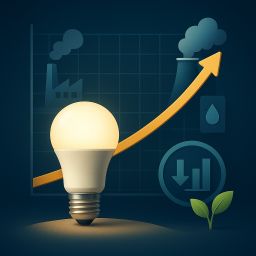
Discover why being more "green" can sometimes backfire through the lens of the Jevons Paradox. By exploring this nib, you will understand the Rebound Effect, a phenomenon where technological upgrades intended to save resources actually trigger a surge in consumption. You will learn to identify these hidden patterns in everyday life, from why LED bulbs led to more light pollution to how fuel-efficient cars can result in longer commutes. This nib offers a vital perspective on why technology alone cannot solve environmental issues, teaching you the importance of pairing innovation with smart habits and policy to create true sustainability.
Flags of Convenience: How Shifting Ship Registration Rewrote the History and Economics of Global Trade

This nib reveals the hidden legal engine behind the global shipping industry, explaining why most of the world's giant cargo vessels fly the flags of small, distant nations. You will discover the origins of the "flag of convenience" system, a clever workaround born during the Prohibition era that now allows billion-dollar corporations to bypass high taxes and strict labor laws. By exploring how landlocked countries like Mongolia can host massive fleets, the nib illustrates how "regulatory shopping" keeps the price of your daily coffee and electronics low. Most importantly, you will learn about the accountability gap this creates on the high seas, showing how a web of shell companies and digital registrations makes it difficult to punish environmental crimes or labor abuse. This is a fascinating look at the "floating loopholes" that make modern, borderless commerce possible.
Prices and the Seesaw Effect: Understanding Market Lags and the Cobweb Theorem
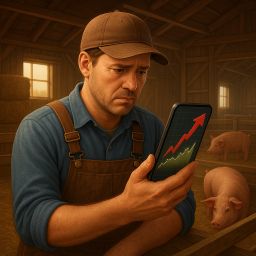
This nib reveals why markets for everything from pork to computer science degrees often swing between frantic shortages and painful gluts. You will learn about the Cobweb Theorem, a concept that explains how "lag time" in production creates a trap for even the most rational business owners. The nib breaks down why today’s high prices often lead to tomorrow’s financial crashes, and how you can spot these patterns before they happen. By understanding these delayed feedback loops, you can improve your personal decision-making, learn to ignore misleading market hype, and time your own investments or career moves to avoid the crowd.
How the WIR System Works: Switzerland’s Alternative Bank for Small Businesses

This nib reveals the secret pulse of the Swiss economy: an invisible safety net that has protected local businesses for nearly a century. You will learn how sixteen shopkeepers turned a Great Depression crisis into a private currency called WIR, which still powers billions in trade today. By exploring this "mutual credit" system, you will discover how communities can create their own money without relying on big banks or government handouts. The nib explains how this "counter-cyclical" tool actually gets stronger when the global economy fails, acting as a natural shock absorber. It is a masterclass in building local resilience, proving that trust and cooperation can be more stable than gold or the stock market.
Japan's Ghost House Crisis: How Tax Laws and a Shrinking Population Created the Akiya Trap

This nib explores why millions of Japanese homes sit abandoned even as cities become more crowded. You will learn how lopsided tax laws actually reward owners for letting buildings rot, turning crumbling ruins into financial shields. The nib reveals why the Japanese housing market operates more like the market for used cars, where properties lose all value in just thirty years, and how a cultural obsession with newness creates a "scrap and build" trap. By understanding the link between a shrinking population and these "ghost houses," you will gain a clear look at the economic challenges facing any aging nation.
How the Aalsmeer Flower Auction Works: Logistics, Global Trade, and the Dutch Clock System

In this nib, you will step onto the floor of the world’s largest flower auction to see how 20 million blooms change hands before breakfast. You will learn the mechanics of the "Dutch auction," a high-speed system where prices drop rather than rise, forcing buyers to make split-second decisions. This nib also breaks down the "cold chain," the logistics feat that keeps a rose fresh for days after traveling thousands of miles. By exploring this engine of engineered urgency, you will discover how psychology and robotics turn fragile plants into a global commodity. It is a fascinating look at how a marketplace can outrun nature itself through sheer efficiency.
The Cost of Progress: Shipbreaking and the Environment in Chittagong, Bangladesh
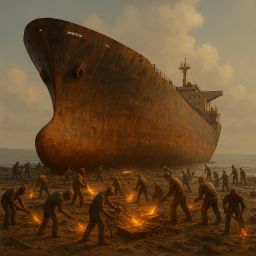
This nib explores "beaching," a staggering industrial spectacle where massive cargo ships are driven onto the shores of Bangladesh to be dismantled by hand. You will learn how the "cold math" of the shipping market turns a 100,000-ton liability into a multi-million-dollar windfall, and why global trade relies on this gritty, manual recycling system. The nib details the "blowtorch symphony" of thousands of workers who strip these steel giants piece by piece using brute force and simple tools. By understanding the role of the mysterious "cash buyer" and the life-threatening risks workers face, you will gain a new perspective on the invisible, physical toil that keeps global shipping cheap and provides the raw materials for a developing nation’s growth.
Airport Slots: The Hidden Economy of Airline Takeoff and Landing Rights

Explore the high-stakes world of "invisible real estate" where a single ten-minute landing window can cost upwards of $75 million. This nib reveals how international regulators turn time into a commodity, creating a global market more valuable than the aircraft themselves. You will learn how the "80/20 rule" forces airlines to fly empty ghost flights just to keep their spot and how "grandfather rights" allow major carriers to block out competition. By mastering the logic of airport slots, you will finally understand the hidden forces that drive ticket prices, cause strategic delays, and shape the environmental impact of modern travel.
Auction Design and the Fundamentals of Game Theory in Mechanism Design

This nib pulls back the curtain on the hidden math governing everything from art sales to the digital ads on your phone. You will learn how the famous winner's curse causes people to overpay and how smart auction design uses transparency to prevent these costly mistakes. Discover the clever logic of the Vickrey auction, a system where the best strategy is simply to tell the truth about what an item is worth to you. By understanding these invisible rules, you will see how game theory creates fair markets and helps global industries trade billions of dollars in resources with surgical precision.
How Shadow Banking Works: Inside the Hidden Architecture and Risks of the Global Financial System

This nib explores the $200 trillion "shadow banking" system, the hidden engine that moves more money than traditional banks without following the same rules. You will learn how this parallel universe unbundles financial services into high-speed assembly lines, using specialized tools like money market funds and repo markets to keep global trade moving. The nib explains why this efficiency comes with a trade-off: without traditional safety nets or cash buffers, these institutions can trigger sudden market heart attacks. By understanding how these hidden players turn risky loans into "safe" assets, you will gain a clearer view of the invisible forces that dictate your pension's stability and the global economy's health.
Cairo's Invisible Economy: How the Zabbaleen Community Powers the City’s Recycling System
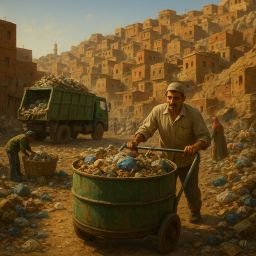
This nib uncovers the hidden world of Cairo’s Zabbaleen, a community that has built the most efficient recycling system on Earth. You will learn how these "entrepreneurs of the unwanted" achieve an 80 percent recycling rate, doubling the performance of most Western cities through an ingenious circular economy. The nib explains how they transform red-brick homes into specialized processing hubs and why human intuition often outperforms high-tech machinery. By exploring their resilience through political crises and failed modernization attempts, you will discover why informal, community-led systems are often the best solution for global waste. This is an essential look at how seeing value where others see junk can sustain a city of twenty million and provide a blueprint for a more sustainable future.
How high-frequency trading works: systemic risks, feedback loops, and flash crashes in modern algorithmic finance
This nib explores the hidden mechanics of high-frequency trading (HFT), where algorithms battle in data centers to move billions in the blink of an eye. You will learn how these digital "predators" use physical location and light-speed math to find tiny profits, and how their constant interactions create dangerous feedback loops. By understanding the difference between real and phantom liquidity, you will see why markets sometimes crash without warning even when the underlying economy is stable. This nib reveals why modern finance behaves more like a chaotic biological ecosystem than a predictable machine, giving you the tools to spot the invisible gears driving today's global markets.
Elinor Ostrom and the Eight Principles for Managing Shared Resources: Moving Beyond the Tragedy of the Commons

This nib explores how communities defy the "Tragedy of the Commons" to protect shared resources like water and forests. You will learn the eight essential design principles that prevent neighbors from overexploiting land, such as setting clear boundaries and creating fair, local rules. By tracing the fieldwork of Nobel winner Elinor Ostrom, this nib explains why humans are "conditionally cooperative" rather than naturally greedy. You will discover how small, self-governing groups often outperform both private corporations and distant governments in saving the environment. Ultimately, these insights provide a practical toolkit for building trust and ensuring the long-term survival of any shared project.
The Invisible Architecture of Risk: How Maritime Insurance Powers Global Trade

This nib explores the invisible world of maritime insurance, the bedrock of global trade. You will learn how a 300-year-old coffee house model evolved into the sophisticated syndicate system that keeps the world economy moving today. By investigating the three pillars of maritime security-Hull, Cargo, and P&I Clubs-you will discover how insurers act as shadow regulators, enforcing safety standards through the pricing of risk. You will also understand how the modern "shadow fleet" threatens this architecture of trust. This nib provides a vital lesson on how we turn the chaos of the high seas into reliable, everyday commerce.
Coffee Around the World: How Global Markets, Hedging, and Supply Chains Really Work
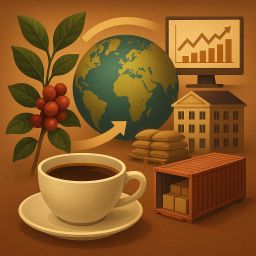
This nib reveals the complex machinery behind your daily coffee, transforming your morning cup into a window on the global economy. You will learn how agriculture meets high-stakes finance, how standardized futures contracts turn volatile crops into stable assets, and why hedging strategies protect everyone from local farmers to massive roasters against unpredictable market shifts. Understanding these mechanics clarifies why coffee prices fluctuate and how global benchmarks govern the path from tree to table. By mastering these essentials, you will gain a profound appreciation for the intricate, invisible network of risks and logistics that powers our interconnected world.
The Hidden World of Vanilla: From Backbreaking Harvests to Global Conflict

Vanilla is more than a pantry staple-it is a commodity that rivals silver in value and demands a brutal, high-stakes supply chain. By exploring the history and mechanics of the vanilla trade, you will learn to identify the hidden costs behind your favorite flavors. Discover how a twelve-year-old boy revolutionized global agriculture with a single manual technique, understand the complex "curing" process that transforms bitter beans into aromatic spice, and uncover how volatile markets fuel real-world conflict. You will gain a sharper perspective on global supply chains, helping you recognize the intense human effort behind everyday products.
The American Blood Plasma Trade and Its Global Reach

The United States is the world’s leading exporter of human blood plasma, a high-value commodity often called "liquid gold." This article pulls back the curtain on the multi-billion-dollar industry that turns biological material into life-saving medicine. You will learn the regulatory differences between donating whole blood and source plasma, how fractionation transforms proteins into essential treatments for autoimmune and blood disorders, and why the U.S. has become the world’s indispensable plasma supplier. Understanding this hidden trade ecosystem reveals how economic policy, global health, and human biology intersect to keep millions of patients alive across the globe.