Education & Learning Sciences | Booknibs
Education & Learning Sciences
Explore focused learning nibs in Education & Learning Sciences on Booknibs.
The Budapest Method and the Ágnes H. T. Approach: Revolutionizing Science Education through Guided Discovery and Provocative Teaching
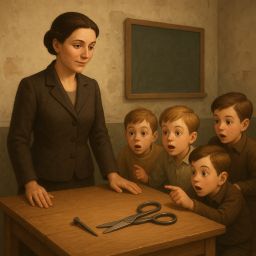
Discover how a radical experiment in post-war Hungary transformed the way we think about learning. This nib explores the Budapest Method, a teaching style that replaces dry lectures with "pedagogical provocations" to spark genuine curiosity. You will learn how to use silence as a strategic tool, why giving away the answer can actually kill a student's drive, and how to structure problems that lead to "guided discovery." By understanding these techniques, you can foster deeper logical thinking and long-term memory in any field. It is a persuasive look at why the best lessons start with a puzzle rather than a textbook.
Where in the World is Carmen Sandiego? How a Global Icon Changed the Way We Learn Geography

This nib reveals how a 1980s computer game grew into a global phenomenon that turned geography into a high-stakes adventure. You will learn how the "Carmen method" uses cultural clues like currency and landmarks to build research skills, and how the franchise evolved from a digital hunt into a modern story about protecting world heritage. By exploring the mechanics of the chase, you will see how play transforms dry facts into a mental map of our planet. This nib is essential for anyone who wants to understand why geographical literacy matters in a connected world and how curiosity can turn the entire globe into an interactive puzzle.
Building Minds with AI: Improving Literacy and Critical Thinking in Today’s Classroom
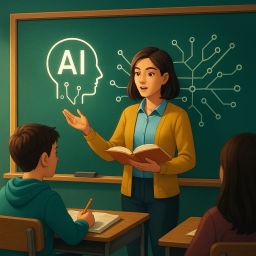
Discover how artificial intelligence is transforming the classroom from a simple answer machine into a sophisticated tool for logical thinking. This guide reveals why "prompt engineering" is becoming a vital literacy skill, moving beyond casual chatting to precise, structured communication. You will learn how to reduce "information entropy" by narrowing a machine's focus, as well as the five essential elements of a professional prompt, including role assignment and clear constraints. By mastering these techniques, you will transition from a passive user to an active architect of information. These strategies help you sharpen your own verbal precision, troubleshoot logical errors, and maintain total intellectual control over automated systems. Turn the "genius without common sense" into a powerful collaborator by learning to express your intent with absolute clarity.
Personalized Learning: How AI and Biometrics Unlock Human Potential
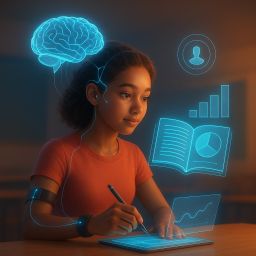
Discover how "Hyper-Personalized Learning" is ending the "one size fits all" era of education. You will explore how wearable sensors and artificial intelligence track a student’s internal state through heart rhythms and skin signals. The text breaks down how these systems manage "cognitive load," or mental effort, to keep learners in the "flow state" where they are challenged but never overwhelmed. By reading this, you will understand how AI assistants use biometrics to replace high-stakes testing with real-time support. You will also learn about the vital ethical balance required to protect sensitive body data. This is a must-read for anyone interested in how the marriage of brain science and technology can unlock the full potential of every student.
How Knowledge Tracing Works: The Algorithms Behind Personalized Learning and Digital Intuition
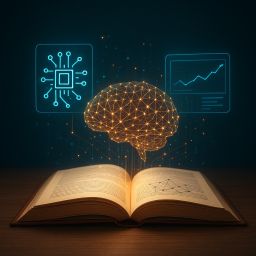
Modern education is pivoting from a rigid "one size fits all" model to a responsive system that mirrors a private tutor. You will learn how Knowledge Tracing algorithms analyze your digital habits to map your specific strengths and weaknesses in real time. The text explains the mechanics of Bayesian Knowledge Tracing, including how it distinguishes a lucky guess from true mastery, and how it identifies the "Goldilocks zone" of learning to prevent boredom or burnout. By understanding these tools, you will see how adaptive technology eliminates learning gaps and cuts study time in half, acting as a powerful assistant that frees teachers to provide deeper human mentorship.
From Kindergarten to College: Mapping the American School Journey, GPA, and Beyond
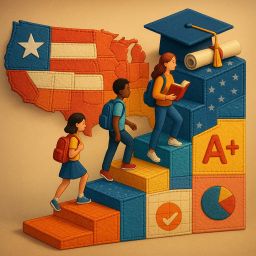
What if the American school experience isn’t about perfect grades, but about choosing your own path? From the first day of kindergarten to the final toss of a graduation cap, students navigate a system unlike any other - where each state sets its own rules, high schoolers build their own schedules, and a single number, the GPA, can open doors or close them fast. Add in Friday night football, college applications that feel like a race, and classrooms filled with as much drama as algebra - and you’ve got a journey defined by freedom, pressure, and second chances. This is school not as a ladder, but as a maze with no single exit. Ready to walk through it?
Reinventing School: A Practical Blueprint for Curiosity-Driven, Mastery-Based Learning
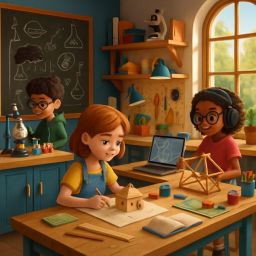
Imagine a school that feels like a curious laboratory, a studio, and a cozy workshop all at once. The bell does not drive learning; students leave each day with a project they love and a question they want to chase tomorrow. Lessons use cognitive science, including retrieval practice, spacing, and interleaving, so knowledge sticks. Students advance by mastery, not seat-time, and learn alongside mentors, peers, and community partners on real problems. Assessment means portfolios, exhibitions, and useful feedback, not just tests. Try a weekly showcase, ten minutes of retrieval practice, or one community mini-project - small moves, big change.