Linguistics & Languages | Booknibs
Linguistics & Languages
Explore focused learning nibs in Linguistics & Languages on Booknibs.
The Race to Save Eyak: Lessons from the Life of Marie Smith Jones and the Fight Against Language Loss

This nib explores the life of Marie Smith Jones, the final native speaker of Eyak, and the profound loss that occurs when a language goes silent. You will learn how language functions as a mental map, shaping how we perceive time and nature, and why recording words in a dictionary is not enough to truly save a culture. This nib explains how economic pressures and social shame drive language loss, while also highlighting successful turnarounds like those of the Hawaiian and Welsh communities. By understanding these linguistic shifts, you will gain a new perspective on why preserving diverse ways of thinking is essential for our collective human survival.
How Languages Die and Live Again: Comparing Akkadian and Hebrew

This nib reveals why some ancient languages vanish while others return from the grave. You will learn the crucial difference between a dead and an extinct language, and why scholarly preservation often fails where parents succeed. By comparing the silence of ancient Akkadian with the modern revival of Hebrew, the nib explains how "intergenerational transmission" and the brain’s "critical period" determine a tongue's survival. You will walk away with a fresh understanding of how languages function like living ecosystems, proving that for a culture to survive, it must move out of the library and into the nursery.
How Children Learn Words: The Gavagai Problem and Three Natural Biases of Language Acquisition
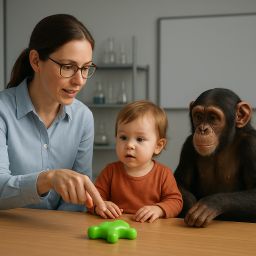
This nib explores the "Gavagai" problem, a famous logic puzzle that suggests learning a single word should be impossible. You will discover the three specific mental shortcuts every toddler uses to filter out a world of confusing data and master language at breakneck speed. By comparing human social intuition to the way chimpanzees and even modern AI process information, the nib reveals why reading another person's intent is more important than raw logic. You will walk away with a deep appreciation for how the human brain "fast-maps" meaning, turning the chaotic noise of childhood into the foundation of civilization.
How Spoken Gibberish and Abstract Language Work: The Logic Behind Nonsense

This nib explores the mechanics of "expressive gibberish" to reveal how human communication works beneath the surface of formal grammar. You will learn how to use rhythmic anchors and tonal shifts to create meaning from thin air, turning simple noises into a structured social tool. By breaking down the "bouba-kiki" effect, the nib shows how specific mouth positions and vowel sounds trigger predictable emotional responses in your listeners. These insights help you master the art of performance and social bonding, proving that a well-timed bit of nonsense can be more persuasive than a dry fact. Whether you want to improve your comedic timing or understand the physical "workout" of linguistics, this nib offers a playful way to sharpen your vocal creativity and emotional intelligence.
Language and Culture of the Pirahã Tribe: How a World Without Numbers or Nested Grammar Shapes Reality

This nib explores the astonishing culture of the Pirahã, an Amazonian tribe whose language lacks words for colors, a distant past, or even numbers. You will learn how these people navigate the world without counting, relying instead on a "now-focused" mindset that prioritizes direct experience over abstract theory. By examining their unique speech patterns, the nib challenges the famous idea that all humans share a hardwired "universal grammar." This journey into the heart of the jungle reveals that math and time-keeping are not biological instincts, but cultural tools like hammers or software. Ultimately, this nib offers a profound look at how the words you speak shape your reality, helping you reconsider which parts of your own logic are natural and which are simply learned habits.
Whistled Speech: The Language and Biology behind Silbo Gomero of the Canary Islands

In this nib, you will discover the ingenious "whistled language" of La Gomera, a rugged island where deep ravines once made talking to neighbors nearly impossible. You will learn the physics behind why a high-pitched whistle travels over three miles while a shout fades away, and how the human brain actually rewires itself to process these tones as if they were spoken words. This nib explains the clever method of mapping the entire Spanish language onto just a few pitches using fingers and breath. It is a fascinating look at how people adapt to their environment, proving that human connection can overcome any physical barrier.
How Language Shapes Our Sense of Direction: Comparing Self-Centered and Landmark-Based Paths in the Mind
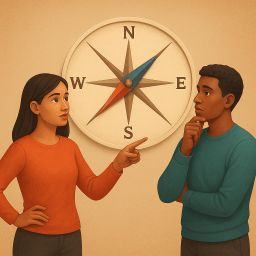
This nib explores how the language you speak shapes your physical sense of direction and your perception of time. By comparing the "self-centered" vocabulary of English to the "world-centered" navigation of the Kuuk Thaayorre people, you will learn why some cultures possess a "superhuman" ability to stay oriented without a compass. You will discover how different grammatical rules can actually rewire the brain, shifting your memory from a personal perspective to a geographic one. Understanding these mental habits reveals why our way of thinking is not the human default, and why losing a language means losing a unique way of mapping the universe.
Sequoyah and the Creation of the Cherokee Alphabet: How One Man Taught a Nation to Write
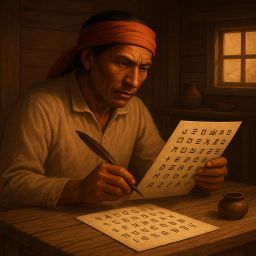
Discover how a single man without formal schooling revolutionized communication by inventing a unique writing system from scratch. This nib explores the analytical genius of Sequoyah, a Cherokee silversmith who decoded the sounds of his native tongue to create "talking leaves." You will learn the mechanical differences between an alphabet and a syllabary, including why certain systems are significantly easier to master than English. By following his transition from complex word-pictures to a logical 85-character script, you will see how rapid literacy can transform a society and protect its cultural identity against outside pressure. It is a powerful look at how one person used the logic of an engineer to build a lasting bridge between spoken word and written history.
Alpha Bravo Charlie: The Engineering and History of the NATO Phonetic Alphabet

This nib explores the fascinating history and science behind the military phonetic alphabet, a communication system engineered to survive chaos. You will learn how researchers used mathematical stress-testing and acoustic fingerprints to create a foolproof way of naming letters, ensuring "Alfa" is never mistaken for "Delta." The nib breaks down the concept of signal-to-noise ratio and explains why adding rhythmic redundancy is more effective than simply turning up the volume. By understanding how these 26 words were specifically designed for non-native speakers and failing equipment, you will discover powerful lessons in clarity and resilience that apply to any high-stakes environment.
How Alice Kober and Michael Ventris Cracked the Code of Linear B

Through this nib, you will discover how a young architect and a dedicated classicist cracked a 3,000-year-old code that the world's top experts considered unsolvable. You will learn the difference between an alphabet and a syllabary, and why searching for a message before understanding its structure is a trap that leads to failure. By following the story of Linear B, you will gain a new perspective on "structural thinking," a logical method for solving complex puzzles by focusing on how parts relate to one another rather than guessing their meaning. This nib reveals how treating a mystery like an architectural grid can turn chaotic data into a clear, history-changing breakthrough.
How Michael Ventris Deciphered Linear B: The Logic Behind Cracked Codes in Ancient Linguistics

This nib explores the thrilling true story of how a self-taught outsider used an architect’s eye to crack a code the world’s best experts deemed impossible. You will learn how Michael Ventris and Alice Kober used structural logic and statistical grids to decipher Linear B, a mysterious writing system that had been silent for three thousand years. The nib reveals how looking for patterns rather than meanings can help you solve complex problems in any field, and why fresh perspectives often beat traditional expertise. By following this journey, you will discover why Greek history goes back much further than once thought and how a simple change in perspective can help you break through your own intellectual walls.
The Languages of the Caucasus: Origins, Diversity, and Survival on the Mountain of Tongues

This nib explores the Caucasus, a rugged mountain bridge between the Black and Caspian Seas where over 50 distinct languages thrive in a space smaller than Spain. You will discover how "vertical islands" created by 13,000-foot peaks acted as a natural filing cabinet, preserving ancient grammars and sounds found nowhere else on Earth. The nib explains why isolation led to incredible specialization, such as verbs with 1.5 million forms and vocabularies shaped by the steep terrain. By understanding this unique linguistic geography, you will see how physical landscape and cultural pride can protect human diversity against the blurring forces of empires and globalization.
How Languages Change: The Forces Behind Evolution and Genetic Drift
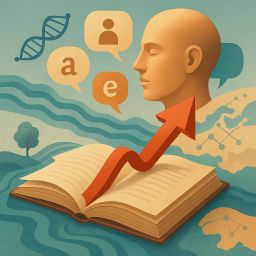
This nib explores why languages never stay still, revealing the hidden forces that transform how we speak over generations. You will learn how the "principle of least effort" causes our tongues to take shortcuts, why physical barriers like mountains turn single languages into diverse dialects, and how social status reshapes our accents. By understanding these linguistic patterns, you will see that modern slang and "errors" are actually signs of a healthy, living culture rather than a decline in standards. This nib offers a fascinating look at how your own speech serves as a living record of human history and identity.
Life in the Moment: The Piraha People and the Language of Immediate Experience

Deep in the Amazon, the Pirahã people speak a language that defies almost every rule of modern linguistics. This nib explores how a culture focused entirely on the present moment functions without numbers, colors, or a shared history. You will learn how the Immediacy of Experience Principle shapes their daily lives and why their simple sentence structure has sparked a fierce debate over how the human brain works. By examining their unique "whistled speech" and "Grammar of Happiness," you will see how culture-not just biology-designs the way we think. This nib is a mind-bending look at what happens when humans strip away the past and future to live in a permanent present.
The Whistled Language of La Gomera: A Journey through History, Linguistics, and the Human Brain

This nib explores the fascinating world of Silbo Gomero, a fully functional whistling language used to communicate across the deep volcanic ravines of the Canary Islands. You will learn how the human brain can be "hacked" to process high-pitched whistles as complex grammar rather than just music, showcasing remarkable neurological flexibility. The nib explains the ingenious way people stripped Spanish down to its acoustic bones to overcome physical barriers, turning a rugged landscape into a natural social network. By looking at this UNESCO-protected treasure, you will see how human creativity and modern education can rescue a dying tradition and turn a simple whistle into a powerful tool for survival and connection.
The Secret Script of China’s Women: The History, Language, and Culture of Nushu

Discover the incredible story of Nüshu, the world's only writing system created and used exclusively by women. This nib explores how marginalized groups use secret languages to reclaim their identity and build community under pressure. You will learn the ingenious ways these women camouflaged their writing as floral embroidery to bypass life-long restrictions on their education. By comparing this phonetic script to standard Chinese characters, the nib demonstrates how language can be simplified to empower everyday people. It is a powerful look at how communication serves as a tool for survival, turning shared hardships into a lasting legacy of sisterhood and resistance.
How Language Shapes the Way We See Color
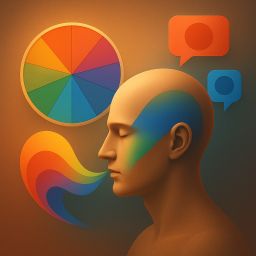
Why did ancient civilizations like the Greeks never describe the ocean as blue? Digging into this mystery reveals that the language we use does more than label our world - it literally shapes how our brains perceive reality. By reading this nib, you will discover the universal blueprint behind how humans categorize color, why "blue" was the last hue to be named across cultures, and how your own vocabulary influences what your eyes actually register. This exploration proves that sight is as much a cultural achievement as a biological one, showing how expanding your language sharpens the resolution of your daily experience.
The Kadesh Treaty: Diplomacy and the Art of Ancient Peacekeeping
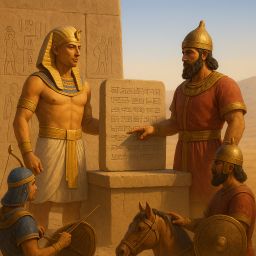
This nib reveals how ancient scribes brokered the world’s first peace treaty by treating language as a strategic tool rather than a mere exchange of words. You will learn how to use semantic framing, navigate cultural sensitivities through intentional ambiguity, and employ functional translation to resolve high-stakes conflicts. These skills provide a blueprint for building common ground between opposing viewpoints by choosing words that honor the dignity of both sides. By studying the sophisticated diplomacy found in the Treaty of Kadesh, you will gain a sharper perspective on how to turn rigid, polarized arguments into productive, lasting agreements.
Decoding Honorifics: How Korean and Japanese Use Language to Build Social Hierarchy

This nib explores the sophisticated social radar systems embedded within the Korean and Japanese languages. By examining these linguistic structures, readers will learn to decode complex social hierarchies through verb endings, master the nuances of in-group and out-group dynamics, and understand how grammar shapes cultural identity. These insights matter because they reveal how language functions as a tool for delicate social navigation, rather than just a means of communication. Exploring this nib provides a broader perspective on human relationships, offering a practical understanding of how our choice of words serves as the glue for professional and personal connection.
The Click Languages of the Khoisan: How They Work, Where They Come From, and Why They Matter

Explore the sophisticated world of Khoisan click languages to master the mechanics of lingual-ingressive speech, the biological science behind percussive sounds, and the profound link between phonetics and ancient human migration patterns. By examining how these complex tongues have evolved and crossed cultural borders into Bantu languages, you will learn to dismantle myths of linguistic simplicity and appreciate how diverse populations shape their own communication tools. This nib is worth your time because it reframes human speech as a flexible, adaptive technology, offering a fresh perspective on the resilient histories hidden within the simple, everyday act of speaking.