Philosophy & Ethics | Booknibs
Philosophy & Ethics
Explore focused learning nibs in Philosophy & Ethics on Booknibs.
The Enhanced Games: Exploring the Logic, Safety, and Ethics of Steroids in Sports
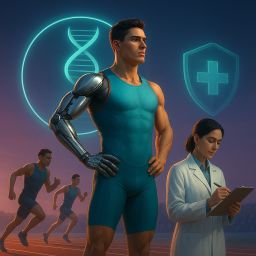
This nib explores the controversial rise of the Enhanced Games, a pro-science alternative to the Olympics that openly permits performance-enhancing drugs under medical supervision. You will learn the core philosophy of transhumanism and how it challenges the traditional "naturalist" view of fair play. The nib breaks down the practical shift from banning substances to monitoring clinical safety, illustrating how this movement aims to turn athletes into scientific pioneers. By the end, you will understand why this debate matters beyond the stadium, as the technologies used to break world records today may one day help fight aging and improve recovery for everyone.
Modern Philosophy: From Descartes and Rationalism to Social Contract Theory and the Individual Mind
This nib pulls back the curtain on the intellectual revolution that shaped the modern world, helping you understand how 400 years of debate created our current systems of science and democracy. You will learn to distinguish between rationalism and empiricism, the two rival schools of thought that still dictate how we verify facts and trust our senses today. By exploring the social contract, you will discover why we trade certain freedoms for safety and where our individual rights actually come from. This nib is an essential guide for anyone wanting to sharpen their critical thinking, decode political arguments, and find their own compass in an era of deep uncertainty.
Moral Luck and the Limits of Control

Does being a good person come down to your character, or just your luck? This compelling look at "moral luck" explores why we judge people for outcomes they cannot control. You will learn to identify the four types of luck - from your DNA to your environment - that shape your reputation and choices. By understanding the "Control Principle," you will discover why our legal systems and social circles often punish bad luck rather than bad intentions. This reading offers a practical path toward greater humility and fairness, helping you judge others by their actions rather than their accidents.
The Veil of Ignorance: John Rawls and the Search for a Fair Society

This guide introduces you to the "Veil of Ignorance," a famous mental tool for building a truly fair society. You will learn how to strip away personal bias to make objective decisions and master the "maximin" strategy - a way to design rules that protect the most vulnerable. By imagining a world where you don't know your own wealth, talent, or status, you can move past political bickering to find logical solutions for healthcare, taxes, and corporate life. These insights matter because they transform empathy from a vague feeling into a practical skill for leadership and personal ethics. You will finish this read with a sharper "moral compass" to evaluate modern laws, AI ethics, and workplace policies. It is an essential toolkit for anyone who wants to ensure that "fairness" isn’t just a slogan, but a lived reality for everyone.
More Than Happiness: A Philosopher’s Guide to Finding Meaning and Living Well
What does it actually mean to live well? We spend our lives chasing success, comfort, and the perfect "filtered" lifestyle, yet many of us remain stuck on a treadmill of endless wanting. This insightful guide moves past modern consumerism to explore the original manual for human flourishing. By revisiting the wisdom of ancient Greek wrestlers, Roman emperors, and modern rebels, you will discover how to build an internal foundation that no external crisis can shake. From the quiet simplicity of Epicurean peace to the resilience of Stoic discipline and the radical freedom of the Existentialists, this story bridges the gap between abstract theory and daily practice. Learn to find the "Golden Mean" in your own habits, distinguish temporary pleasure from lasting fulfillment, and take control of the only thing you truly own: your character. Whether you are looking for deeper relationships or a more authentic career, these timeless lessons offer a practical roadmap to a life of purpose, balance, and true excellence.
The Soul, Consciousness, and the Brain: Exploring Beliefs, Evidence, and the Search for Meaning
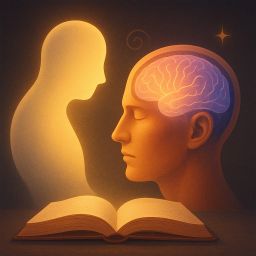
Is the self a ghost in a machine or the emergent music of neurons? This brisk, clear-eyed investigation follows soul ideas from ancient Egypt, Plato, and Aristotle through Hindu and Buddhist thought to modern neuroscience. It probes near-death episodes, anesthesia, hippocampal memory loss, and the "hard problem" of consciousness to show why brain science narrows the room for a separable, immortal soul without closing the debate. Along the way it untangles common confusions, compares physicalism, dualism, panpsychism, and religious views, and explains why the answer matters for death, moral responsibility, and what makes a life meaningful.
Can We Upload Our Minds? Science, Engineering, and the Ethics of Personal Identity
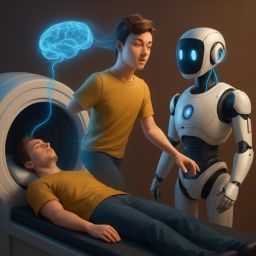
Imagine stepping out of your body and into a machine - could we really upload our minds? The sci-fi image of a scan that copies you into code thrills and terrifies, because it squeezes identity, consciousness, and engineering into one big promise: transfer equals continuity. In reality there are three routes - structural, functional, or slow replacement - each with wildly different tech needs and philosophical quirks. Scanning and massive compute are only half the puzzle; proving subjective experience, consent, and legal rights is the other. Whether uploads become backups, clones, or new people, the debate makes us ask who we truly are.