Applied Sciences | Booknibs
Organoid Intelligence and Biocomputation: Testing neurons on chips with the DishBrain project and the future of wetware bio-computers
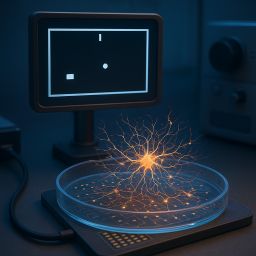
This nib explores the groundbreaking world of "wetware," where living brain cells are merged with silicon to create biological computers. You will learn how scientists taught 800,000 neurons to play the video game Pong, proving that organic tissue can process information and learn in real time without traditional code. The nib explains why this "organoid intelligence" is thousands of times more energy-efficient than modern AI and how it could revolutionize medical testing and pattern recognition. By diving into the mechanics of how cells communicate with chips, this nib reveals why the future of technology may be grown in a lab rather than built in a factory.
Why tomato juice tastes better on a plane: How altitude and noise change the way we experience flavor

This nib explores the strange science of why food tastes different mid-air, starting with the puzzling popularity of tomato juice on Lufthansa flights. You will learn how high-altitude cabins act as a sensory desert, stripping away 30 percent of your ability to taste sugar and salt while leaving savory umami flavors untouched. The nib explains the biological reasons your nose and brain struggle in dry, noisy environments, forcing airline chefs to over-season meals just to make them edible. By understanding how pressure and engine roar reshape your palate, you will gain a new perspective on how your surroundings dictate your reality.
Why Medieval Cathedral Windows Aren't Actually Melting: The Liquid Glass Myth Exposed

This nib deconstructs the popular myth that medieval cathedral windows are melting over time. While many tour guides claim these ancient panes are thicker at the bottom because glass is a slow-moving liquid, you will discover the real chemistry of amorphous solids and why glass never actually flows at room temperature. The nib explains the crown glass method, a traditional spinning technique that created uneven sheets, and shows how medieval builders strategically placed the thickest edges at the base for stability. By learning to distinguish between manufacturing quirks and material properties, you will gain a deeper appreciation for the grit and skill of early craftsmen. This nib reframes your understanding of everyday physics, replacing folklore with a fascinating look at materials science and human history.