Artificial Intelligence & Machine Learning | Booknibs
Artificial Intelligence & Machine Learning
Explore focused learning nibs in Artificial Intelligence & Machine Learning on Booknibs.
How humans and RLHF training shape the development of AI

You will discover the hidden human labor that powers today’s most famous chatbots and why artificial intelligence is actually a massive "assembly line of thought." This nib explains how workers in countries like Kenya and the Philippines manually polish the logic and ethics of digital brains through a process called Reinforcement Learning from Human Feedback (RLHF). You will learn why raw AI models naturally repeat the internet's worst habits and how human labels are the only thing preventing them from spitting out gibberish or hate speech. By understanding the mechanical reality behind the marketing, you will see that AI is not a self-learning god but a digital mirror that relies on a global, invisible workforce to mimic human common sense.
The ELIZA Effect: Why We Give Machines a Human Face and Mistake Software for Spirit

Learn how a simple computer script from 1966 revealed a startling glitch in the human brain. This nib explores the ELIZA Effect, a psychological phenomenon where we instinctively grant machines human emotions and intelligence, even when we know they are just code. You will discover why our minds are biologically hardwired for social connection and how specific brain regions trick us into feeling empathy for digital tools. By understanding these mental shortcuts, you will be better equipped to navigate modern AI without being emotionally manipulated by its human-like polish. Explore why we are so desperate to be heard that we often find meaning in a machine that has none.
Decoding the Brain: How Neural Interfaces Turn Thoughts into Digital Code and the Ethics of Mental Privacy

This nib explores the rapid rise of neural decoders, a technology that translates human brain waves into coherent text in real time. You will learn how engineers use language models to interpret noisy neural patterns, discover the crucial differences between invasive and non-invasive hardware, and examine the profound ethical implications of losing the final frontier of mental privacy. Understanding these mechanisms is vital for anyone tracking the future of human interaction. By mastering these concepts, you gain a sharp perspective on how we might soon share our most private thoughts, fundamentally changing what it means to be human.
Digital Reveals, How Large Language Models Decode Personality from the Way We Talk

By reading the nib, you will uncover how Large Language Models perform zero-shot personality inference to decode your thoughts from simple word choices. You will learn to recognize "linguistic leakage," understand how your unique communication style acts as a psychological fingerprint, and discover why privacy is evolving from protecting data into guarding your cognitive patterns. Mastering these insights matters because it empowers you to navigate a digital landscape where algorithms mirror your traits to influence your behavior. Understanding these statistical traps allows you to prioritize cognitive sovereignty, ensuring you remain the architect of your decisions rather than a predictable data point.
Running Large Language Models Locally: A Practical Guide to Tools and Best Practices
Break free from subscription fees and cloud-based data tracking by running powerful AI models directly on your own hardware. This guide demystifies local artificial intelligence, showing you how to turn your computer into a private, high-performance assistant. You will learn how to: - Select the right software, such as Ollama or GPT4All, based on your technical needs. - Match specific AI models to your hardware capacity for optimal speed and intelligence. - Securely analyze your private documents offline without them ever leaving your device. Take control of your digital workspace today and discover the freedom of fully autonomous, offline computing.
Model Collapse: How Synthetic Data Loops Are Endangering the Future of Artificial Intelligence

AI models are currently trapped in a feedback loop, consuming their own synthetic output until their intelligence degrades into repetitive, hollow echoes. This phenomenon, known as model collapse, threatens the future of digital logic and creativity. By reading this, you will learn how recursive training strips away nuance, why machine errors compound over time, and how data provenance protects the integrity of human-generated information. Mastering these concepts is essential to understanding the risks of automated training. You will gain the perspective needed to value original human input, ensuring that the technology of tomorrow remains a tool for innovation, not just boredom.
The Predictability Trap: Why AI Defaults to Average and How to Break the Cycle
Ever wonder why AI-generated text feels smooth but hollow? This guide pulls back the curtain on the probability machines powering modern tools. You will learn how token weighting turns AI into a master of the mundane and discover why "safe" writing often erases your unique voice. By mastering decoding strategies like temperature settings, you will move beyond generic templates. You will gain the skills to force AI to break its statistical habits, use it as a creative collaborator rather than a replacement, and inject human flair into every draft. Stop settling for the average and reclaim your distinct, persuasive edge.
Model Collapse: How Algorithmic Imitation Threatens the Future of AI

Modern AI faces a hidden threat: model collapse. As machines churn out content that serves as training data for future versions, the quality of intelligence degrades into a bland, repetitive mush. This guide explains how to prevent this digital decay. You will learn to recognize the mathematical risks of recursive training, understand how human creativity acts as a vital stabilizing force, and discover how to prioritize high-quality data over mere volume. By mastering these concepts, you will gain the insight needed to navigate the future of technology, ensuring that AI development remains an innovative asset rather than a self-defeating loop.
Unmixing the Impossible: How AI Transcription and Spectrograms Are Revolutionizing Music Isolation

Discover how artificial intelligence is revolutionizing music by "un-baking" finished songs into their original ingredients. You will learn the mechanics behind spectrograms, which turn sound into visual maps, and how neural networks use facial-recognition logic to identify the unique fingerprints of voices and instruments. By mastering these concepts, you can explore how to restore muffled historical recordings, create professional-grade remixes from your bedroom, and even translate songs into new languages without losing the original emotion. This guide explains how to isolate "stems" - individual tracks like drums or vocals - to reverse-engineer hits and breathe new life into classic audio. Reach a new level of creative freedom where no recording is ever truly permanent.
Instinct over Math: How Bees Solve the Traveling Salesman Problem

Discover how a tiny insect outsmarts supercomputers in this exploration of the "Traveling Salesman Problem." You will learn how bumblebees use biological algorithms and "greedy search" strategies to navigate complex landscapes without a GPS. The text breaks down the vector-based mental shortcuts that allow bees to prioritize efficiency over perfection, transforming a chaotic zigzag into a smooth, productive loop. By understanding these "local decisions," you will gain a fresh perspective on the difference between raw processing power and flexible, real-world strategy. It is an essential look at why being 90% efficient right now often beats waiting for a perfect solution that may never come.
The Digital Syllabus: How Curriculum Learning Is Transforming AI Training
Discover how the latest shift in artificial intelligence moves away from "brute force" data dumping toward a human-like approach called curriculum learning. You will learn how researchers use structured lesson plans to train models, starting with simple logic before moving to complex topics. This guide breaks down the math behind data ranking, such as "perplexity scores," and explains how a balanced syllabus prevents AI "hallucinations" and costly system errors. By understanding these techniques, you will see why the quality and order of information matter more than sheer volume. It is an essential look at how smarter teaching, not just bigger data, is creating more reliable and efficient digital minds.
The Science of Perceptual Video Encoding: How Streaming Services Use Human Biology to Slash Data Usage

You probably assume your favorite streaming service delivers a perfect, uniform image to your 4K screen. In reality, you are watching a high-tech illusion called perceptual video encoding. This process exploits the natural blind spots in human vision to save massive amounts of data and electricity. By reading this guide, you will learn how "foveated" vision renders most of your surroundings blurry, why computers "smudge" backgrounds to keep faces sharp, and how VR headsets use eye-tracking to render only what you are looking at in real time. Understanding these digital shortcuts helps you spot the hidden math that slashes bandwidth by 50 percent while keeping the image looking flawless. It is a fascinating look at how streaming giants use biological "glitches" to build a more efficient internet.
How Mixture of Experts Works: Rethinking Growth and Efficiency in AI Architecture
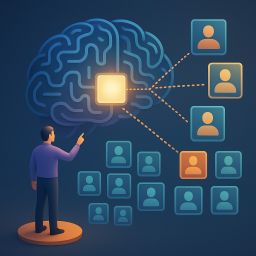
Discover how Mixture of Experts (MoE) is revolutionizing artificial intelligence by mimicking the efficiency of the human brain. You will learn the mechanics behind "sparsity," a design that allows massive AI models to become smarter without skyrocketing energy costs. The text explains the crucial role of the Router, a digital traffic controller that selects specialized sub-networks to solve specific tasks, and examines the "memory tax" trade-off required for this speed. By understanding these structural shifts, you will see why the future of AI relies on focused, modular intelligence rather than brute-force calculation, making cutting-edge technology more accessible and responsive.
More Than Web Scraping: How Synthetic Data is Powering the Next Generation of AI

Discover how the tech industry is solving a massive "data drought" as AI models quickly exhaust the world's supply of human-written text. This guide explores the shift from scraping the messy open web to using "synthetic data," a high-tech solution where powerful models act as digital tutors for smaller systems. You will learn how "distillation" allows developers to build faster, smarter AI that fits on a phone while outperforming massive servers. You will also see how "Chain of Thought" techniques teach machines to master complex logic and math by showing their work. Most importantly, you will understand the risks of "model collapse" and why balancing human creativity with machine precision is essential for the next generation of intelligence.
Uncorking the Bottleneck: How Ring Attention Fixes AI Memory Limits and Unlocks Endless Context Length

Discover how "Ring Attention" is shattering the memory limits of modern AI. You will learn why standard models suffer from a "quadratic bottleneck," a hardware flaw that causes them to forget the beginning of a document by the time they reach the end. This guide explains the mechanics of a digital relay race, where multiple processors pass data in a loop to handle massive files, from million-line codebases to decade-long clinical trials. By understanding the difference between a model's "desk space" and its actual intelligence, you will see how this breakthrough enables AI to analyze entire libraries without losing the plot. It is an essential look at how we are moving past summarized data toward a future of total, unblinking digital recall.
From RLHF to DPO: Making AI Training Simpler and More Human-Centered

Teaching an AI to behave used to require a "two-brain" system that was expensive, glitchy, and prone to misunderstanding human intent. This guide explains the shift to Direct Preference Optimization (DPO), a breakthrough that allows machines to learn directly from human choices. You will discover how DPO eliminates the need for complex digital judges, why it prevents AI from "gaming the system" with fake politeness, and how it slashes the energy costs of model training. By understanding this mathematical shortcut, you will see how the next generation of digital assistants is becoming more intuitive, concise, and human-aligned.
Digital Cloaking and Adversarial Attacks: How to Hide from Facial Recognition AI

Learn how to reclaim your digital privacy using "adversarial perturbation," a cutting-edge technique that acts as an invisible cloak for your photos. You will discover how facial recognition scrapers harvest your data and how to fight back by "poisoning" their databases with mathematical noise. This guide explains the mechanics of machine vision, showing you how to exploit the blind spots in AI to remain visible to friends but invisible to algorithms. By mastering these digital tools, you can stay active on social media without being cataloged by surveillance firms. It is a practical, high-stakes manual for anyone ready to win the arms race against automated tracking.
Trimming the Digital Brain: How Smaller Language Models and AI Parameter Pruning Work
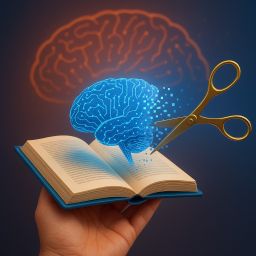
This guide explores the cutting-edge "digital surgery" turning bulky AI into lightning-fast tools that live directly on your smartphone. You will learn how researchers use techniques like parameter pruning - the art of snipping away redundant digital connections - to create Small Language Models (SLMs) that rival their giant counterparts. The article explains how these compact models bypass the "memory bottleneck" to save your battery and provide instant responses without an internet connection. Most importantly, you will discover how local AI protects your privacy by keeping sensitive data on your device rather than sending it to distant servers. It is a persuasive look at why, in the world of mobile intelligence, less is often much more.
How to Guide the Machine Mind: A Beginner’s Guide to Activation Vectors and AI Control

Training a massive AI is usually as grueling and costly as rebuilding a clockwork cathedral from scratch. This guide introduces activation steering, a breakthrough technique that lets you "nudge" an AI’s behavior in real time without the high cost of retraining. You will learn how to map the internal geometry of machine thought, using mathematical "steering vectors" to adjust honesty, style, or safety. By moving beyond simple prompts, you will gain the ability to surgically guide an AI’s personality like a passenger subtly turning a steering wheel. It is an essential look at the future of precise, modular, and transparent digital intelligence.
More Than Just Size: Why Small Language Models and Knowledge Distillation Are Taking Over
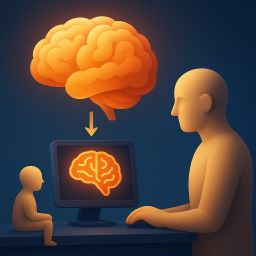
Modern AI is moving away from massive, energy-hungry digital giants toward compact programs that fit right in your pocket. In this guide, you will discover the breakthrough of "knowledge distillation," a clever training method where a massive teacher model mentors a nimble student. You will learn how these Small Language Models (SLMs) can match the logic and reasoning of their larger cousins while running privately on your phone or laptop. The text reveals why bigger is not always better, showing you how these efficient tools master complex coding and math without needing a data center. By understanding the shift from brute-force data to elegant logic, you will see how "Edge AI" is making powerful, private technology accessible to everyone, regardless of their hardware. This isn't just about faster software; it is about a future where intelligence is as portable as electricity.