Biology | Booknibs
Life in the Underground: How Earth's Deep Crust and Radiation Power Microscopic Worlds
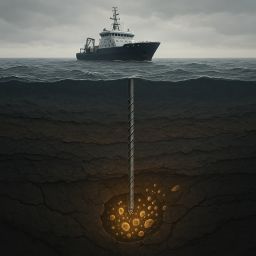
This nib unveils a massive, hidden kingdom of "rock-eating" microbes living miles beneath the earth's crust. Readers will discover how these organisms survive without sunlight by using radioactive decay to split water molecules for energy, a process called radiolysis. By exploring this subterranean world, you will learn why the majority of our planet’s life might actually be hidden under our feet and why these slow-moving "zombies" thrive in environments that would kill most surface creatures. These insights fundamentally shift how we search for life on other planets, proving that a world can be a biological oasis even if it is frozen or drifting in the dark.
Why We Shake Hands: The Biology of Subconscious Chemical Signaling
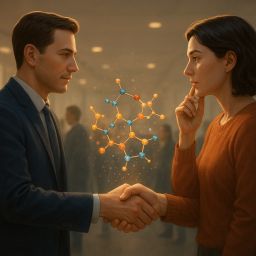
This nib reveals the surprising biological science behind the common handshake, proving it is much more than a polite greeting or a relic from the Middle Ages. You will learn how skin-to-skin contact acts as a high-speed data transfer, allowing your brain to "sniff" and "download" a stranger's chemical profile without you even realizing it. The nib explains how this hidden sense helps you detect stress, health, and social compatibility, turning a simple gesture into a vital tool for survival and intuition. By understanding the research from the Weizmann Institute, you will discover why your body craves physical touch to vet the people around you and why digital meetings often leave us feeling socially incomplete. Reach out and uncover the silent language of human chemistry that guides your every interaction.
Wood is rarer than diamonds: why biological materials are the ultimate cosmic exception

This nib explores the surprising reality that wood is rarer than gold, diamonds, or any precious metal in the known universe. You will learn why wood is a "biological technology" that requires millions of years of evolution to create, unlike gemstones that form through simple heat and pressure. The nib explains the role of lignin, the natural cement that allowed plants to defy gravity, and compares Earth's organic complexity to the sterile chemistry of other planets. By shifting your perspective, you will discover why a simple pencil is a greater cosmic fluke than an asteroid made of solid gold, helping you appreciate the high-tech genius of the nature right outside your door.
Bringing Back the Thylacine: How Gene Sequencing, CRISPR, and Synthetic Embryos Could Revive the Tasmanian Tiger
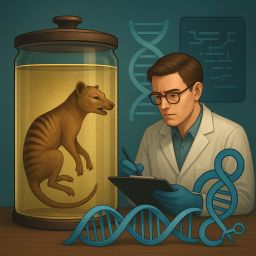
This nib explores the frontier of de-extinction, moving past science-fiction tropes to explain how geneticists are actually reviving the lost Tasmanian tiger. You will learn the difference between traditional cloning and modern "search and replace" gene editing, specifically how tools like CRISPR allow scientists to rewrite the DNA of a living relative to match an extinct blueprint. The nib also covers why marsupials are uniquely suited for this work, the mechanical hurdles of growing a prehistoric embryo in a lab, and how these breakthroughs are already being used to protect endangered species today. It is an essential look at how we are shifting from mourning lost wildlife to actively restoring the natural world.
The Odd Evolution and Anatomy of the Platypus
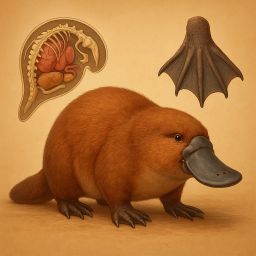
Step into the shoes of baffled 18th-century naturalists who first dismissed this creature as a taxidermy prank. This nib explores how the platypus shattered the scientific "rulebook" by blending the traits of birds, reptiles, and mammals into one improbable body. You will discover how this animal hunts using a high-tech "sixth sense" to detect electricity and learn why its complex genetic code makes human DNA look simple. By tracing the eighty-year battle to classify this "monster," you will see why nature often ignores the tidy boxes we try to put it in. This nib is a gripping look at a biological rule-breaker that forced us to rethink what it actually means to be a mammal.
How Insects Change Shape: The Biology and Evolution of Metamorphosis and Liquid Cells
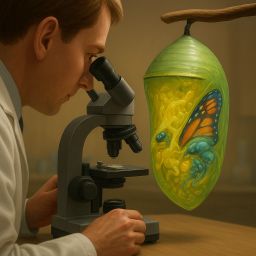
Explore the gruesome yet awe-inspiring science of how a caterpillar survives its own total dissolution inside the chrysalis. Through this nib, you will discover the role of imaginal discs, the tiny "instructional cores" that act as biological blueprints to build a butterfly from liquid remains. You will also learn how a high-stakes hormonal tug-of-war prevents a premature transformation, ensuring the insect has enough energy to fuel its radical renovation. Understanding this process reveals why 75% of insects gamble on such a vulnerable transition to eliminate competition for food between generations. Most surprisingly, you will find out how memories can survive the melting of a brain, proving that the identity of the crawler persists even after it take to the skies.
How nature created antibiotics and why bacteria have always fought back
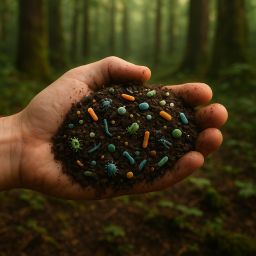
This nib uncovers the hidden billion-year war raging beneath our feet, where soil microbes pioneered the world's most advanced chemical weapons long before humans existed. You will learn how modern antibiotics are actually stolen blueprints from nature and why bacteria use a "biological internet" to trade survival secrets like hackers swapping code. By exploring the origins of resistance genes found in ancient permafrost, this nib explains why we are currently losing the race against superbugs. It offers a vital shift in perspective, moving away from the doomed goal of total extermination toward a smarter, more ecological approach to medicine. This is an essential guide to understanding the microscopic arms race that dictates our future health.
How serotonin shapes social status and lobster psychology
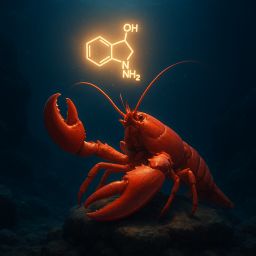
This nib explores the surprising biological link between lobsters and human psychology, revealing how our brains are wired for success. You will discover how serotonin, a mood-regulating chemical, dictates social status and physical posture in the animal kingdom. The nib explains how winning or losing literally rewires the brain, making you either more resilient or more prone to retreat. By understanding these ancient chemical triggers, you will learn why standing tall and projecting confidence can fundamentally shift your mental state. This nib provides a fascinating look at the evolutionary roots of self-worth and how to harness your own biology to navigate a competitive world.
How and Why Deep-Sea Creatures Use Light to Talk: Biological Mechanisms and Evolutionary Functions
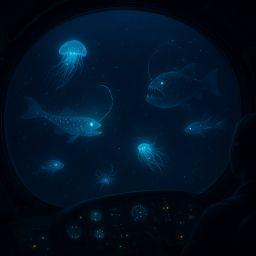
This nib explores the high-stakes world of the deep ocean, where creatures use biological neon to survive the crushing pressure and total darkness. You will learn how animals like the dragonfish "hack" the laws of physics to create secret hunting lights and how others use glowing bellies as high-tech camouflage to disappear in plain sight. By breaking down the chemistry of living light, this nib explains how bioluminescence evolved dozens of separate times as a vital tool for communication. It is a fascinating look at the "visual Morse code" of the abyss, showing how nature turns a cold chemical reaction into a sophisticated language for hunting, mating, and defense.
Born to Run: How Evolution Made Humans the Ultimate Long-Distance Athletes
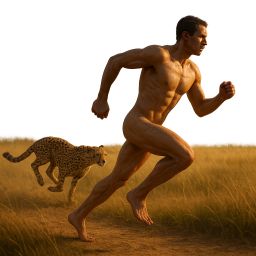
This nib reveals how the human body evolved into the world's most efficient long-distance machine. You will discover the biological "springs" in your feet that recycle energy and the unique "water-cooling" system that allows us to outlast any predator on earth. By comparing our mechanics to high-speed animals like the cheetah, the nib explains why humans are built for endurance rather than raw power. You will learn the practical reasons behind our physical traits, from why we sweat to why our glutes are so large, shifting your perspective on movement from a chore to a biological masterpiece. This is a must-read for anyone wanting to understand the "8-calorie engine" that turned our ancestors into the ultimate survivors.
The Science of Cellular Immortality: How HeLa Cells and the Hayflick Limit Changed Medicine
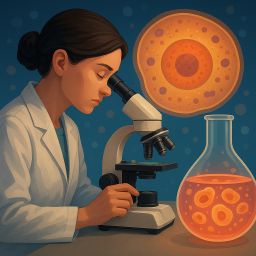
This nib reveals the incredible true story of the first "immortal" human cells and the biological miracle that changed medicine forever. You will discover the mechanics of the Hayflick Limit - the natural expiration date programmed into our DNA - and how a specific enzyme acts like a molecular construction crew to bypass aging. By exploring the journey of these unique cells, you will learn how they paved the way for the polio vaccine, gene mapping, and cancer treatments. This nib offers a fascinating look at the high-speed collision between a virus and human genetics, showing how a single medical breakthrough can save millions of lives while raising profound questions about privacy and consent.
Bird Migration Secrets: How Feathery Travelers Use Star Maps, Inner Compass, and Quantum Logic to Find Their Way
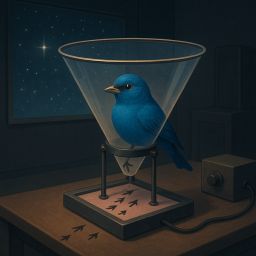
Discover how tiny songbirds navigate thousands of miles with the precision of a high-tech GPS. This nib reveals the biological wonders behind migration, from the inborn "travel fever" that acts as a genetic alarm clock to the way young birds learn to read the rotation of the stars. You will explore the cutting-edge science of magnetoreception, a skill that may allow birds to actually see the Earth's magnetic field through quantum chemistry. By understanding how these creatures cross-reference sun, stars, and magnetic pull, you will gain a new perspective on animal intelligence and the invisible forces that shape our world.
CRISPR-Cas9 gene editing: history, mechanics, and real-world uses
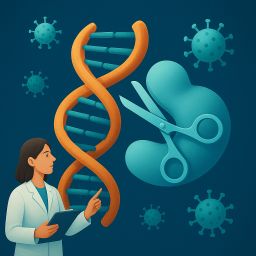
This nib tracks the accidental discovery of nature’s most powerful defense system, hidden for eons within the bacteria used to make yogurt. You will learn how researchers turned a microscopic battle into "molecular scissors" that can rewrite the genetic code of any living thing. The nib breaks down how this tool, CRISPR, simplifies complex gene editing from a years-long ordeal into a fast, affordable task, and explores its real-world success in curing lifelong blood diseases. By understanding the shift from observing evolution to actively directing it, you will gain a clear perspective on the medical revolutions and ethical crossroads shaping our biological future.
Icelandic Immunogenetics: How Isolation and the Founder Effect Shaped the Human Immune System
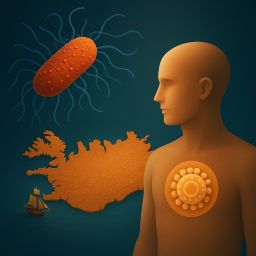
This nib explores how Iceland’s thousand years of isolation turned the island into a world-class laboratory for human genetics. You will learn how the Black Death acted as a brutal biological filter, shaping the immune systems of the survivors into a specialized genetic archive. The nib explains why a small, consistent gene pool makes it easier for scientists to pinpoint the causes of diseases like Alzheimer's, and how these local discoveries lead to global medical breakthroughs. By tracking Viking ancestry through thirty generations, you will see how a history of hardship created a level of genetic clarity found nowhere else on Earth.
How Mantis Shrimp See Color: The Neural Logic and Survival Costs of a Unique Visual System
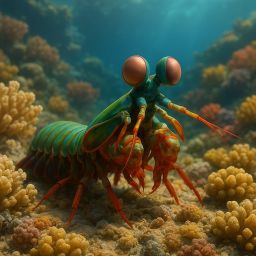
This nib explores the fascinating sensory world of the mantis shrimp, an animal famous for its sixteen color receptors. You will learn the difference between human vision, which uses a complex brain to mix millions of colors, and the shrimp’s "barcode" system, which trades artistic detail for raw reaction speed. By examining how these creatures use specialized hardware to skip mental processing, the nib reveals why more sensors do not always lead to a more vibrant world. This look into the biological trade-off between precision and efficiency will challenge your assumptions about how eyes work and show you why evolution often favors a fast shortcut over a deep thought.
Smart Network Design and Collective Intelligence in the Physarum polycephalum Slime Mold
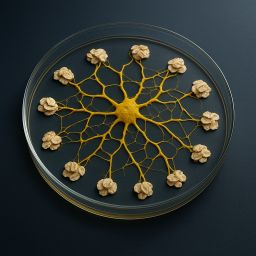
This nib explores how a brainless, single-celled organism can out-engineer human urban planners. You will learn the mechanics of shuttle streaming, a pulsing fluid system that allows slime mold to solve complex transit problems without a central brain. By examining experiments that recreated the Tokyo rail map and ancient Roman roads, this nib demonstrates how a simple rule of reinforcing successful paths creates networks that are both efficient and reliable. These insights matter because they shift our understanding of intelligence from a high-level mental faculty to a physical process of feedback and flow. You will discover how these biological shortcuts are currently being used to program better data networks and more resilient power grids, proving that nature’s bottom-up approach can solve human problems that once seemed impossible.
Why Humans Get Goosebumps: The Evolution and Biology of a Survival Reflex
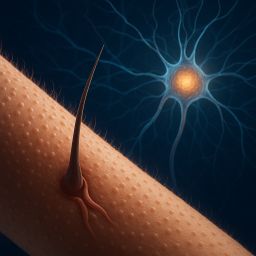
This nib explores the surprising biological triggers behind goosebumps, shifting the focus from simple temperature control to deep emotional communication. You will learn how the "fight or flight" system controls your skin, why the brain reacts to powerful music as if it were a physical threat, and how our ancestors used fur to broadcast social signals. By understanding the mechanics of the arrector pili muscles, you will discover why these tiny bumps are an honest, involuntary window into your true feelings. This nib reveals that your skin is not just a barrier, but an ancient social tool that connects your modern emotions to millions of years of evolutionary history.
Inside a hundred-year-old sourdough starter: the evolution, microbiology, and biological legacy of traditional bread making
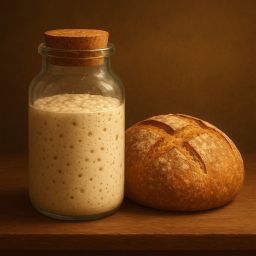
This nib tells the gripping story of a sourdough starter that survived a 1904 shipwreck to become a century-old family heirloom. You will discover how wild yeast and bacteria form a microscopic security system to fend off mold and keep the culture healthy for decades. The nib explains how your kitchen habits actually drive high-speed evolution, turning a simple jar of flour and water into a specialist ecosystem adapted to your specific home. By learning why these biological time capsules are more resilient than store-bought yeast, you will gain a deeper respect for the invisible world bubbling on your counter. This is a fascinating look at how life adapts, survives, and connects generations through the science of bread.
Tardigrade survival mechanisms and their uses in biotechnology, medicine, and agriculture
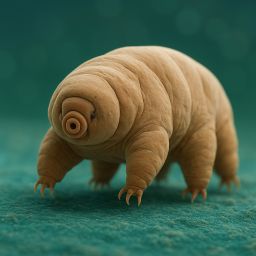
This nib reveals the incredible biological secrets of the tardigrade, a microscopic creature capable of surviving the vacuum of space and extreme radiation. You will learn how these tiny "water bears" use unique proteins to turn their bodies into protective biological glass, a process that prevents their cells from breaking despite total dehydration. The nib explains how scientists are now copying this "molecular bodyguard" system to create life-saving vaccines that do not need refrigeration and crops that can thrive during severe droughts. By exploring these practical breakthroughs, you will see how ancient survival tactics are being transformed into modern tools to protect human health and food security.
Mind Control and Biological Puppetry: How the Glyptapanteles Wasp Hijacks the Geometrid Caterpillar
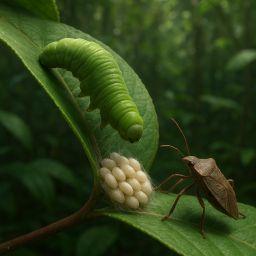
This nib explores the unsettling world of biological hijacking, where a tiny wasp turns a much larger caterpillar into a devoted, suicidal bodyguard. You will learn how viruses and chemical signals are used to rewrite a host's natural instincts, essentially turning one creature into a remote-controlled shield for another. By examining the "bodyguard paradox," you will understand how parasites bypass the immune system and manipulate brain chemistry to control behavior. This nib offers a fascinating look at the "extended phenotype," showing how genes can reach beyond a single body to turn an enemy into a loyal protector. Focus on these evolutionary tactics to see how nature prioritizes the survival of a species over the life of an individual.