Computer Science & Programming | Booknibs
Computer Science & Programming
Explore focused learning nibs in Computer Science & Programming on Booknibs.
Grace Hopper and the Invention of the Compiler: The Birth of Programming Languages and Software Abstraction

In this nib, you will travel back to the sweltering labs of the 1950s to meet Grace Hopper, the Navy officer who refused to speak in ones and zeros. You will learn how she invented the compiler, the essential translation tool that turned cryptic pulses into human-friendly languages. This nib explains the concept of abstraction, showing how Hopper freed programmers from grueling manual labor so they could focus on solving big problems. By understanding her fight against the skeptics, you will see why modern software exists today and how her legacy still powers every ATM transaction and credit card swipe.
The evolution and mechanics of Catmull-Clark subdivision in Pixar's 3D animation

This nib reveals the secret mathematical breakthrough that allowed computers to finally mimic the soft, flowing curves of the real world. You will learn how icons like Ed Catmull moved beyond the rigid, boxy shapes of early 1970s graphics by developing a method to "dream up" infinite smoothness from rough sketches. The nib explains the transition from clunky, jagged polygons to the elegant Catmull-Clark algorithm, a tool that uses simple division to turn digital wireframes into organic life. By exploring the making of Pixar’s Geri’s Game, you will discover how this "digital origami" revolutionized animation, allowing characters to express human warmth and realistic movement. Understanding this invisible bridge between math and art shows why modern cinema feels so alive, turning cold code into deep emotional connection.
From Grace Hopper to Modern Coding: The History of the Compiler

Learn how Grace Hopper transformed computing from a chore of manual wiring into a creative pursuit using the world's first compiler. This nib reveals how "machine code" once forced experts to speak in tedious strings of ones and zeros, locking away the power of technology from ordinary people. You will see how this breakthrough allowed humans to give commands in English, paving the way for modern languages like Python and COBOL. By understanding the shift from hardware to software, you will gain a new appreciation for how translation tools democratized the digital world and why human logic is more valuable than raw processing power.
A Simple Guide to Zero-Knowledge Proofs: How They Work and Why They Matter in the Real World

This nib explores the "mathematical magic" of Zero-Knowledge Proofs (ZKPs), a breakthrough in cryptography that allows you to prove a statement is true without revealing any underlying data. You will learn the logic behind the "Ali Baba Cave" model, which explains how repeated interactions can turn probability into certainty. The nib also breaks down the three essential pillars of digital privacy - completeness, soundness, and zero-knowledge - and moves from simple games to the fast, non-interactive "SNARK" technology used in modern blockchains. By the end, you will understand how we can verify identities, bank balances, and even voting results while keeping sensitive personal details entirely hidden. This is an essential look at how we can replace blind trust with mathematical facts to secure our digital future.
Claude Shannon: The Father of Boolean Logic, Digital Media, and Information Theory
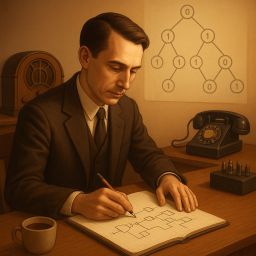
This nib explores how a playful polymath turned the "ghost" of human speech into a hard science. You will learn how Claude Shannon used simple logic to transform electrical switches into digital brains, laying the groundwork for every computer chip in use today. The nib explains the birth of the "bit" and shows how Shannon proved that any message, from a family photo to a deep-space transmission, can travel without errors regardless of static or distance. By understanding these concepts, you will see why our modern gadgets are so reliable and how a single mathematical discovery created the universal language of the digital age.
Margaret Hamilton and the birth of software engineering for the Apollo missions

This nib explores the high-stakes birth of software engineering through the lens of Margaret Hamilton, the pioneer who saved the Apollo 11 moon landing. You will discover how a cryptic error code almost aborted the mission and how Hamilton’s "priority scheduling" - a system that ranks vital tasks over secondary ones - allowed the lunar module to touch down safely. The nib breaks down the transition from flexible hardware to the disciplined logic of modern code, teaching you the essentials of fault-tolerant design and how to build systems that survive human error. By following Hamilton’s journey from weaving copper wires to defining an entire profession, you will gain a new perspective on the invisible architecture that runs everything from your smartphone to global aviation.
Classical vs. Quantum Computing: Technical Limits and Real-World Uses

Learn why the world’s most powerful machine would be a total failure at running your favorite apps. This nib breaks down the fundamental differences between the "bits" in your laptop and the "qubits" used in quantum computing, explaining why these billion-dollar systems require temperatures colder than deep space to function. You will discover why quantum computers excel at solving "nightmare problems" - such as simulating new medicines or cracking global encryption - while remaining agonizingly slow at daily tasks like checking email. By understanding the concept of algorithmic scaling, you will see how these specialists tackle math that would take a traditional supercomputer trillions of years to solve. This nib clarifies how a hybrid future will use quantum power in the cloud to revolutionize chemistry and weather forecasting without ever replacing your smartphone.
Claude Shannon and the Mathematical Theory of Communication: How Information Theory Invented the Digital Age
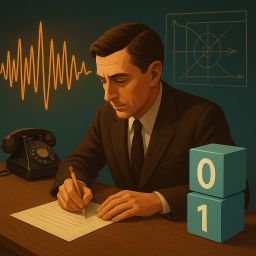
Discover the brilliant mind of Claude Shannon, the man who turned information from a fuzzy concept into a precise science. This exploration reveals how Shannon bridged the gap between logic and machinery, laying the foundation for the digital world. You will learn to quantify information as "bits," understand why redundancy is the secret to error-free communication, and grasp how digital systems filter out noise to maintain perfect clarity. These insights explain the mechanics behind your smartphone, streaming media, and the internet. Understanding Shannon’s work helps you see how we process data and why our modern digital connections are so remarkably resilient.
The Physics of Fabric: From Sheet Logic to Micro-Simulation in Digital Animation
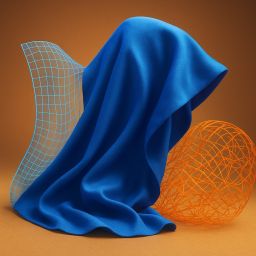
You will discover how digital animators transformed "plastic" clothing into hyper-realistic fabric by moving from simple shapes to complex physics. This overview reveals the shift from "sheet logic," which treated clothes like rubber, to "thread logic," which simulates how individual yarns interact. By reading this, you will understand: - The mechanics of microsimulation, where computers track thousands of interlocking loops to recreate the natural "shear" and drape of silk or denim. - Why friction and tension are the "hidden heroes" that keep digital garments from collapsing. - How light interacts with virtual fibers to create authentic textures. This insight explains why modern movies look so lifelike and how these tiny details - like the way a sleeve creases - build believable characters and worlds. Whether you are a fan of cinema or tech, you will gain a new appreciation for the massive computing power required to make a digital shirt move just like the one you are wearing.
The Power of Zero-Knowledge Proofs: How to Verify the Truth Without Sharing Your Data

Our modern digital lives often force us into a "privacy paradox," where we must overshare personal data just to prove we are trustworthy. This guide introduces you to Zero-Knowledge Proofs (ZKPs), a breakthrough in math and coding that lets you verify facts without revealing the underlying information. You will learn the three balance points of a secure proof - completeness, soundness, and zero-knowledge - and see how they ensure honesty without leaks. By understanding the difference between interactive trials and high-speed "zk-SNARKs," you will discover how this technology is already securing everything from bank loans to medical records. This is a must-read for anyone interested in a future where we can verify our identity, age, or finances while keeping our private lives completely off the grid. You will gain a clear look at how "sharing certainty" is replacing the dangerous habit of sharing data.
How Idempotency Works: The Engineer’s Secret to Reliable and Repeatable Systems

Discover the quiet engineering trick that keeps the internet from double-charging your credit card every time your Wi-Fi flickers. This guide explains idempotency, a mathematical principle that ensures an action only happens once, no matter how many times you accidentally click a button. You will learn to distinguish between "safe" and "unsafe" web commands, understand how unique "idempotency keys" prevent data errors, and see why thinking in "final states" rather than "actions" creates more reliable software. Mastery of this concept is essential for building resilient systems that handle the chaos of the real world without losing or duplicating critical information.
The Rubber Duck Method: How Talking Out Loud Solves Tough Problems

Ever feel trapped by a stubborn bug that refuses to vanish? This guide introduces "Rubber Ducking," a deceptively simple yet powerful technique to break through mental blocks. You will learn to trigger System 2 thinking, a deliberate mental state that catches the subtle logic flaws your "autopilot" brain usually ignores. By explaining your work line by line to an inanimate object, you will master the art of vocalizing assumptions to reveal hidden typos and errors. This approach helps you solve complex problems independently, protecting your team's focus while sharpening your own logical precision. It is an essential, low-tech skill for anyone who wants to move from messy intuition to clear, structured reasoning.
A Beginner’s Guide to Big O Notation: Understanding Algorithmic Efficiency and Linear Growth

Master the fundamentals of efficiency by learning Big O notation, the universal language used to measure how code performs as data grows. You will learn to identify different growth rates, such as linear and quadratic time, and understand the crucial difference between adding work, O(n + x), and multiplying it. These skills allow you to predict if a program will stay fast or crash when moving from a small test to a massive database. By stripping away "noise" and focusing on scaling, you can write professional-grade software that remains stable and responsive under the weight of real-world traffic.
Mastering Patterns: A Complete Guide to Regular Expressions
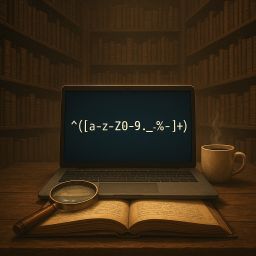
Stop wasting hours on manual data entry and "search and replace" tasks. This guide introduces you to Regular Expressions (RegEx), a powerful symbolic language used to find, edit, and organize text in seconds. You will learn how to use special "shorthand" codes to identify specific data types, apply quantifiers to match variable lengths like phone numbers or zip codes, and use "anchors" to pinpoint text based on its exact position. By mastering these patterns, you will gain the ability to surgically extract information from messy datasets or instantly reformat thousands of names and dates. Whether you are a programmer or a casual user handling large documents, these skills turn grueling manual chores into automated, lightning-fast solutions. Conquer your fear of complex code and unlock the hidden logic behind digital text.
Quantum Computing: A Practical Introduction to Qubits, Algorithms, Hardware, and How to Get Started

Think of hide-and-seek where you can hide and seek until someone looks - that’s a qubit. Quantum computers use superposition, interference and entanglement to compute in ways classical machines cannot. Algorithms like Shor and Grover promise exponential or quadratic speed-ups, and Google’s Sycamore stirred headlines by doing a sampling task classical machines struggle with. Hardware flavors - superconducting, trapped ions, photons, neutral atoms, topological - trade speed, coherence and scalability. Noise and error correction impose huge qubit overheads, so practical advantage is problem-specific. Want to learn? Start with linear algebra, try Qiskit or Cirq, and build small circuits.