Earth & Environmental Science | Booknibs
Earth & Environmental Science
Explore focused learning nibs in Earth & Environmental Science on Booknibs.
Natural Nuclear Fission: How Gabon’s Oklo Reactors Formed Millions of Years Ago
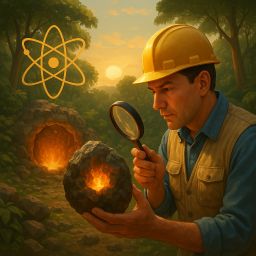
This nib reveals a fascinating moment in 1972 when a tiny error in a French lab led to the discovery of a two-billion-year-old mystery. You will learn how the earth created its own functional nuclear reactors in the jungles of Gabon long before humans ever existed. The nib explains how nature used groundwater and simple chemistry to manage nuclear fission and, more importantly, how it successfully stored radioactive waste for eons without any human help. By exploring this ancient phenomenon, you will gain a new perspective on modern energy and see why the best solutions to our biggest technical hurdles might already be hidden in the soil beneath our feet.
The Killer Lake: How Geology Caused the Nyos Disaster and How Engineering Prevents it Today
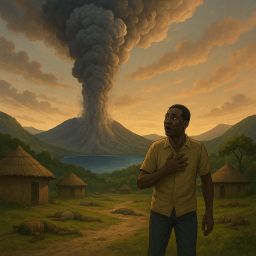
This nib details the 1986 Lake Nyos disaster in Cameroon, where a silent, invisible cloud killed nearly 1,800 people in a single night. You will learn the mechanics of a limnic eruption, a rare geological event where a peaceful lake acts like a pressurized soda bottle, trapping lethal amounts of carbon dioxide. The nib explains why tropical climates make certain lakes more dangerous and reveals how scientists now use simple plastic pipes to "degas" these basins, preventing future catastrophes. By exploring the physics of this invisible killer and the engineering used to tame it, you will gain a deeper respect for the hidden balances of our natural world.
Hidden Giants: Discovering and Preserving the Massive Selenite Crystals of Mexico's Naica Mine
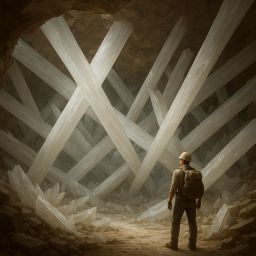
This nib uncovers the accidental discovery of a lethal yet beautiful underworld hidden 300 meters beneath Mexico. You will learn the "Goldilocks" conditions required to grow the world's largest crystals, some weighing 55 tons, and why the very air in this cavern can drown a human on dry land. By exploring how microscopic life survives for 50,000 years inside solid stone, the nib reveals how scientists use these "extremophiles" to hunt for life on other planets. You will also see the difficult choice between keeping this wonder open for study or flooding the mine to preserve its fragile giants. This journey into the deep highlights the incredible patience of nature and the high cost of human curiosity.
How Water Trapped in Deep-Earth Ringwoodite Reshapes Our Planet’s Geology
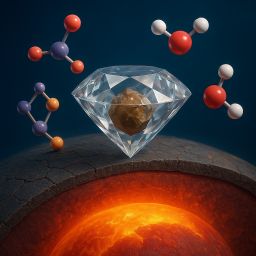
This nib explores the stunning discovery of a massive "hidden ocean" locked 400 miles beneath the Earth's surface. By following the trail of a rare, microscopic mineral found inside a worthless diamond, you will learn how scientists use seismic waves to map our planet's interior. You will discover how hydrogen atoms bond with solid rock to create a deep-earth reservoir containing three times more water than all our surface oceans combined. This nib explains why this internal hydration is the vital lubricant for plate tectonics and how it may even rewrite the history of how our world began.
Turning Basalt and Peridotite into Stone: How Carbon Mineralization Works and Where to Store It
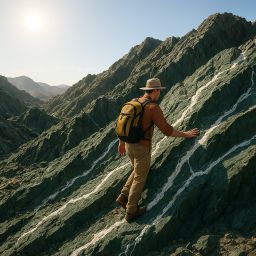
This nib explores a remarkable geological phenomenon in the mountains of Oman where the "breathing" earth naturally turns greenhouse gases into stone. You will discover how peridotite - a rare rock from the Earth’s mantle - acts like a hungry vacuum cleaner for carbon dioxide, locking it away forever as solid white minerals. The nib explains the difference between common basalt and highly reactive peridotite, showing why these specific formations are the "gold standard" for climate technology. By learning how scientists are now fast-tracking this million-year natural cycle into a process taking only weeks, you will understand how the very ground beneath our feet offers a permanent, leak-proof solution for cooling the planet.
Clair Patterson: Solving the Mystery of Earth’s Age and the Fight Against Lead Poisoning

In this nib, you will discover the gripping story of Clair Patterson, the geochemist who determined the Earth is 4.55 billion years old. You will learn how his struggle with contaminated data led him to invent the ultra-clean room - a breakthrough that revealed a hidden global lead-poisoning crisis. By following Patterson’s transition from a quiet lab researcher to a bold public health advocate, you will see how he challenged powerful industrial giants to remove toxic additives from gasoline. This nib illustrates the power of scientific integrity and explains why one man's obsession with precision saved millions of lives and fundamentally changed the world we breathe in today.
How the Boiling River of the Peruvian Amazon formed and stays hot

You will journey into the heart of the Peruvian Amazon to uncover the mystery of the Shanay-Timpishka, a massive river that reaches temperatures of 203 degrees Fahrenheit. This nib explores why the water boils despite being hundreds of miles from the nearest volcano, revealing how deep tectonic cracks act as a "thermal superhighway" for the earth's internal heat. You will learn how high-pressure "plumbing" systems move energy from the crust to the surface and how rare microbes thrive in these lethal conditions. By looking past local myths, this nib explains the fascinating science behind a geological anomaly that defies traditional rules, offering a rare glimpse into the raw power of our planet's interior.
How Modern Landfills and Garbage Research Shape Our Engineering and the Environment
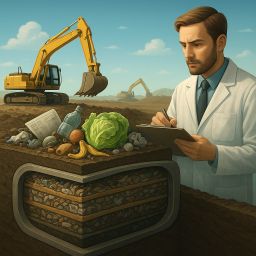
Discover why your kitchen scraps might outlive you in this exploration of the "Garbage Project," a landmark study that revealed the hidden life of our waste. This nib explains how modern landfills function as high-tech, airless tombs designed to protect our water rather than break down our trash. You will learn how engineers use plastic liners and clay to "mummify" refuse, why a head of lettuce can stay green for decades underground, and how this lack of oxygen creates explosive methane gas. By understanding the trade-offs between clean water and permanent trash, you will walk away with a new perspective on why keeping organic waste out of the bin matters for the planet's future.
Geography and weather patterns: why the Catatumbo lightning strikes the Maracaibo Basin
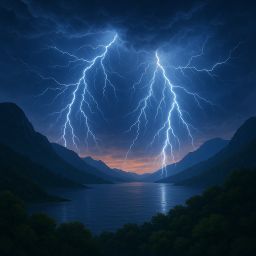
This nib explores the Catatumbo Lightning, a mesmerizing weather phenomenon in Venezuela that acts as a natural lighthouse for the Caribbean. You will learn how the unique, horseshoe-shaped geography of the Andes Mountains creates a physical trap for warm air, fueling a stationary storm that flashes up to 260 nights a year. The nib breaks down the mechanics of cloud physics, explaining how friction between ice and water creates massive electrical charges without relying on common myths like methane gas or ozone production. By understanding this rhythmic atmospheric generator, you will gain a clearer perspective on how landscape directly dictates weather patterns and why some of the world's most chaotic displays are actually governed by precise physical laws.
Red Sprites and Sky Sparks: How We Found and Figured Out the Physics of Atmospheric Electricity
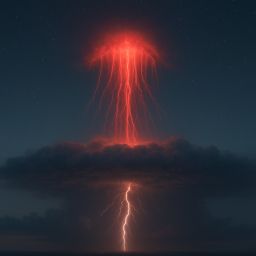
This nib explores the ghostly world of Red Sprites, massive bursts of crimson electricity that dance at the edge of space. You will learn how these "hallucinations" went from pilot folklore to scientific fact, and you will discover the physics of cold plasma that allows them to dwarf Mount Everest without producing heat. By comparing common lightning to these high-altitude titans, the nib explains how storms act as global batteries connecting our soil to the cosmic vacuum. Understanding these fleeting specters matters because they may influence our ozone layer and reveal the hidden electrical circuits that govern our atmosphere.
How Gladys West and Geoid Modeling Led to the Invention of GPS

This nib introduces you to the brilliant mathematician Gladys West, whose quiet work at a Virginia naval base paved the way for the GPS technology we use every day. You will learn how West transformed the Earth from a lumpy, irregular planet into a precise mathematical model, and why your phone would be useless without her complex gravity calculations. The nib breaks down the science of geodesy, explaining how "gravity bumps" on the ocean floor and mountains affect satellite orbits. By exploring West’s journey as a Black female pioneer in the 1960s, you will discover the rigorous logic required to turn invisible physical forces into a reliable digital grid. This is a must-read to understand the hidden layers of math that keep the modern world on track.
Buried Treasure: How the Giant Selenite Crystals Formed in the Naica Mine Case of Crystals
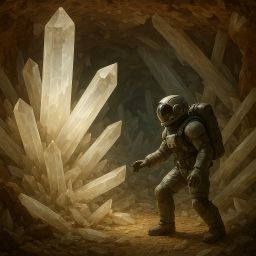
This nib takes you 300 meters below the Mexican desert into a lethal, sweltering cavern filled with the largest crystals on Earth. You will discover the rare geological "engine" that allowed these 12-meter selenite beams to grow, and why the very air in the cave can be fatal to humans without specialized cooling suits. By exploring the chemistry of supersaturation and the physics of ultra-slow growth, you will learn how 500,000 years of total isolation created mineral perfection. This nib offers a striking perspective on the power of geological patience, showing how the planet’s most magnificent treasures often thrive in conditions that are fundamentally hostile to human life.
Wasaburo Oishi and the Discovery of the Jet Stream: How High-Altitude Currents Rewrote Aviation History

In this nib, you will discover the hidden history of the jet stream through the eyes of Wasaburo Oishi, the Japanese researcher who first mapped these high-speed winds. You will learn how the Earth’s rotation and temperature gaps create "rivers of air" that move at over 150 miles per hour, and why Oishi’s choice to publish in a secret, universal language kept his work hidden for decades. This nib explains the practical physics behind modern flight times and reveals how these invisible currents powered the first intercontinental weapons. It is a compelling look at how a missed connection in science changed the course of aviation and global history.
The Man Who Saw the Wind: How Ted Fujita Linked Atomic Blasts to Aviation Safety

This nib explores how Dr. Ted Fujita solved a terrifying aviation mystery by connecting his knowledge of nuclear blast patterns to a tragic 1975 plane crash. You will learn how to identify the specific mechanics of a microburst, a localized "atmospheric hammer" that can swat modern aircraft out of the sky without warning. By examining Fujita’s journey from the ruins of Hiroshima to the runways of New York, the nib demonstrates the value of lateral thinking, showing how patterns observed in one field can solve life-or-death puzzles in another. You will gain a practical understanding of how this discovery revolutionized airport safety and why looking at problems through a different lens is a crucial skill for any problem solver.
Earth's Inner Layers: Myths and Facts About the Solid Mantle Under High Pressure and Heat
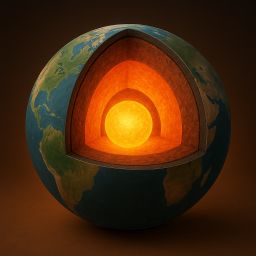
Discover how our planet really works by debunking the popular myth that we live atop a vast ocean of liquid fire. In this nib, you will learn why the Earth's mantle is actually a solid, plastic rock rather than a boiling sea of lava. You will explore the "clash of titans" between extreme heat and crushing pressure, and understand how seismic waves provide a window into the deep interior. By mastering concepts like decompression and flux melting, you will find out where volcanic magma actually comes from and why the mantle's slow, solid flow is the very thing that keeps our crust stable enough for life to thrive.
Mary Anning and the Discovery of Coprolites: How Fossilized Droppings Launched the Science of Paleoecology

Explore the stormy cliffs of 19th-century England to discover how an unlikely pioneer transformed our understanding of prehistoric life. In this nib, you will follow Mary Anning as she hunts for treasures along the Jurassic Coast, looking past giant skeletons to find the "smoking gun" of ancient behavior. You will learn the science of coprolites, or fossilized dung, and see how these stone remnants reveal the brutal food chains of a lost world. By uncovering the birth of paleoecology, this nib shows how one woman’s sharp eye for detail turned discarded scraps into a map of the first prehistoric ecosystems, proving that the messiest evidence often tells the most profound stories.
The Evolution of Minerals and How Life Transformed the Earth's Geology
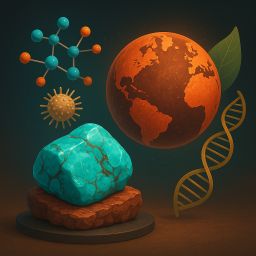
This nib reveals the surprising truth that most of the gemstones and minerals we value today are the direct result of biological life. You will discover how ancient bacteria triggered a massive chemical explosion that transformed Earth from a dull, gray rock into a vibrant world of over 6,000 mineral types. By tracing the "mineral evolution" of our planet, you will learn to use stones as biological fingerprints to detect life on other worlds and understand why the Moon and Mars remain geologically frozen. This nib changes how you see the ground beneath your feet, showing that rocks are not just silent scenery but the physical legacy of life itself.
Mexico City is sinking: A history of engineering, geology, and the battle against the ancient lakebed of Tenochtitlan
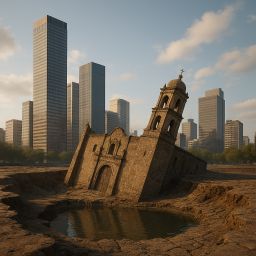
This nib reveals the hidden geological battle beneath Mexico City, where a modern metropolis is slowly sinking into an ancient lakebed. You will learn how the Aztec empire’s brilliant water engineering was replaced by colonial drainage projects, creating a "sponge effect" that causes the city to drop up to 20 inches per year. The nib explains why the soil amplifies earthquake waves like gelatin and clarifies the "growing" monument phenomenon, where buildings anchored to bedrock appear to rise as the streets around them vanish. By exploring these engineering paradoxes, you will understand the high stakes of urban survival and how rediscovering ancestral wisdom may be the only way to keep this vibrant capital afloat.
How the Moon Shapes Earth's Physical Systems and Life's Stability
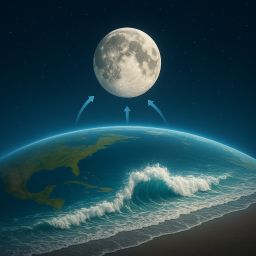
This nib explores the vital bond between Earth and its only natural satellite, revealing that the Moon is far more than a decorative rock. You will discover how lunar gravity serves as a planetary brake, slowing our rotation to create a manageable 24-hour day and preventing violent, high-speed winds. The nib explains how the Moon stabilizes Earth’s tilt to keep our seasons predictable, and how its pull drives the tides that nourish global marine life. By understanding these invisible mechanics, you will learn why the Moon is the essential guardian of our climate and the silent pulse behind almost every biological rhythm on our planet.
The Atlantropa project: A look at the technical hurdles and ecological impact of Herman Sörgel’s plan to drain the Mediterranean Sea
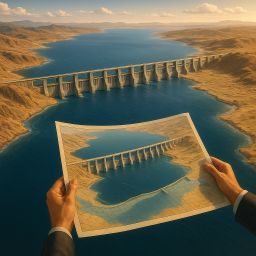
This nib explores the staggering 1920s proposal to dam the Strait of Gibraltar and drain the Mediterranean Sea to create a new supercontinent. You will learn how this ambitious engineering project, dubbed Atlantropa, aimed to provide limitless electricity and fresh farmland by merging Europe and Africa. The nib explains the geological "leaky bathtub" effect that made the plan seem possible, while revealing the terrifying environmental fallout modern science now predicts. By examining the risks of toxic salt deserts, massive earthquakes, and frozen European winters, you will discover why manipulating the water cycle on a global scale is a recipe for disaster. This nib is an essential look at the dangers of using "quick-fix" technology to solve complex political and natural problems.