Physics | Booknibs
Hunting for Lightning's High-Energy Secrets: The Science of Gamma-Ray Flashes and Atmospheric Antimatter
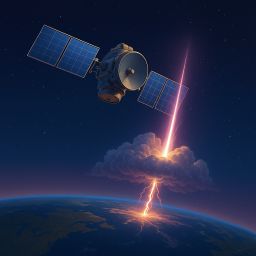
This nib reveals that ordinary thunderstorms are actually massive, natural particle accelerators hidden in our sky. You will learn how simple rain clouds generate terrestrial gamma-ray flashes, bursts of energy so powerful they once baffled NASA satellite teams hunting for deep-space supernovas. The nib explains the physics of how lightning-strained air can launch beams of pure antimatter into space and why these events create a literal bridge between Earth's weather and the vacuum of the cosmos. By exploring this invisible side of nature, you will discover why a common summer storm is one of the most violent and fascinating laboratories in the known universe.
Supersonic Flight: The Physics of High-Speed Travel and the Myths of the Sound Barrier
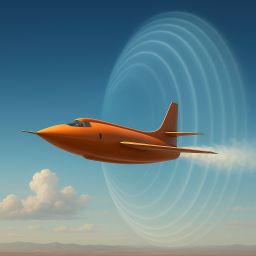
This nib explores the legendary "sound barrier" to reveal why pilots once feared it as a solid wall in the sky. You will learn the mechanics of air compression and how physics transforms air from a soft gas into a stiff, unyielding fluid at high speeds. The nib explains how iconic aircraft like the Bell X-1 used "wasp-waist" shapes and thin wings to pierce this pressure, turning a violent shaking into a smooth, supersonic glide. By understanding how air molecules communicate, you will see how engineering shifted from trying to smash through obstacles to gracefully outrunning the speed of sound.
Steel from the Sunken Fleet: Why Scapa Flow's Pre-Atomic Shipwrecks are Vital for Modern Technology

This nib explores the fascinating reason why the metal from sunken WWI warships is more valuable than steel forged today. You will learn how the birth of the atomic age permanently changed the chemistry of our atmosphere, leaving a radioactive fingerprint on all modern metal. The nib explains why "low-background steel" from pre-1945 wrecks is essential for building life-saving medical scanners and the sensors inside deep-space probes. By understanding this accidental time capsule at the bottom of the sea, you will see how a century-old act of defiance grew into a vital resource for modern science and space exploration.
How the Universe Ends: A Guide to False Vacuum Decay and Quantum Simulations in 2024-2025

This nib explores the unsettling yet fascinating theory that our universe sits on a "false floor" that could give way at any moment. You will learn about false vacuum decay, a process where the fundamental laws of physics could instantly rewrite themselves, and discover how scientists use cutting-edge quantum computers to simulate these cosmic shifts. By examining research from 2024 and 2025 involving the Higgs field, you will understand why the universe is currently stable and how these invisible energy fields dictate the behavior of all matter. This nib offers a clear, high-level look at how the cosmos might have begun and how it could eventually end, providing a deeper appreciation for the delicate balance that keeps our reality intact.
How Superionic Ice Shapes the Magnetic Fields of Uranus and Neptune

This nib explores a mind-bending state of matter called superionic ice, a black, hot substance that acts like a solid and a liquid at once. You will learn how researchers used high-powered lasers and diamond anvils to recreate the crushing pressures of deep space right here on Earth. This discovery solves a long-standing mystery regarding the chaotic magnetic fields of Uranus and Neptune, revealing that the clear water we drink is actually a cosmic rarity. Read this nib to understand the "engine room" of giant planets and how the most common form of water in the universe behaves more like a conducting metal than an ice cube.
Why Traffic Jams Appear Out of Nowhere: The Physics of Phantom Jams and Jamitons

This nib explores the surprising physics behind phantom traffic jams, those frustrating delays that appear on clear highways without any accidents or roadwork to blame. You will learn how human reaction times turn a simple tap on the brakes into a backward-moving shockwave called a "jamiton," and why adding more lanes often makes this problem worse. By understanding the three phases of traffic flow, you will discover how to act as a human shock absorber. The nib provides practical ways to dissolve these ghost jams through simple driving habits, like maintaining a steady buffer, to keep the road moving for everyone.
Superconductors of the Future: What We Learned From the LK-99 Hype and the Search for High-Pressure Hydrides

This nib explores the high-stakes hunt for the "Holy Grail" of physics: a material that carries electricity with zero waste at room temperature. You will learn the mechanics of superconductivity, including how electrons pair up to flow without friction, and why recent viral claims like LK-99 ultimately fell short. The nib explains the massive practical impact this discovery would have, from cooling down our overheating computers to building hyper-efficient power grids that could help solve the climate crisis. By the end, you will understand how researchers use extreme pressure to turn hydrogen into a miracle material and why even failed experiments are providing a vital map to a future without energy loss.
How Bicycles Stay Up: The Science of Stability Past the Gyroscope Myth

For over a century, physics textbooks taught a lie: that spinning wheels act like gyroscopes to keep a bicycle upright. This nib shatters that myth, revealing the clever engineering that actually prevents you from hitting the pavement. You will learn the secret of steering geometry and "trail," a self-correcting mechanism that uses gravity and friction to steer the bike back under your weight during a lean. By exploring how weight distribution and the caster effect allow for "no-hands" riding, you will gain a new appreciation for the physics of balance. This nib explains why bikes feel stable at high speeds but twitchy as you slow down, turning a simple ride into a masterclass in dynamic engineering.
Noether's Theorem: How Physical Symmetry Creates the Laws of Conservation

This nib explores how a marginalized mathematician saved Albert Einstein’s life work by uncovering the hidden blueprints of the universe. You will learn how the physical laws we take for granted, such as the conservation of energy and momentum, are actually rooted in the concept of symmetry. By connecting the abstract world of geometry to the tangible world of moving objects, this nib explains why the universe remains consistent across time and space. It offers a fresh perspective on the "instruction manual" for modern physics, showing how simple mathematical balances dictate the behavior of everything from atoms to stars.
How Quartz Watches Work: The Physics and Engineering of the Piezoelectric Effect

This nib reveals the hidden engineering that allows a simple piece of rock to track time more accurately than the world’s finest mechanical clocks. You will discover the "piezoelectric effect," a strange property where squeezing quartz creates electricity, and how engineers flip this process to make a tiny crystal fork vibrate tens of thousands of times per second. The nib explains why every watch relies on the "Goldilocks frequency" of 32,768 Hz and how microscopic parts are laser-trimmed to perfection. By the end, you will understand how this invisible rhythm keeps everything from your microwave to global GPS satellites in perfect sync.
How Einstein’s Relativity Keeps GPS Accurate and Global Systems in Sync

This nib reveals how the abstract theories of Albert Einstein act as the invisible backbone of the modern world. You will learn how gravity and high speeds warp time for GPS satellites, and why engineers must intentionally "de-tune" space-bound clocks to keep them in sync with those on Earth. The nib explains the high stakes of this 38-microsecond daily drift, showing how it impacts everything from the accuracy of your smartphone's map to the stability of global banking and power grids. By connecting complex physics to daily tasks like swiping a credit card or using a navigation app, this nib demonstrates why understanding the fourth dimension is essential for keeping our digital civilization from falling apart.
How Gabon's natural nuclear reactors work and what they taught the scientific world

This nib reveals an incredible geological detective story that began with a tiny measurement error in a French laboratory and ended with a mind-blowing discovery in Africa. You will learn how the earth managed to build its own self-regulating nuclear reactors in Gabon two billion years ago, long before humans even existed. This nib explains how ancient bacteria and simple rainwater acted as engineers to trigger a safe, pulsing chain reaction that lasted for millennia. Most importantly, you will see how these prehistoric sites provide a natural blueprint for storing nuclear waste today, proving that nature solved our most difficult energy problems eons ago. By exploring this nib, you will gain a new perspective on the planet as a dynamic, self-organizing system capable of mastering the laws of physics on its own.
The Basics of Quantum Entanglement and the Reality of Action at a Distance

This nib explores the strange world of quantum entanglement, the phenomenon Albert Einstein called "spooky action at a distance." You will learn how subatomic particles link together across vast distances, reacting to one another instantly even when they are light-years apart. By examining the groundbreaking experiments that proved Einstein’s view of a predictable universe was incomplete, the nib explains why distance might be a clever illusion and how this "spooky" connection is currently fueling the race to build powerful quantum computers. It is an essential look at how the cosmos is woven together, shifting your perspective from a world of isolated objects to a universe defined by invisible relationships.
Chien-Shiung Wu and the Discovery of Parity Violation in the Weak Force

This nib explores the groundbreaking experiment that shattered our belief in a perfectly symmetrical universe. You will learn how Chien-Shiung Wu, a brilliant experimental physicist, proved that the laws of nature actually have a "left-handed" bias, a discovery that overturned decades of scientific dogma. By following her journey to reach temperatures near absolute zero, you will understand how the weak nuclear force functions and why this hidden asymmetry is vital to the very structure of matter. This nib reveals the grit required to challenge the world's greatest minds and explains why some of the most important discoveries happen when we dare to look for cracks in a mirror.
How Sea Shanties Use Physics and Biomechanics to Build a Human Engine

This nib reveals how 19th-century sailors used music as a mechanical tool to move massive weights that seemed physically impossible to lift. You will learn the science of rhythmic entrainment, a process where the brain syncs muscle movements to a beat to bypass exhaustion and pain. The nib explains how singing together forced an entire crew to breathe in unison, turning dozens of individual men into a single, high-power machine capable of breaking static friction. By understanding these vocal "shortcuts," you will see how human biology can be hacked to maximize physical strength and team coordination. This is a fascinating look at the sea shanty not as a folk song, but as the essential software that powered the age of sail.
How the BIPM Manages Universal Time to Keep the World on Schedule

This nib reveals the invisible bureaucracy that dictates the world’s clocks, taking you inside a sovereign estate in France where scientists decide exactly what time it is. You will learn how modern time is a man-made mathematical consensus, built by averaging data from 400 global atomic clocks rather than following the Earth’s unreliable rotation. Discover why adding a single leap second can crash airlines and wipe out internet giants, and how the "leap second smear" helps tech firms avoid digital chaos. By exploring the high-stakes microsecond economy, you will see why the world is finally choosing the precision of atoms over the alignment of the sun, forever changing our relationship with the planet.
How Planes Actually Fly: Debunking the Equal Transit Time Myth

Most people were taught a lie about how planes stay in the sky. This nib deconstructs the famous Equal Transit Time myth, the popular but false idea that air molecules must race to meet at the back of a wing. You will discover the real physics of flight, including the Coanda Effect, which explains why air sticks to surfaces like water on a spoon. By understanding how wings actually shove air downward to create an upward reaction, you will learn to see the atmosphere as a physical substance rather than empty space. This nib replaces a common fairy tale with the gritty, fascinating mechanics of pressure and momentum.
Viking physics: using Iceland spar and polarized light to find the sun through the fog

This nib reveals how the Vikings used a real-life "magic" crystal to navigate the treacherous North Atlantic centuries before the invention of the compass. You will discover the physics of Iceland spar, a unique mineral that splits light into two beams to act as a natural GPS. By understanding light polarization and how it reacts with the Earth's atmosphere, you will see how ancient sailors found the sun's exact position through thick fog or heavy clouds. This nib shows how careful observation of nature can lead to advanced technological breakthroughs, proving that the Vikings were master physicists who used solid-state sensors to dominate the seas.
The physics of clouds: how much they weigh and why they stay afloat

This nib explores the staggering physical reality behind a common summer sky, revealing why a typical cloud weighs as much as 100 elephants yet manages to stay afloat. You will learn how to calculate the mass of a transparent object using volume and density, and why humid air is surprisingly lighter than dry air. The nib also explains the roles of buoyancy and terminal velocity, showing how microscopic water droplets turn the atmosphere into a thick fluid that resists gravity. By understanding these principles, you will gain a fresh perspective on how nature balances massive forces through distribution, turning a million pounds of water into a delicate, floating marvel.
Katharine Burr Blodgett: The Woman Behind Molecular Engineering and the Invention of Invisible Glass

This nib reveals the secret molecular chemistry behind "invisible glass," the Nobel-quality breakthrough that ended lens glare forever. You will learn how Katharine Blodgett stacked layers of molecules like bricks to create "visual silence," using the same principles of interference found in modern noise-canceling headphones. By exploring her work with General Electric, you will see how she solved critical problems for WWII submarine pilots and Hollywood directors alike. This nib explains why your smartphone screen is readable in the sun and your eyeglasses stay clear, showing how one woman mastered the laws of light to bridge the gap between microscopic science and everyday life.