Space & Astronomy | Booknibs
The Black Knight Satellite: The Science and History of a Space Myth
This nib explores the legendary Black Knight satellite, a mysterious object rumored to have orbited Earth for 13,000 years. You will trace how this "space whodunit" was pieced together from Nikola Tesla's early radio experiments, Cold War spy scares, and strange NASA photographs. By separating scientific facts from internet myths, you will learn how to identify common orbit debris and understand the phenomenon of long-delayed radio echoes. This nib is a practical masterclass in critical thinking, showing you how to spot "circular reporting" and why our brains are wired to see alien sentinels in lost thermal blankets. It is an essential read for anyone who wants to navigate the line between genuine cosmic mysteries and modern folklore.
How the Soviet Venera Missions Conquered the Hellish Conditions of Venus
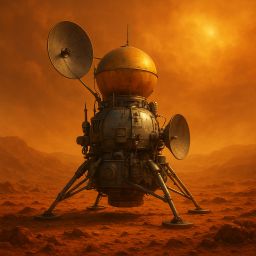
Discover how Soviet engineers conquered the most punishing environment in the solar system to achieve the first soft landing on another planet. This nib explores the grueling trial-and-error process behind the Venera program, detailing how scientists moved from vaporized probes to armored "cannonballs" capable of surviving a world that melts lead and crushes metal. You will learn about the clever engineering hacks used to photograph the Venusian surface, from internal ice blocks to quartz periscopes, and see why these missions remain the gold standard for planetary science. By the end, you will understand how these "brute force" machines expanded our knowledge of the greenhouse effect and why their silent, scorched hulls still sit on the surface today as monuments to human persistence.
Searching for alien life: the odds and the impact of finding life across the universe
This nib explores the scientific search for life beyond Earth, turning grand philosophical questions into measurable astrophysics. You will learn how the Goldilocks zone determines a planet’s habitability, why extreme life forms on Earth suggest we might find neighbors on frozen moons, and how the Drake Equation provides a framework for calculating the odds of alien civilizations. By breaking down the Fermi Paradox, the nib explains why a vast, silent universe does not necessarily mean we are alone. Reading this nib will help you grasp the scale of the cosmos and why modern technology is bringing us closer to discovering that life is a universal norm rather than a lucky accident.
What the Universe Is Made Of: A Guide to Ordinary Matter, Dark Matter, and Dark Energy
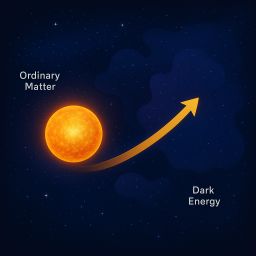
This nib reveals why everything we can see, from the tallest mountains to the furthest stars, accounts for less than five percent of the universe. You will explore the 1998 discovery that shocked the scientific world by proving the expansion of space is actually speeding up, a finding that earned a Nobel Prize. By looking into the mystery of "standard candles" and the invisible glue holding galaxies together, you will learn to distinguish between dark matter and dark energy. This nib explains how these invisible forces shape our reality and why our current understanding of physics is only the tip of the iceberg. It is a humbling look at how much remains to be discovered in the vast, hidden reaches of the cosmos.
Cecilia Payne and the Discovery of What Stars Are Made Of

Discover how a young student revolutionized our understanding of the cosmos by reading the "fingerprints" of starlight. In this nib, you will learn how to decode a star's chemical makeup using spectroscopy and why the scientific establishment was convinced the Sun was made of rock and iron. You will see how Cecilia Payne used new math to prove that the universe is actually a sea of hydrogen, a discovery so radical she was forced to disown it to protect her career. This nib explores the tension between groundbreaking evidence and the weight of consensus, showing you why standing by your data matters even when the experts say you are wrong.
The Science of Celestial Photography: How Robert Gendler Turns Space Telescope Data into Art
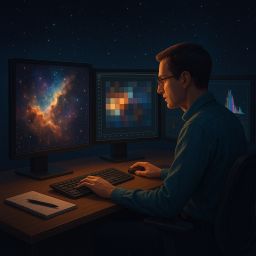
This nib explores the intersection of human resilience and deep-space technology through the story of an astronomer who revolutionized how we view the universe. You will learn the hidden mechanics of space telescopes, including why they act as light counters rather than cameras, and discover the rigorous "image-processing pipeline" used to turn raw data into brilliant photos. By mastering the art of data stretching and color mapping, you will understand how we translate invisible chemical signatures into a visual language humans can actually perceive. This nib provides a fascinating look at how technical constraints and sensory processing can be used to uncover the structural beauty of the cosmos.
Space Lasers: Mapping the Growth of Optical Satellite Networks
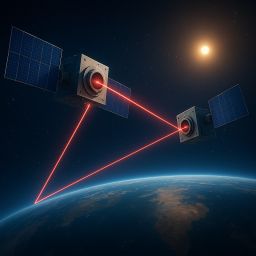
This nib explores the silent revolution of laser-mesh networks, a technology that is moving the internet's core hardware into the stars. You will discover how optical intersatellite links provide speeds 30 percent faster than ground-based fiber by sending data through the vacuum of space. The nib explains the transition from old radio-wave satellites to narrow-beam infrared lasers, which are harder to jam and carry thousands of times more data. By learning how these "orbital routers" bypass physical cables and borders, you will understand how this technology creates a more secure, resilient global connection that works even in the most remote corners of the Earth.
Space junk and the Kessler Syndrome: collision physics, risks, and solutions for a sustainable orbit
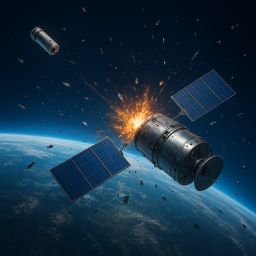
This nib explores the invisible world of orbital debris, where a stray fleck of paint travels with the destructive force of a high-caliber bullet. You will learn how the laws of physics transform harmless scrap into lethal projectiles and why scientists fear the Kessler Syndrome-a chain reaction of collisions that could trap humanity on Earth forever. By breaking down the limits of modern radar and the high-speed "orbital dance" required to keep the International Space Station safe, this nib reveals why space junk is the greatest threat to our digital age. It is an essential look at the physics of speed and the urgent mission to clean up our skies before they become an impassable cage.
How Subrahmanyan Chandrasekhar Discovered the Limit of Galactic Giants and the Lifespan of Massive Stars

This nib explores how a nineteen-year-old student on a long sea voyage fundamentally changed our understanding of the universe. You will learn the mechanics of the "cosmic tug of war" that prevents stars from collapsing and discover why even the laws of quantum physics have a breaking point known as the Chandrasekhar Limit. Beyond the science, this nib reveals the high-stakes drama of a young outsider challenging the scientific elite, offering a powerful lesson on how to stand by your data when experts try to silence you. It is an essential look at the birth of black hole theory and the grit required to move physics forward.
Finding the Afterglow of Creation: How Cosmic Microwaves Proved the Big Bang
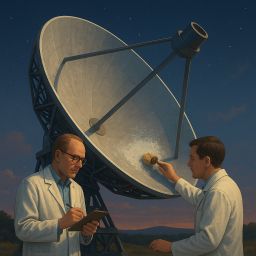
Discover how two engineers accidentally stumbled upon the birth certificate of our universe while trying to fix a noisy antenna. This nib follows the 1964 journey of Arno Penzias and Robert Wilson as they move from scrubbing bird droppings to winning a Nobel Prize. You will learn how to distinguish between competing theories of the cosmos, understand the "relic radiation" that fills the sky, and see how stubborn attention to detail can turn a technical nuisance into a historic breakthrough. It is a persuasive look at why the most world-changing discoveries often look like a simple mistake until you have the patience to look closer.
Henrietta Swan Leavitt and the discovery of the period-luminosity relationship for measuring cosmic distances

This nib reveals how a forgotten genius working as a human "computer" at Harvard cracked the code to measuring the cosmos. You will learn the mechanics of Leavitt’s Law, a breakthrough that turned flickering stars into "standard candles" to calculate distances across the vacuum of space. By mastering the relationship between a star's pulse and its true brightness, you will see how humanity finally moved beyond the Milky Way to discover a universe of billions of galaxies. This nib captures a pivotal turning point in science, showing you how simple observation can provide the yardstick for the infinite.
Setting a Standard Lunar Time: How Moon Missions Handle Relativity and Navigation challenges
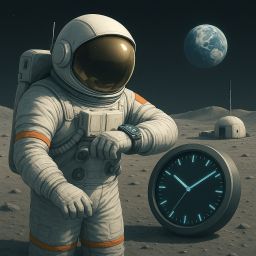
This nib reveals the mind-bending reality of how gravity warps time on the Moon, ticking 56 microseconds faster daily than on Earth. You will learn why this tiny gap is a major hurdle for space travel, as even a split-second error can send a multi-billion dollar spacecraft miles off course. The nib explains the urgent global effort to build Coordinated Lunar Time, a unified clock system vital for landing rovers, syncing GPS, and preventing "railroad chaos" among competing lunar bases. By exploring the physics of gravitational time dilation, you will see why mastering time on the Moon is the essential first step for humanity to thrive across the solar system.
How the Deep Space Network works: Engineering the architecture of interplanetary communication
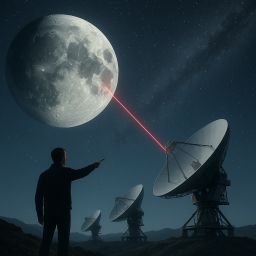
This nib reveals the incredible engineering behind the Deep Space Network, the global system that allows us to speak with robots across the solar system. You will discover how three massive antenna complexes on different continents hand off signals like a relay race to keep a constant link with probes as the Earth spins. The nib explains the mind-blowing physics required to catch signals a quadrillion times weaker than a watch battery, including why engineers must freeze their equipment to near absolute zero to filter out cosmic noise. By exploring the hurdles of light-speed delays and the "interplanetary internet," you will gain a new appreciation for the invisible bridges of light and logic that bring the wonders of deep space into our daily lives.
Heat Distribution, Climate Patterns, and Life on Tidally Locked Planets
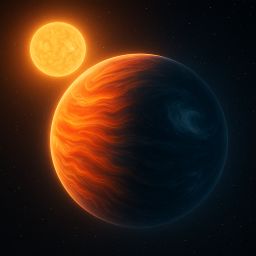
Explore how tidal locking creates worlds of eternal day and night, where planets survive not as frozen statues, but as dynamic engines of heat. This nib reveals the mechanics of atmospheric circulation, explaining how planetary-scale winds and reflective cloud shields distribute energy across a surface. You will learn how the terminator line serves as a potential sanctuary for life and how atmospheric density influences climate stability. Understanding these heat-transfer processes is essential for identifying habitable zones in the galaxy, as most nearby stars host these unique, locked worlds. Dive into these extreme environments to grasp the physics of our universe.
HAARP Explained: The Science, History, and Myths of the Ionospheric Research Instrument
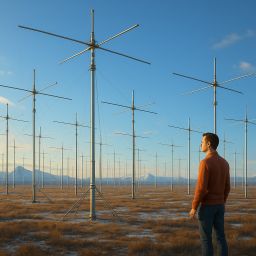
Deep in Gakona, Alaska, the High-frequency Active Auroral Research Program operates 180 antennas that have long fueled conspiracy theories. By reading the nib, you will demystify this facility through three core takeaways: how the ionosphere enables global communication, why the sun dictates the stability of our satellite networks, and how research stations use radio beams to study atmospheric science. You will learn to distinguish scientific fact from science fiction regarding weather control and mind manipulation. Understanding the reality behind this unique array replaces internet myths with a clear perspective on how we protect our modern, interconnected world from space-based disruptions.
Decoding the Great Attractor: Mapping the Laniakea Supercluster and Cosmic Flow
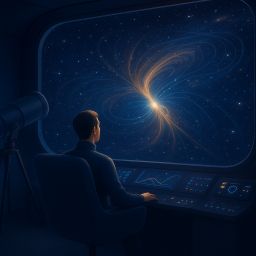
Discover how the Milky Way moves through the cosmos as you explore the Great Attractor. This nib clarifies our place in the universe by teaching you how gravity shapes cosmic flow, why dark matter acts as the hidden scaffolding for galaxy clusters, and how the expansion of space sets limits on our motion. By looking beyond the "Zone of Avoidance," you will learn to visualize the universe as a vast, interconnected landscape of motion. Understanding these forces transforms how you see our neighborhood in space, revealing that we are not drifting randomly but dancing within a massive, elegant structure called Laniakea.
The Carrington Event: Solar Storms and the Fragility of Our Power Grid
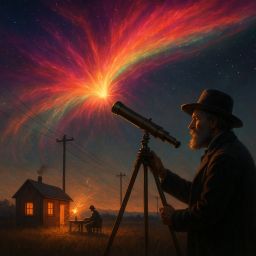
In 1859, a massive solar storm known as the Carrington Event turned the night sky neon and scorched telegraph lines worldwide. By reading this nib, you will uncover how solar flares trigger magnetic induction, distinguish between localized device failure and systemic grid collapse, and understand the vital role of space-weather monitoring. You will learn why our modern, interconnected infrastructure is uniquely fragile to cosmic interference compared to 19th-century technology. Mastering these concepts is essential for grasping the reality of "black swan" threats, transforming your perspective from viewing space as a static void to a dynamic, powerful, and occasionally hazardous neighbor.
Rogue Planets: How Worlds Ejected from Star Systems Survive and Why They Might Be Habitable
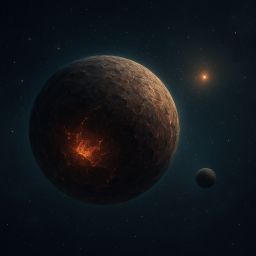
Discover why the dark reaches of space may be home to thriving alien ecosystems. This nib invites you to explore the fascinating physics of rogue planets, those starless worlds that drift silently through the galaxy. You will learn how internal radioactive heat acts as an engine for life, why thick hydrogen atmospheres serve as powerful thermal blankets, and how biological systems could replace photosynthesis with chemosynthesis. By shifting your focus from the sun to the earth’s own core, you will gain a new perspective on how life persists in extremes, proving that habitable zones exist far beyond the reach of any star.
The Growing Crisis of Space Junk: Risks and Solutions for Earth's Orbit
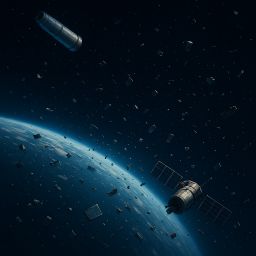
This nib reveals the hidden chaos above, where millions of pieces of high-speed debris threaten to ground humanity. You will learn about the Kessler Syndrome, a chain reaction of collisions that could render space travel impossible, and discover how physics dictates the immense destructive force of even the smallest orbiting fragments. By exploring cutting-edge cleanup methods, such as orbital harpoons and laser brooms, this nib explains why stewardship of the space environment is essential. More than just a technical briefing, it highlights the urgent need to transition from viewing space as an infinite dumping ground to a vital, protected resource.
Searching for Alien Civilizations, Using the James Webb Space Telescope to Spot Technosignatures in Exoplanet Atmospheres
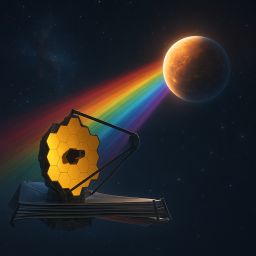
Explore how humanity is shifting from hunting for simple microbes to detecting advanced alien civilizations. In this nib, you will master the principles of transmission spectroscopy, learn how to distinguish natural gases from synthetic industrial pollutants, and understand the critical "Oxygen Bottleneck" that limits technological growth on other worlds. By learning to read the chemical barcodes of distant atmospheres, you will grasp how astronomers turn light into evidence of manufacturing cultures. This essential guide explains why our path to finding neighbors depends as much on understanding our own industrial footprint as it does on the power of the James Webb Space Telescope.