Cybersecurity | Booknibs
How Root Key Ceremonies protect the Internet and the Domain Name System

You will discover how a small group of people meets in secret high-security rooms to prevent the entire internet from being hijacked. This nib explains the hidden mechanics of the Domain Name System (DNS), the digital phonebook that connects web names to the correct addresses. You will learn how "multi-person control" works to stop hackers from redirecting your bank logins to fake sites, and why the world still relies on physical metal keys and hand-scanners instead of just code. By exploring this quarterly ritual, you will see why true digital security actually depends on human witnesses and international cooperation to keep the global web trustworthy.
A World Without Cryptography: The Risks to Privacy, Commerce, and Global Infrastructure

Cryptography is the invisible glue holding our modern world together, yet we rarely notice it until it fails. This guide explores the catastrophic, real-world consequences of a society without digital encryption. You will learn how cryptography functions as a protective shield for our daily lives, from securing bank transactions to verifying the safety of the software in our cars. By understanding these mechanics, you will grasp why encryption is essential for maintaining individual privacy, global commerce, and national security. Read this to discover why strong digital security is not just for tech experts-it is the foundation of a free society.
Securing the Future: Post-Quantum Cryptography and the Race to Protect Digital Privacy
Modern encryption is facing a quiet crisis called "Harvest Now, Decrypt Later." Hackers and rival nations are currently stealing and storing your private data, betting they can unlock it once powerful quantum computers arrive. This guide breaks down how digital architects are fighting back with post-quantum cryptography. You will learn how these computers use quantum physics to shatter classic security, why apps like Signal and iMessage are already upgrading their "locks," and how complex-lattice math provides a shield even high-tech machines cannot crack. Reading this ensures you understand the high-stakes transition to a quantum-proof future and how to keep your private information secure for decades to come.
Who Are You? How Velocity, Friction, and Behavioral Biometrics Secure Modern Fintech
Modern security is moving beyond passwords to track how you physically interact with your phone. This article explores "velocity friction," a silent bodyguard that identifies you by the unique rhythm of your thumbs and the natural pauses in your movements. You will learn how banks use your "digital body double" to outsmart hackers and why your human habit of fumbling through menus is actually your best defense against high-speed automated fraud. By understanding these invisible guardrails, you can see how "how you do" has become more important than "what you know." This is a must-read for anyone interested in why their apps feel different during a rush and how technology finally distinguishes a living human from a cold, calculated script.
More Than a Password: How Behavioral Biometrics Use Your Habits to Verify Your Identity
Discover how your daily habits are becoming your strongest digital defense. This guide introduces behavioral biometrics, a cutting-edge security shift that moves beyond easily stolen passwords and static face scans. You will learn how your smartphone uses built-in sensors to recognize your unique "digital DNA" based on the tilt of your hand and the rhythm of your typing. By understanding how "continuous authentication" works, you will see why it is nearly impossible for hackers or automated bots to mimic your natural movements. This insight is essential for anyone interested in the future of privacy, offering a glimpse into a world where your personal identity is protected by your own physical intuition rather than a forgotten pin code.
From Magnetic Stripes to Secure Chips: How Credit Card Encryption Changed Forever
You likely carry a sophisticated, armored computer in your wallet without even realizing it. This guide pulls back the curtain on the tiny gold chip in your credit card to show how it replaced the vulnerable magnetic stripe. You will learn the mechanics of the "mathematical handshake," a process where your card proves its identity through complex puzzles rather than just handing over your data. By understanding the difference between "static" and "dynamic" security, you will see why physical card cloning has nearly vanished. Most importantly, you will discover why online shopping remains the final frontier for fraudsters and how to bridge that security gap. It is a fascinating look at the invisible technology that keeps your money safe in a world of digital thieves.
Zero-Knowledge Proofs: A New Frontier for Privacy and Digital Identity Verification
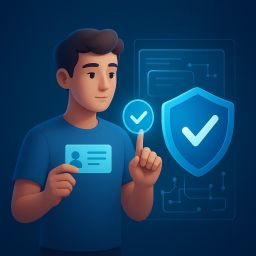
Identity theft and data breaches often start with a simple ID check. This guide explores zero-knowledge proofs (ZKPs), a breakthrough in mathematics that allows you to prove facts, like your age or bank balance, without revealing a single piece of personal data. You will learn how "cryptographic ceremonies" secure these systems and how digital wallets are replacing vulnerable databases. By understanding the shift from sharing records to sharing mathematical certainty, you will see how to reclaim control over your digital footprint. Discover why the future of privacy relies on proving the truth without ever showing your ID.
Honeytokens and the Art of Digital Deception: Looking Beyond the Fortress Mentality

Security is no longer just about building higher walls; it is about outsmarting the person trying to climb them. This guide introduces you to honeytokens, the digital "fool's gold" designed to trap hackers. You will learn how to shift from a passive "fortress" defense to active deception, effectively turning your network into a minefield for intruders. By the end, you will understand how to use fake files, dummy credentials, and tracking pixels to slash "dwell time" - the dangerous period when a hacker roams undetected. You will also discover how these psychological tripwires force attackers to second-guess every move, buying your team the precious time needed to respond. This is an essential look at how simple, clever traps provide a high-tech advantage against even the most determined digital thieves.
Honey Encryption: Using a Hall of Mirrors to Fool Cyberattackers

Discover how "honey encryption" is revolutionizing digital security by turning the tables on hackers. You will learn how traditional encryption accidentally helps thieves narrowing down their guesses and how a clever mathematical shift can transform a simple "access denied" message into a convincing decoy. Find out how this "hall of mirrors" approach forces attackers to waste hours, or even years, chasing fake data that looks and feels real. This guide explains the mechanics of Distribution Transforming Encoders, the tools that generate realistic lies, and why human intuition is becoming the ultimate bottleneck for automated attacks. By understanding this shift from defensive walls to psychological traps, you will see how deception provides a powerful new layer of safety for password vaults, corporate secrets, and personal privacy. Learn why the most effective digital shield is the one an intruder never even knows they are hitting.
The Predictability Problem: How Computers Turn Random Chaos into Digital Security

Computers are perfectly logical, which makes them predictably bad at rolling dice. This guide explores the "logic trap" of computer science and how engineers overcome it to keep your data safe. You will learn the difference between math-based sequences and true physical randomness, discovering why your bank and private chats rely on thermal noise - the tiny, unpredictable jitter of electrons - rather than just code. By understanding how hardware captures the "shiver" of the universe to create encryption keys, you will gain a clear perspective on how digital security bridges the gap between rigid software and the chaotic physical world.
Securing the Digital World: How Lattice-Based Encryption Protects against the Quantum Threat
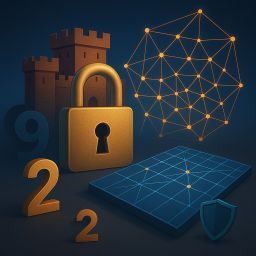
Our digital world is built on a foundation of prime numbers, but a new generation of quantum computers is close to cracking that code. This guide explores the urgent shift toward post-quantum cryptography and why it matters for your privacy. You will learn how experts are ditching simple arithmetic for "lattice-based" math - a system that hides data inside high-dimensional geometric grids. By understanding the Shortest Vector Problem and the "Learning With Errors" method, you will see how we create mathematical mazes that even subatomic processors cannot navigate. Most importantly, you will discover how these upgrades are already securing today’s internet against the "harvest now, decrypt later" tactics of hackers. This is your look at the invisible geometry protecting the future of global communication.
Biometrics and Data Minimization: Protecting Your Irreversible Digital Key
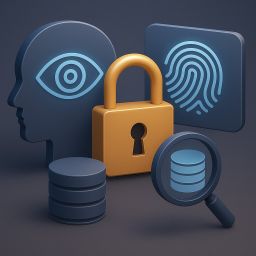
Your physical traits-the shape of your eye or the rhythm of your walk-are unique keys that you can never change. This guide explores the urgent movement for "data minimization," a strategy to keep your biological blueprints out of the hands of hackers and corporate trackers. You will learn the critical difference between disposable passwords and permanent biometrics, how "honeypot" databases make you a prime target for identity theft, and why "privacy by design" is replacing the old habit of data hoarding. By understanding these concepts, you will gain the tools to evaluate the apps you use and protect your "digital shadow." This is a vital look at how we can enjoy modern convenience without sacrificing our right to remain anonymous. It is essential reading for anyone who wants to ensure their physical body does not become a permanent tracking device in a digital world.
More Than Maps and Math: The Physics of Unhackable Quantum Networks
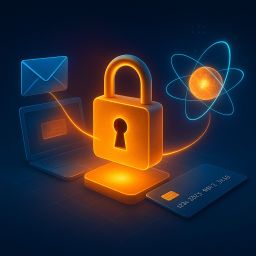
Digital privacy currently relies on math problems that are hard to solve, but the rise of powerful quantum computers means these locks will soon be picked. This guide introduces you to Quantum Key Distribution (QKD), a revolutionary technology that uses the laws of physics rather than complex equations to secure data. You will learn how "the observer effect" creates a built-in alarm system, making it physically impossible for hackers to eavesdrop without being caught. You will also discover how scientists use satellite beams to bypass the limits of fiber optic cables. By understanding the shift from mathematical probability to physical certainty, you can prepare for a future where your data is protected by the fundamental rules of the universe.
A Guide to Data Clean Rooms: The Future of Privacy and Shared Intelligence
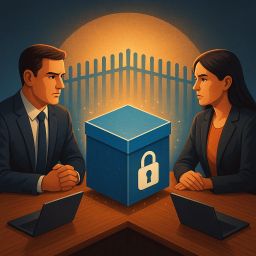
Discover how "data clean rooms" are revolutionizing the way companies collaborate without compromising your personal information. You will master the mechanics of Secure Multi-Party Computation (MPC), a method that allows businesses to extract shared insights from encrypted data while keeping individual files strictly private. The text explains why traditional data sharing is a legal risk and how hardware-level security, such as Trusted Execution Environments, creates a digital "neutral ground" for research. By learning to balance privacy with utility, you will see how these tools prevent data leaks in fields from healthcare to finance. This is an essential guide to the future of the digital economy, where you can solve complex problems using collective intelligence without sacrificing anonymity.
How Zero-Knowledge Proofs Protect Your Privacy and Digital Identity

In a world where every login or purchase usually requires handing over your life story, Zero-Knowledge Proofs (ZKPs) offer a way out. This guide explores the cutting-edge math that allows you to prove facts - like your age, income, or citizenship - without revealing any actual documents or personal details. You will learn how "selective disclosure" keeps your data on your own device rather than in hackable central databases, and how tech like zk-SNARKs makes these digital handshakes instant and secure. By understanding this shift from "sharing data" to "confirming truths," you will see how to protect your identity in an era of increasing digital surveillance.
How Homomorphic Encryption Works: The Math Behind Running Data Without Seeing It

Imagine a future where you never have to choose between privacy and convenience. This guide introduces Homomorphic Encryption (HE), a "holy grail" of computing that allows machines to process and analyze your data without ever unlocking or seeing it. You will learn how "lattice-based" math creates a secure environment for sensitive tasks, how "bootstrapping" keeps complex calculations accurate, and why this technology is a game-changer for medical research and personal finance. By understanding these concepts, you will see how we can finally close the door on data leaks and identity theft. This is a must-read for anyone interested in how we can use powerful AI and big data while keeping our most private information strictly to ourselves.
Quantum Storms and High-Dimensional Shields: An Introduction to Lattice-Based Cryptography
Our current digital security relies on mathematical patterns that future quantum computers will easily dismantle, leaving everything from bank accounts to state secrets vulnerable. This guide explains how researchers are fighting back with "lattice-based" encryption - a system so complex it can baffle even a quantum super-brain. You will learn how shifting from simple prime numbers to thousand-dimensional geometry creates "unbeatable" locks, and why the "Harvest Now, Decrypt Later" strategy makes upgrading our security an urgent priority today. By understanding these new standards, you will see how "intentional noise" and high-dimensional grids protect your privacy. This look at the future of cryptography reveals why the next generation of digital defense is worth the transition, ensuring your data remains safe long after the first quantum computers roar to life.
Secure Digital Identities: How Zero-Knowledge Proofs Protect Your Privacy online
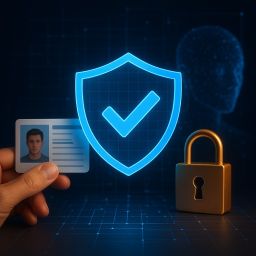
Traditional ID checks force us to overshare personal details, like home addresses and birthdates, just to prove a simple fact. This guide introduces Zero-Knowledge Proofs (ZKPs), a breakthrough technology that lets you verify your identity without revealing any underlying data. By shifting from sharing documents to verifying math, you can navigate the digital world while keeping your private life under lock and key. You will learn: - How to provide a definitive "yes" to specific questions without exposing your "biography." - The three logical pillars that make a digital proof honest and unhackable. - Why modern companies are adopting "data minimization" to protect themselves and their users from data breaches. This transition is essential for anyone who wants to regain control over their digital footprint. Mastering the basics of ZKPs will help you understand a future where privacy and convenience finally coexist.
Spotting Deepfakes With the Science of the Heartbeat: How rPPG Works as a Digital Shield
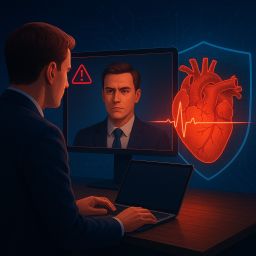
You will explore the cutting-edge science of "liveness detection," a breakthrough in cybersecurity that uses your heartbeat to prove you are a real person during video calls. This guide explains how remote photoplethysmography (rPPG) works by tracking microscopic color changes in your skin that are invisible to the naked eye. You will learn to identify why current AI models struggle to mimic human biology, the technical hurdles like lighting and camera quality, and why your pulse is becoming the ultimate unhackable password. By understanding these biological markers, you can better protect yourself against sophisticated deepfakes and identity theft.
More Than Pixels: How Soft Biometrics Are Helping Spot Deepfakes
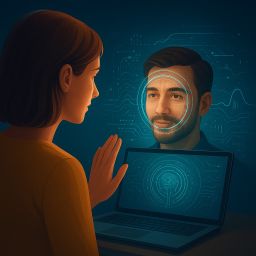
Deepfakes have evolved beyond simple glitches, making it nearly impossible to spot a fraud with the naked eye. This guide introduces you to "soft biometrics," a cutting-edge field of cybersecurity that moves past visual checks to verify a person’s identity through biology. You will learn how researchers use ordinary cameras to detect hidden "living" signals, such as the invisible pulse in your cheeks or the millisecond-long flickers of your eyes. By understanding these biological signatures, you will discover why your heartbeat is becoming your most secure digital password. You’ll also gain practical insights into the limits of this technology, such as how low-quality video can hide a fake. Most importantly, this read explains how our involuntary, human imperfections are the ultimate defense in an age of AI illusions.