Hardware & Electronics | Booknibs
Hardware & Electronics
Explore focused learning nibs in Hardware & Electronics on Booknibs.
The Microchip Revolution: How the Integrated Circuit Conquered the Tyranny of Numbers

This nib reveals how a lonely summer in a Texas lab and a "wrong" idea birthed the digital age. You will learn how Jack Kilby and Robert Noyce overcame the "Tyranny of Numbers," the physical limit that once made complex computers impossible to build. By exploring why experts mocked the first microchip as a waste of expensive materials, you will gain a new perspective on why "useful ignorance" often beats deep expertise when solving impossible problems. This nib shows how shifting from hand-soldering parts to "growing" them inside stones changed the math of our economy, turning the once-costly transistor into the most abundant resource on earth.
Mastering Computer Science and Hardware Architecture without Tools: Assembly Language Programming under Extreme Constraints

This nib follows the incredible journey of Will, a man who taught himself the most complex level of computer science while serving time in a high-security Texas prison. You will see how he salvaged components from broken televisions to build a functioning computer, using nothing but logic, trash, and sheer persistence. Through his story, you will master the four pillars of computer architecture and learn how to "think like silicon" by simulating calculations on paper. This nib demonstrates that deep expertise does not require expensive tools or the internet; it simply requires the discipline to master the core principles underneath the screen. This is a powerful lesson in how extreme constraints can actually sharpen your mind and turn you into a superior problem solver.
How Capacitive Touchscreens Work: The Physics and Engineering of Modern Smartphone Displays

Discover how your body acts as a biological battery to power the modern world. This nib explains the physics behind your smartphone screen, showing how you use the salty water in your cells to "steal" electricity from an invisible grid of indium tin oxide. You will learn why ordinary gloves leave you digitally invisible and how your phone distinguishes a human thumb from a raindrop. By understanding capacitance, or the storage of electric fields, you will master the science of your own touch. This nib reveals the hidden engineering that turns your physical presence into a digital command, transforming every swipe into a high-tech spark.
How transistors work and how they built the world of modern computing and microelectronics
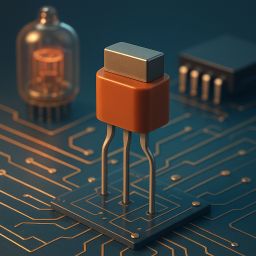
This nib traces the evolution of the transistor, the tiny switch that powers every device in your pocket. You will learn how engineers moved beyond bulky, hot vacuum tubes to harness the "solid state," using crystals to control electricity with perfect precision. By exploring the chemistry of semiconductors and the logic of binary code, the nib explains how we shrank room-sized computers into microscopic circuits. This history matters because it reveals the hidden physics behind your smartphone, showing how mastering matter at the atomic level sparked the modern digital revolution.
The Physics of Modern Chips, Global Supply Chains, and the Economic Feedback Loop

This nib reveals how a tiny grain of silicon becomes the brains behind our modern world. You will learn the mechanics of the "Yield Loop," the strategic risks of global supply chain concentration, and how industry-wide feedback loops trigger massive market swings. By exploring the fragile precision required for high-tech manufacturing, this nib dismantles the misconception that these processes are automated and simple. Understanding these hidden, interconnected systems is essential for grasping why global shortages occur and why the future of technology rests on such a delicate, geographically sparse web of specialized talent, resources, and extreme engineering.
Beyond the Screen: The Hidden Physical Toll of High-Resolution Displays

Ever wonder why your phone battery drains so fast when you crank up the brightness or use a high-resolution display? It is not just about computing power-it is about the microscopic hardware inside your screen. This article explains the hidden "aperture ratio penalty" that forces your device to burn through energy just to shine light through tiny, crowded circuitry. You will learn why: - High-resolution screens require more light, not just more data. - OLED displays change the battery game. - Small settings adjustments, like using Dark Mode, save real power. Master these insights to extend your battery life and understand your technology.
Feel the Beat: A Guide to Haptic Track Injection and Sensory Perception

Discover how "haptic track injection" is solving a classic acoustic problem: why bass disappears when you turn your volume down. By reading this, you will understand the physics of the Fletcher-Munson curve, which explains why our ears struggle to hear low frequencies at quiet levels. You will also learn about cross-modal perception, a mental shortcut that allows your brain to "hear" deep tones when it feels a physical vibration. This technology turns your smartphone motor into a miniature subwoofer, letting you experience a full, chest-thumping sound without disturbing others. Whether you are interested in the engineering behind real-time haptic sync or the ways this innovation makes music accessible to the hard-of-hearing, you will see how blending touch and sound creates a more immersive, multi-sensory world.
Breaking the Heat Barrier: Moving from Electronic to Optical Computing
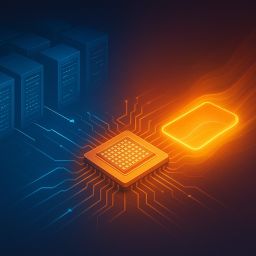
Modern computing is hitting a "heat wall" that threatens to stall the future of artificial intelligence. This guide explores the shift from electricity to optical computing, where light replaces copper wires to move data. You will learn how silicon photonics use light-guides (microscopic fiber-optic paths) to eliminate the friction that causes chips to overheat. Discover the potential of optical transistors to process data at the speed of light while using a fraction of the power. This shift isn't just an upgrade; it is a necessary evolution to build the massive, real-time AI systems of tomorrow without melting our existing infrastructure.
The Silent Shift to Immersion Cooling: Why AI is Swapping Fans for Liquid Environments

Discover why the roaring fans of traditional data centers are being replaced by the eerie silence of immersion cooling. You will learn the physics behind dielectric fluids, which are engineered synthetic oils that allow electronics to be fully submerged without short-circuiting. The text explains how switching from air to liquid upgrades a "dirt path" of heat removal into a "ten-lane highway," making it possible to pack ten times more power into the same space. Practical takeaways include how these liquids protect expensive hardware from dust and vibration while slashing energy bills by 30 percent. This is a must-read for anyone interested in how the infrastructure supporting AI remains sustainable, turning waste heat into a reusable resource for homes and greenhouses.
The Wait-4-Me Effect: Why Timing and Physical Limits Slow Down Computing

Master the hidden physics of computing by exploring the "Wait-for-Me" effect, the silent challenge that dictates how every smartphone and laptop functions. You will learn how engineers use synchronous logic and "digital metronomes" to prevent electrical chaos from crashing your favorite apps. This guide breaks down essential concepts like propagation delay and the critical path, explaining why processors hit a physical speed limit and why more speed often leads to more heat. By understanding the strict timing rules of setup and hold times, you will gain a new perspective on why hardware stability is a masterpiece of precision timing and forced patience.
DIY AM Radio Antennas: A Guide to Physics, Construction, and Legal Transmission for Hobby Broadcasters

Discover the hidden physics of the airwaves by building your own AM radio antenna. This guide teaches you how to master "resonance" to trick short wires into acting like massive broadcast towers, helping you reach your neighbors while staying within legal power limits. You will learn to construct a loading coil to tune your signal and how to use the earth itself as a ground system to boost your range. By selecting the right hardware and avoiding electronic interference, you can transform a simple spool of wire into a functional station, turning your backyard into a gateway for local communication.
Liquid Cooling and the High-Density Revolution for Modern Data Centers

You will discover why the tech industry is abandoning fans and air conditioning to embrace liquid cooling for the next generation of supercomputers. This guide explains how "direct-to-chip" cold plates and immersion tanks - where servers are dunked in specialized fluids - solve the physical limits of modern processors. You will learn: - Why air acts as an insulator that can no longer protect high-power AI chips. - How liquid cooling systems use 3,000 times less space than air to move the same amount of heat. - Ways to repurpose "waste heat" from data centers to warm homes and greenhouses. Understanding these thermal physics is essential for grasping how data centers are becoming more compact, silent, and energy-efficient. This transition is not just a hardware upgrade; it is a vital shift toward a sustainable digital future.
The Future of the Microchip: How Chiplets and 3D Packaging are Pushing Modern Computing Beyond Moore's Law
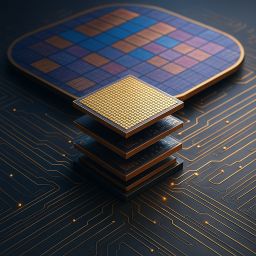
For decades, the tech industry relied on making transistors smaller to boost power, but we have finally hit a physical wall. This guide explains why the "flat" era of microchips is ending and how a new 3D architecture is taking its place. You will learn how engineers use "chiplets" to build processors like Lego sets, swapping out specialized parts to save money and improve reliability. The text also breaks down "advanced packaging," a method of stacking chips vertically to slash energy use and move data at lightning speeds. By understanding these shifts, you will see how the industry is overcoming overheating problems and why this vertical "silicon skyscraper" is the new foundation for the future of AI and global security.
Building Upward: The Move to Advanced Packaging and Bringing Chip Success Home

Modern computing is hitting a physical wall. As transistors reach the size of a few atoms, they can no longer shrink without leaking electricity. This transition from "making parts smaller" to "building systems smarter" is the focus of a quiet revolution called advanced packaging. You will learn how engineers are using 3D stacking and "chiplets" to bypass the limits of physics, creating faster gadgets that use less power. Beyond the science, you will discover the geopolitical stakes of "reshoring." By mastering how chips are assembled rather than just how they are printed, countries are bringing high-tech manufacturing back to their own shores. This shift secures global supply chains and lowers the cost of innovation. It is an essential read for anyone wanting to understand how the next generation of AI and smartphones will be built, why heat is the new enemy of progress, and why the future of tech is moving upward, not just inward.
Inside the Black Box: A Guide to Computer Hardware and Design
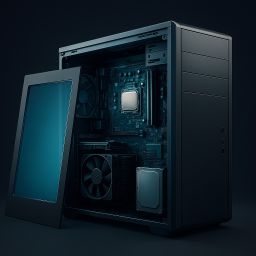
Demystify the "black box" on your desk by learning the fundamental logic and components that power modern life. This guide uses simple, everyday analogies to explain how computers process information, from the "chef" (the CPU) handling rapid calculations to the "pantry" (the hard drive) storing your digital life. You will learn to distinguish between memory and storage, understand why your device gets hot, and discover how to make smarter buying or repair decisions. By stripping away the jargon, you gain a clear map of the digital world, turning you from a passive user into an empowered, informed owner.
Swollen Batteries: A Calm, Practical Guide to Safety, Removal, and Recycling

Swollen batteries are not just a cosmetic wobble; they’re a time-bomb inside your device. The puff signals gas building inside a lithium-ion pack, which can overheat, short, or burst into flames. The guide gives a calm, practical plan: power down, unplug, move the device to a non-flammable surface, and never puncture it. If there’s smoke, evacuate and call for help. It also covers device-by-device steps, safe removal when possible, and where to recycle or replace. Myths are busted and prevention tips shared - charge smart, stay cool, use the right charger, and inspect regularly. Stay calm, act safely, protect people and planet.