Arts & Creativity | Booknibs
The Science of Paper and Ink: Why Receipts Fade While Books Last
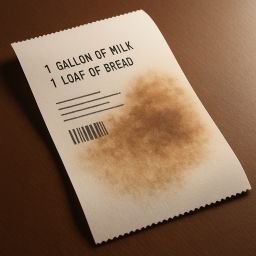
Ever wonder why your store receipts fade into blank slips within weeks while library books remain sharp for generations? The secret lies in thermal printing technology, a marvel of inkless engineering that relies on leuco dyes and organic acids. Unlike traditional pigment-based printing, which embeds color into paper fibers, thermal paper uses heat to trigger a delicate, reversible chemical reaction. This guide explores the molecular architecture of your daily transactional slips, explains why environmental heat and light act as natural erasers, and highlights the trade-offs between rapid, low-friction commercial convenience and long-term archival permanence.
The QWERTY Legacy: How 19th-Century Mechanics Still Shape the Way You Type
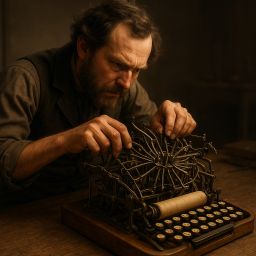
Discover why your fingertips follow a layout designed in the 1870s to prevent mechanical typewriter jams. This fascinating look at engineering history and motor neuroscience reveals how an obsolete solution for swinging metal arms evolved into the permanent architecture of our digital lives. You will learn how the QWERTY system influences the way your brain plans movements and why certain words feel physically smoother to type than others. By exploring this invisible system of constraints, you will understand how legacy technology forces our creative process to adapt to ancient mechanical rhythm, rather than modern ergonomic efficiency.
The Art and Science of Wajima-nuri: How Humidity Hardens Urushi Lacquer

Discover the hidden science behind Wajima lacquer, a traditional Japanese craft that turns a poisonous tree sap into a nearly indestructible surface. You will learn how the chemistry of polymerization works and why humidity is the essential engine that hardens this liquid into a glass-smooth shield. This nib explains the unique role of biological enzymes and local geological secrets, like fossilized earth, that help artisans create finishings more durable than modern plastics. By exploring the delicate balance between climate and craft, you will gain a new appreciation for how ancient materials outperform today's synthetic coatings.
Sacred Geometry and the Spiritual Secrets of the Buddhist Stupa: The Architecture of Dissolution

This nib explores the sacred architecture of the Buddhist stupa, revealing how these ancient monuments serve as practical maps for the human mind. You will learn to decode the hidden symbols within their geometry, from the square foundations of "earth" to the soaring spires of "fire," and see how each level represents a stage of emotional healing. By following the ritual of clockwise walking, you will discover a physical method for grounding yourself and processing grief. This nib shows why these structures are not just religious landmarks, but sophisticated tools for transforming loss into wisdom and finding steady ground when life feels uncertain.
Messiaen and the Science of Birdsong in Catalogue d-oiseaux
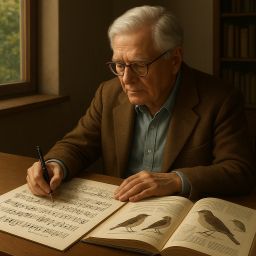
This nib reveals how the legendary composer Olivier Messiaen overcame a career-threatening hearing loss by transforming himself into a musical scientist. You will learn how he used scientific spectrograms and high-speed recordings to turn biological data into a radical new form of art. By exploring his systematic approach, you will discover how physical limitations can actually sharpen your focus and spark innovation. This nib shows that when you stop relying on intuition and start trusting a rigorous process, you can create work with an accuracy that stands the test of time. It is a powerful lesson in turning a personal setback into a revolutionary method for capturing the truth of the natural world.
How Placebo Buttons Trick Us into Feeling in Control of Modern Tech

Discover why your world is full of "placebo buttons" that offer the feeling of power without actually being connected to anything. This nib explores the fascinating engineering and history behind dead elevator buttons, silent crosswalk signals, and honorary office thermostats. You will learn how the Americans with Disabilities Act (ADA) changed how skyscrapers function and why designers use "the illusion of control" to keep you calm in high-stress spaces. By understanding these hidden tricks of urban design, you will see how cities manage your mood using clever psychology rather than physical wires. It is an eye-opening look at why a button that does nothing is often more important than one that works.
Rachilde and Monsieur Venus: A Bold Writer Defies Moral Order and the Fin-de-Siecle Body Politic

This nib explores the daring life and work of Rachilde, a young Parisian woman who shattered the male-dominated literary world of the 1880s. You will learn how she used provocative fashion and a bizarre pen name to bypass social filters, effectively branding herself a "Man of Letters" to be taken seriously. The nib breaks down her breakthrough novel, Monsieur Vénus, which flipped gender roles long before modern theory, and explains how she turned public scandal into a powerful tool for success. By studying her strategy of "cultural guerrilla warfare," you will see how mastering the rules of a closed system is the first step toward overturning it. It is a compelling look at why personal image and radical creativity can force open doors that have been locked for centuries.
Sor Juana Ines de la Cruz and Mexico’s Musical Revolution: The Secret History of El Caracol and Madre la de los primores

Discover the hidden genius of Sor Juana Inés de la Cruz, a 17th-century nun who transformed a silent Mexican convent into a cutting-edge sound laboratory. This nib reveals how she mastered complex music theory and composed the first known female-authored music in the Americas, centuries before such feats were thought possible for women. You will learn how her "Snail" theory predicted modern musical tuning and how she blended Spanish, African, and Indigenous rhythms to create a uniquely Mexican sound. By exploring her innovative work, you will see how one woman used math and art to break through colonial barriers, proving that historical breakthroughs often happen in the most unexpected places.
Building Derinkuyu: Engineering and Daily Life in the World’s Deepest Underground City

Discover how a homeowner’s DIY renovation led to the accidental uncovering of Derinkuyu, a massive 18-story underground city hidden for centuries. This nib explores the brilliant engineering behind the city’s ability to house 20,000 people in total secrecy. You will learn how ancient builders used volcanic rock that hardens when exposed to air and how they designed a natural air-conditioning system to keep the deep tunnels breathable. Insights into innovative defensive tactics, such as hidden stone doors and poisoned-well protection, show how this society thrived in the face of invasion. It is a fascinating look at how human grit and clever design can create a functioning world beneath the surface.
The Kuleshov Effect: How Film Editing and Context Shape What We See
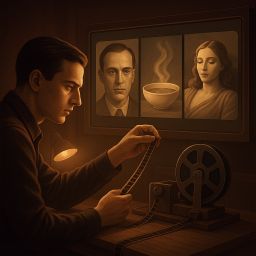
Discover how your brain "hacks" reality to find meaning in a fragmented world. This nib explores the Kuleshov Effect, a landmark psychological discovery showing that we don't just see emotions, we participate in creating them. You will learn how filmmakers use clever editing to manufacture feelings like hunger or grief without a single word of dialogue. By understanding how the mind automatically links unrelated images, you will gain a sharp eye for modern media manipulation and learn to spot "top-down" mental traps in everyday life. It is an essential look at why we are all storytelling machines who prioritize context over raw facts.
The Squeeze Tube: How a Simple Invention Created Impressionism and Changed Art Forever
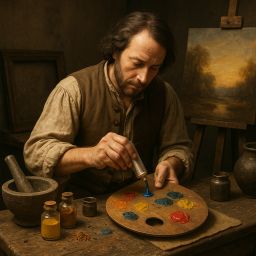
This nib explores how a simple piece of metal packaging sparked a revolution in modern art. You will discover how the transition from messy animal-bladder storage to the portable tin tube freed painters from their dark studios, allowing them to work directly in nature. By learning about the logistical struggles of masters like Monet and Renoir, you will see how this invention paved the way for the vibrant colors and quick brushstrokes of Impressionism. This nib highlights the fascinating link between technical tools and creative breakthroughs, showing how a humble container for oil paint eventually changed the way we see the world and even led to the invention of the toothpaste tube.
The Baskerville Effect: Why Typography Makes Information Feel More Truthful
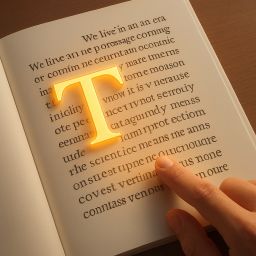
This nib explores the hidden psychological power of typography through a famous 2012 experiment by filmmaker Errol Morris. You will learn how different fonts, from the scholarly Baskerville to the playful Comic Sans, can boost or burn your credibility without the reader even noticing. By understanding "cognitive fluency," you will discover how the brain uses visual shortcuts to decide if a statement is true based on how easy it is to read. These practical takeaways explain why matching your "visual voice" to your message is vital for anyone who wants to write persuasively. Knowing these secrets helps you spot when you are being nudged by design and shows you how to choose the right font to make your own ideas carry more weight.
How the Teenage Mutant Ninja Turtles Began and Conquered the World

Discover how a late-night prank between two artists in 1984 grew from a gritty, black-and-white indie comic into a multi-billion dollar global empire. This nib breaks down the distinct archetypes of the four turtle brothers, showing how their contrasting personalities create a balanced team, and explains why their survival depends on the "found family" they built in the sewers. You will explore how the franchise successfully pivoted from dark, violent origins to kid-friendly heroics, offering a masterclass in brand evolution and staying power. By the end, you will understand the creative "lightning-in-a-bottle" moment that proved even the strangest ideas can resonate when they are grounded in loyalty and heart.
The Power of Three: Why It Works in Comedy, Stories, and Everyday Speech

This nib reveals the psychological secret behind the "rule of three" and how it controls the way we learn, laugh, and remember. You will discover why the human brain is a pattern-matching machine that craves a specific rhythm to feel satisfied. By mastering the setup, reinforcement, and payoff model, you will gain a practical "cheat code" to improve your writing and sharpen your storytelling. This nib explains how to use these three beats to build tension and deliver impactful points, helping you communicate more persuasively in any professional or social setting.
The Silver Swan: Engineering an 18th-Century Clockwork Marvel
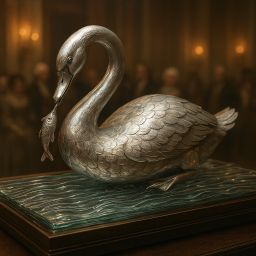
In this nib, you will travel back to the 18th-century London showroom of James Cox to witness the birth of the Silver Swan. You will discover how master inventor John Joseph Merlin used over 2,000 mechanical parts to transform cold metal into a creature with lifelike grace. By exploring the swan’s internal labyrinth of brass gears and rotating glass rods, you will learn the secrets behind its famous "preening" motions and the clever visual tricks that simulate flowing water. This nib explains how 250-year-old engineering served as a vital precursor to modern robotics, proving that our drive to automate the world began long before the digital age. Most importantly, it reveals why this stunning marriage of art and physics continues to captivate audiences centuries later, offering a masterclass in craftsmanship that was truly built to last.
From Folk Legend to Literary Icon: The Real History of Count Dracula

This nib explores the surprising origins of the world's most famous vampire, tracing the character from a bloodthirsty medieval prince to a global pop culture icon. You will learn to distinguish between the historical Vlad the Impaler and the fictional Count, discover how folk beliefs about "bloated corpses" evolved into the image of a sophisticated aristocrat, and identify which famous traits came from the original book versus early Hollywood films. By understanding these roots, you will see how creators mix history and local legends to build a lasting myth. This nib is essential for anyone interested in why certain stories haunt us for centuries and how the things that scare us often reflect the hidden anxieties of our own times.
Designing Highway Signs: How Typography and Information Design Solve Glare to Make Night Driving Safer

At seventy-five miles per hour, your safety depends on how quickly your brain can decode a sign in the dark. This nib explores the high-stakes world of highway typography, where design meets physics to save lives. You will learn about halation - a visual trick where bright reflections "eat" the holes in letters - and how engineers use "word shapes" to help you recognize destinations from hundreds of feet away. By comparing the classic Highway Gothic to the modern Clearview font, the nib reveals how small tweaks to negative space give drivers precious extra seconds to react, proving that even the curve of a lowercase "e" is a vital piece of safety engineering.
How Cataracts Changed Claude Monet’s Sight and Reshaped Impressionism
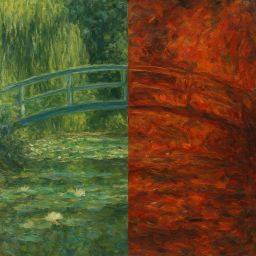
This nib explores the fascinating intersection of biology and fine art through the lens of Claude Monet’s failing eyesight. You will discover how a medical condition called nuclear sclerosis acted as a physical filter, stripping the blues from Monet’s world and forcing his iconic palette into shades of muddy red and fiery orange. The nib explains the mechanics of how the human eye ages and detail the high-stakes 1923 surgery that may have granted the artist a rare, "superhuman" ability to see ultraviolet light. By tracing this shift from serene gardens to chaotic abstractions, you will learn how physical limitations can spark creative breakthroughs and why our perception of reality is often just a byproduct of our own biology.
Shadow and Light: The Art of Traditional Japanese Design

This nib explores the traditional Japanese aesthetic that finds beauty in the dark rather than the light. You will learn how architectural features like paper screens and long eaves turn harsh sun into a soft, calming glow, and why materials like gold leaf and lacquer are designed to shine only in dim corners. By contrasting Western preferences for clarity with the Japanese "aesthetic of gloom," this nib reveals how shadows can create a sense of mystery and peace in your daily life. You will walk away with a fresh eye for the textures and quiet spaces around you, discovering why less visual data often leads to a deeper, more meditative experience.
How Movies Trick Your Brain: The Neuroscience of Cinematic Immersion
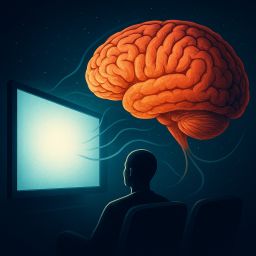
This nib reveals the hidden neurological tricks filmmakers use to hijack your brain and keep you glued to the screen. You will learn the science behind "edit blindness," a psychological quirk that makes jarring camera cuts feel completely natural, and how the "180-degree rule" prevents visual confusion. It explains why close-ups trigger a deep social response in your brain, forcing you to feel a character’s emotions as if they were your own. By understanding these invisible techniques, you will see how directors manipulate your pulse, your sense of time, and your very instincts to create a seamless dream world. Discover why your body reacts to the screen before your mind even catches up, turning a passive viewing into a high-stakes survival experience.