Social Sciences & Humanities | Booknibs
Social Sciences & Humanities
Explore focused learning nibs in Social Sciences & Humanities on Booknibs.
Operation Barbarossa and why the German invasion failed on the Eastern Front

Discover the massive scale and fatal mistakes of Operation Barbarossa, the largest land invasion in history. By reading this nib, you will understand how overconfidence can blind a leader to basic realities like distance, climate, and supply chains. You will learn to identify the turning points that transformed a "lightning war" into a desperate struggle for survival, and explore why geographical hurdles like the Russian winter proved more powerful than any tank. This nib offers a clear look at the logistical nightmares and strategic blunders that shifted the momentum of World War II, providing timeless lessons on the danger of underestimating an opponent.
Engineering the Venice of the Pacific: The History and Culture of Pohnpei's Ancient Stone City
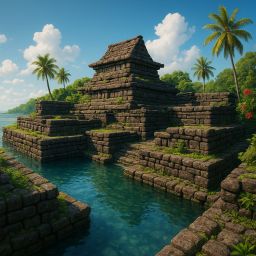
Explore the mystery of Nan Madol, a massive stone city built atop a coral reef in the remote Pacific. This nib reveals how ancient builders moved thousands of tons of volcanic rock without metal tools or pack animals to create roughly 90 artificial islands. You will discover the clever engineering behind these "floating" structures and learn how the Saudeleur Dynasty used the city to unite Pohnpei through a mix of religious ritual and political control. By separating local legends from modern archaeology, this nib shows how a sophisticated society mastered water management and seafaring to build a lasting monument in the open ocean.
Exploring Cusco: History, Architecture, and Culture in the Heart of the Inca Empire
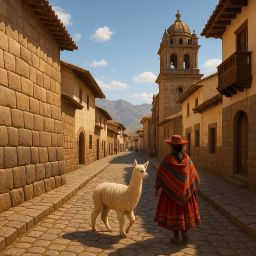
This nib explores how the Inca transformed a small village into a sprawling imperial capital designed in the shape of a sacred puma. You will learn how ancient engineers carved massive stones to survive powerful earthquakes and discover how indigenous artists hid their own cultural secrets inside colonial Spanish masterpieces. By understanding these architectural and artistic layers, you will gain a deeper appreciation for the resilience of a city that functions as a living link between the 13th century and the modern day. This nib reveals why Cusco remains the spiritual and cultural heart of the Andes, offering practical insights into its unique traditions, world-class food scene, and the enduring customs of the Quechua people.
Samson, Judge of Israel: The Rise and Fall of the Bible’s Great Outlaw Hero
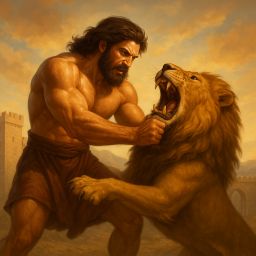
Explore the legend of Samson, the biblical strongman whose life was a whirlwind of superhuman feats and deep human flaws. In this nib, you will discover the rules of the Nazirite vow that governed his life, the historical context of the Iron Age conflict between the Israelites and Philistines, and the symbolic meaning behind his famous long hair. You will learn how to distinguish between his physical power and the spiritual commitment that truly fueled it. By following his journey from a miraculous birth to a tragic but redemptive end, you will gain insights into how raw talent requires self-discipline and integrity to stay on track. This nib offers a timeless look at a man who was both a one-man army and a person struggling with his own heart, showing why his story still resonates as a study of resilience and second chances.
The Race to Save Eyak: Lessons from the Life of Marie Smith Jones and the Fight Against Language Loss
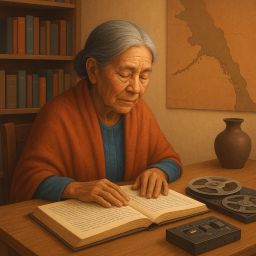
This nib explores the life of Marie Smith Jones, the final native speaker of Eyak, and the profound loss that occurs when a language goes silent. You will learn how language functions as a mental map, shaping how we perceive time and nature, and why recording words in a dictionary is not enough to truly save a culture. This nib explains how economic pressures and social shame drive language loss, while also highlighting successful turnarounds like those of the Hawaiian and Welsh communities. By understanding these linguistic shifts, you will gain a new perspective on why preserving diverse ways of thinking is essential for our collective human survival.
Liane Russell and the Mouse House: Genetic Radiation Risks and a History of Hidden Science

This nib chronicles the hidden history of Liane Russell, the geneticist who shook the Cold War establishment from her laboratory in Tennessee. You will explore how "The Mouse House" replaced fruit fly studies with mammalian models to prove that radiation damage is cumulative, a breakthrough that led to the "10-day rule" for medical X-rays. The nib explains how Russell’s data dismantled the myth of "safe" radiation thresholds, highlighting the biological costs of the nuclear age. Beyond the science, you will learn how institutions use selective citation and gender bias to sideline inconvenient voices. It is a compelling look at the courage required to defend an unpopular truth when it threatens those in power.
The Disappearance of John Reed and the Legend of the Fake City of Akakor
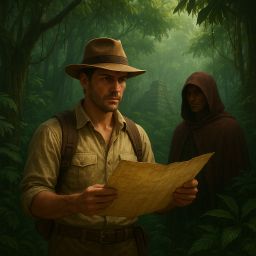
In this nib, you will journey into the heart of the 1980s Amazon to uncover the chilling disappearance of John Reed, a young seeker who vanished while hunting for a mythical underground city. You will learn how to spot the red flags of a charismatic con man and understand the psychological traps that lead even intelligent people to ignore reality in favor of a beautiful lie. By examining the "Prince of Akakor" and the trail of missing explorers he left behind, you will gain a deeper perspective on the dangers of toxic idealism and the importance of balancing a thirst for adventure with grounded skepticism. This nib is a haunting study of what happens when the desire for a miracle meets the unforgiving law of the jungle.
Bunkers and Boltholes: What the Ultra-Wealthy Want in Luxury Survival Real Estate

This nib explores the secretive world of "survivalist real estate," where the global elite are trading digital stocks for deep-earth bunkers. You will learn how modern fortresses are engineered with hydroponic farms and independent power grids to ensure total self-sufficiency. Beyond the floor plans, this nib breaks down the "island mentality" that drives the ultra-wealthy to seek geographic moats in places like New Zealand. By understanding the systemic risks these leaders are hedging against, you will gain a clear look at where they see the world’s social and financial cracks forming. It is a fascinating study of risk, privacy, and the high-stakes insurance policies of the one percent.
How Languages Die and Live Again: Comparing Akkadian and Hebrew
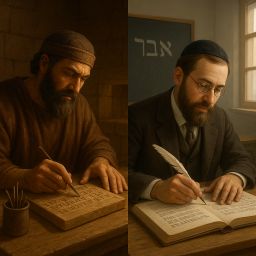
This nib reveals why some ancient languages vanish while others return from the grave. You will learn the crucial difference between a dead and an extinct language, and why scholarly preservation often fails where parents succeed. By comparing the silence of ancient Akkadian with the modern revival of Hebrew, the nib explains how "intergenerational transmission" and the brain’s "critical period" determine a tongue's survival. You will walk away with a fresh understanding of how languages function like living ecosystems, proving that for a culture to survive, it must move out of the library and into the nursery.
Structure and Function of the Khipu: The Inca Empire’s System for Data Management and Accounting
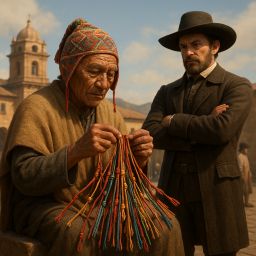
This nib explores the khipu, a sophisticated system of knotted strings that served as the primary data storage for the Inca Empire. You will discover how these ancient masters used color, texture, and 3D space to record complex census data and imperial taxes with a precision that rivaled modern spreadsheets. By understanding this tactile code, you will learn how a massive civilization managed twenty-five hundred miles of territory without ever using a single drop of ink. This nib reveals a brilliant alternative to the written word, proving that human intelligence can organize the world through touch and memory rather than just lines on a page.
The Sogdians: Architects of Global Trade on the Silk Road from Antiquity to the Middle Ages
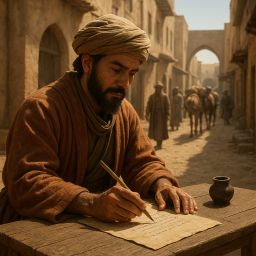
This nib explores the fascinating world of the Sogdians, the Central Asian merchants who built the first global trade engine. You will discover how this small group of traders used linguistic skills and innovative financial tools, such as early paper credit, to bridge the gap between China and Rome. This nib highlights two vital takeaways: how trust and reputation function as the ultimate currency in any market, and why "middlemen" are often the most influential architects of world history. By looking at their "ancient internet" of desert outposts, you will learn how these cultural translators turned a collection of warring empires into a single, unified marketplace without ever firing a shot.
Human Echolocation and Brain Plasticity in Iran's Blind Musicians: Navigating Traditional Architecture Through Sound
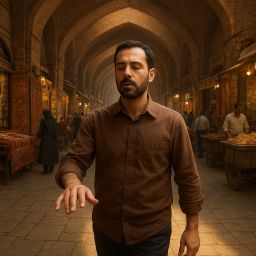
Through this nib, you will discover the incredible science of human echolocation and how Iranian street musicians use sound to "see" through solid walls. You will learn how the brain rewires itself to turn hearing into a visual map, a process known as neuroplasticity, and how traditional Persian architecture acts as a natural navigation system. This nib explains why these skills are not a miracle but a practical use of biological radar that anyone can understand. By exploring these acoustic secrets, you will gain a new perspective on human potential and learn how to pay closer attention to the hidden signals in your own environment.
Water from the Waste: The History and Technology of Nabataean Engineering
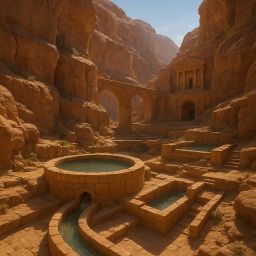
In this nib, you will discover the brilliant water-harvesting secrets of the Nabataeans, the ancient desert masterminds behind the city of Petra. You will learn how they built a hidden empire by "hacking" flash floods through precise underground plumbing and clay piping that outperformed Roman engineering. This nib explores the practical logic of using subtle slopes and silt-trapping pools to create lush gardens in the middle of a wasteland. By seeing how these "Water Kings" thrived in the harshest heat without modern power, you will gain a new perspective on sustainable design and the importance of passing down technical knowledge before it disappears into the sand.
The Roots of Robotics and Coding in the Islamic Golden Age: How Bagdad and Al-Jazari Engineered Early Automata
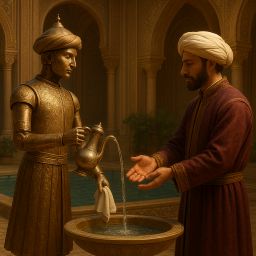
This nib explores the surprising origins of the digital age in ninth-century Baghdad, where engineers built the world’s first programmable machines. You will discover how medieval inventors used water pressure and metal cams, or rotating cylinders with pegs, to create lifelike robots that could pour drinks and play music. By examining the work of the Banu Musa brothers and al-Jazari, you will learn the mechanics of feedback loops and sequential logic, proving that computer programming existed long before electricity. This nib reveals why these "ingenious devices" are the direct ancestors of modern software and how a forgotten golden age of engineering shaped our automated world.
The Savior of Mothers: Ignaz Semmelweis, Germ Theory, and the Fight for Hand-washing

This nib explores the tragic life of Ignaz Semmelweis, the doctor who discovered that simple hand-washing could stop a deadly epidemic in its tracks. You will learn how to spot the Semmelweis Reflex, a psychological blind spot that causes people to reject new facts when they clash with established habits. By following his journey through the delivery wards of 19th-century Vienna, you will understand why even the best data often fails to change minds without a dose of humility. This nib provides a vital lesson in overcoming ego and institutional bias, showing how you can stay open to breakthroughs that challenge the status quo.
Fighting for the White House: How the UFC and the President Built a New American Icon

This nib explores the unlikely collision of professional combat sports and presidential prestige. You will learn how the administration is rebranding the White House as a "populist arena" to mark America’s 250th anniversary, moving away from formal tradition toward high-energy spectacle. The nib explains the strategic "rebranding" of the UFC from a shunned outsider to a mainstream symbol of the American spirit, while breaking down the logistical and security nightmares of building an Octagon on the South Lawn. By examining the "theatricalization" of politics, you will understand how modern leaders use entertainment to project strength and connect with a changing electorate. This is a vital look at how American cultural symbols are shifting in real time.
Building M-Pesa: How Mobile Money Changed the Way Kenya Moves Cash and Fights Poverty
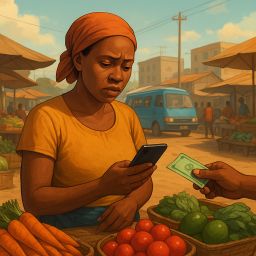
This nib explores how a simple text messaging tool accidentally revolutionized the Kenyan economy by solving the "friction" of physical cash. You will learn how a human network of local shopkeepers replaced traditional banks, providing a secure way for the poor to move money across vast distances. The nib explains why the ability to send small amounts instantly is a powerful tool against the poverty trap, helping families survive medical or weather crises without losing their livelihoods. By following the shift from physical cash to digital "liquidity," you will understand how removing small hurdles can create massive social change and financial independence for women. This is a practical look at how technology succeeds when it adapts to human culture rather than trying to change it.
The Hajj: History, Rituals, and the Inner Spirit of the Great Pilgrimage

This nib takes you into the heart of the Hajj, a massive pilgrimage that brings millions of people to the desert of Saudi Arabia. You will learn about the ancient history behind these rituals, from the persistence of a mother searching for water to the construction of the iconic, cube-shaped Kaaba. The nib reveals how a simple dress code of white cloth erases social classes, creating a radical sense of human equality before God. You will also discover the step-by-step traditions that act as a spiritual reset, helping people let go of past mistakes and focus on their character. By exploring these five days of intense physical and mental focus, you will see why this journey is a life-altering event that offers a fresh perspective on the world.
The Science and Business of Garum: Biochemistry, Mass Production, and the Role of Ancient Rome’s Favorite Fish Sauce
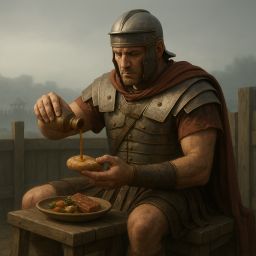
In this nib, you will discover why a pungent fermented fish sauce was the secret engine behind the Roman Empire's power. You will learn the science of autolysis, a process that uses salt and natural enzymes to turn raw fish into a shelf-stable protein concentrate packed with umami. The nib explains how Rome used this liquid to feed millions across three continents, providing essential nutrients to soldiers on the frontier and flavor to the urban poor. By exploring these ancient production and branding secrets, you will see how the Romans pioneered the world's first global food industry and why your own pantry favorites, like Worcestershire and soy sauce, are actually direct descendants of this two thousand year old technology.