STEM & Applied Sciences | Booknibs
STEM & Applied Sciences
Explore focused learning nibs in STEM & Applied Sciences on Booknibs.
The Black Knight Satellite: The Science and History of a Space Myth
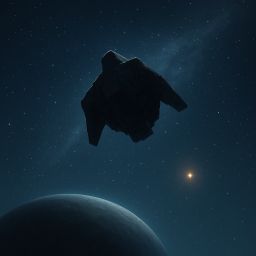
This nib explores the legendary Black Knight satellite, a mysterious object rumored to have orbited Earth for 13,000 years. You will trace how this "space whodunit" was pieced together from Nikola Tesla's early radio experiments, Cold War spy scares, and strange NASA photographs. By separating scientific facts from internet myths, you will learn how to identify common orbit debris and understand the phenomenon of long-delayed radio echoes. This nib is a practical masterclass in critical thinking, showing you how to spot "circular reporting" and why our brains are wired to see alien sentinels in lost thermal blankets. It is an essential read for anyone who wants to navigate the line between genuine cosmic mysteries and modern folklore.
How the Soviet Venera Missions Conquered the Hellish Conditions of Venus
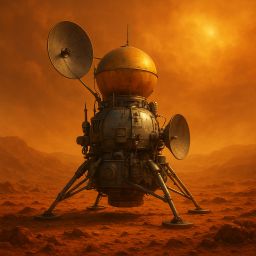
Discover how Soviet engineers conquered the most punishing environment in the solar system to achieve the first soft landing on another planet. This nib explores the grueling trial-and-error process behind the Venera program, detailing how scientists moved from vaporized probes to armored "cannonballs" capable of surviving a world that melts lead and crushes metal. You will learn about the clever engineering hacks used to photograph the Venusian surface, from internal ice blocks to quartz periscopes, and see why these missions remain the gold standard for planetary science. By the end, you will understand how these "brute force" machines expanded our knowledge of the greenhouse effect and why their silent, scorched hulls still sit on the surface today as monuments to human persistence.
How humans and RLHF training shape the development of AI
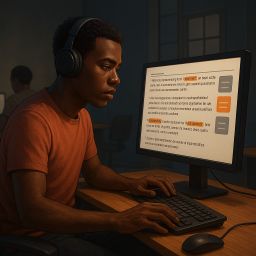
You will discover the hidden human labor that powers today’s most famous chatbots and why artificial intelligence is actually a massive "assembly line of thought." This nib explains how workers in countries like Kenya and the Philippines manually polish the logic and ethics of digital brains through a process called Reinforcement Learning from Human Feedback (RLHF). You will learn why raw AI models naturally repeat the internet's worst habits and how human labels are the only thing preventing them from spitting out gibberish or hate speech. By understanding the mechanical reality behind the marketing, you will see that AI is not a self-learning god but a digital mirror that relies on a global, invisible workforce to mimic human common sense.
Organoid Intelligence and Biocomputation: Testing neurons on chips with the DishBrain project and the future of wetware bio-computers
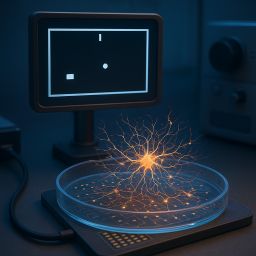
This nib explores the groundbreaking world of "wetware," where living brain cells are merged with silicon to create biological computers. You will learn how scientists taught 800,000 neurons to play the video game Pong, proving that organic tissue can process information and learn in real time without traditional code. The nib explains why this "organoid intelligence" is thousands of times more energy-efficient than modern AI and how it could revolutionize medical testing and pattern recognition. By diving into the mechanics of how cells communicate with chips, this nib reveals why the future of technology may be grown in a lab rather than built in a factory.
Solar-Powered Camel Saddlebags: Keeping Vaccines Cold Across Remote Deserts
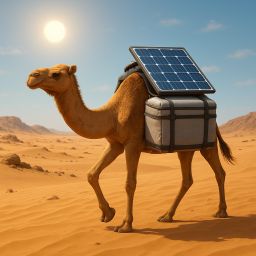
This nib reveals how engineers are conquering the "cold chain," the fragile refrigerated pathway required to keep life-saving vaccines from spoiling in the desert. You will discover how "solar saddlebags" use thin-film panels and thermal batteries to maintain a perfect chill without heavy lead-acid batteries or unreliable fuel. By exploring why camels outperform 4x4 trucks and drones in harsh terrain, you will learn how local traditions can be upgraded with modern physics to solve global logistics gaps. This nib illustrates the power of appropriate technology, showing how combining ancient animal endurance with high-tech insulation can deliver "liquid gold" to the most remote people on Earth.
How Mary Sherman Morgan Engineered Hydyne Fuel for the Explorer 1 Mission

The United States was losing the Space Race until an unlikely hero rewrote the laws of chemistry. This nib explores the high-stakes world of early rocket science, where self-taught chemist Mary Sherman Morgan solved a crisis that had baffled the nation’s top experts. You will learn the mechanics of "specific impulse," which measures how much thrust fuel provides, and discover why changing a molecule is often more effective than building a bigger engine. This nib reveals the clever engineering behind Hydyne, a custom fuel that saved the American space program when failure seemed certain. It is a powerful look at how grit and precise math can overcome institutional barriers and technical deadlocks.
Natural Nuclear Fission: How Gabon’s Oklo Reactors Formed Millions of Years Ago
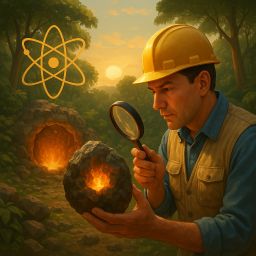
This nib reveals a fascinating moment in 1972 when a tiny error in a French lab led to the discovery of a two-billion-year-old mystery. You will learn how the earth created its own functional nuclear reactors in the jungles of Gabon long before humans ever existed. The nib explains how nature used groundwater and simple chemistry to manage nuclear fission and, more importantly, how it successfully stored radioactive waste for eons without any human help. By exploring this ancient phenomenon, you will gain a new perspective on modern energy and see why the best solutions to our biggest technical hurdles might already be hidden in the soil beneath our feet.
Hunting for Lightning's High-Energy Secrets: The Science of Gamma-Ray Flashes and Atmospheric Antimatter
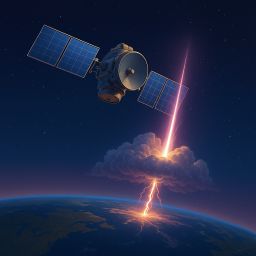
This nib reveals that ordinary thunderstorms are actually massive, natural particle accelerators hidden in our sky. You will learn how simple rain clouds generate terrestrial gamma-ray flashes, bursts of energy so powerful they once baffled NASA satellite teams hunting for deep-space supernovas. The nib explains the physics of how lightning-strained air can launch beams of pure antimatter into space and why these events create a literal bridge between Earth's weather and the vacuum of the cosmos. By exploring this invisible side of nature, you will discover why a common summer storm is one of the most violent and fascinating laboratories in the known universe.
Life in the Underground: How Earth's Deep Crust and Radiation Power Microscopic Worlds
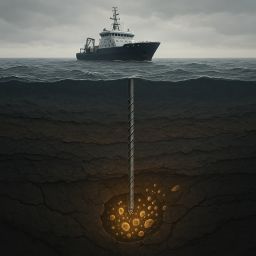
This nib unveils a massive, hidden kingdom of "rock-eating" microbes living miles beneath the earth's crust. Readers will discover how these organisms survive without sunlight by using radioactive decay to split water molecules for energy, a process called radiolysis. By exploring this subterranean world, you will learn why the majority of our planet’s life might actually be hidden under our feet and why these slow-moving "zombies" thrive in environments that would kill most surface creatures. These insights fundamentally shift how we search for life on other planets, proving that a world can be a biological oasis even if it is frozen or drifting in the dark.
Climate Adaptation in Ladakh: The Physics and Engineering Behind Ice Stupas
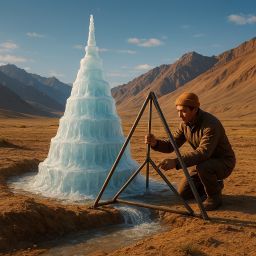
Discover how Ladakhi farmers turn freezing mountain air into a vital water supply using the brilliant physics of the Ice Stupa. This nib explains how simple geometry can beat a drought, showing why a conical shape preserves ice much longer than a flat sheet by reducing surface area. You will learn how gravity-fed pipes create automatic fountains without using a single watt of electricity, and why blending modern engineering with local Tibetan traditions makes technology more sustainable. It is an inspiring look at how basic thermodynamics and "passive" design can help remote communities adapt to a changing climate using only the tools provided by nature.
Why We Shake Hands: The Biology of Subconscious Chemical Signaling

This nib reveals the surprising biological science behind the common handshake, proving it is much more than a polite greeting or a relic from the Middle Ages. You will learn how skin-to-skin contact acts as a high-speed data transfer, allowing your brain to "sniff" and "download" a stranger's chemical profile without you even realizing it. The nib explains how this hidden sense helps you detect stress, health, and social compatibility, turning a simple gesture into a vital tool for survival and intuition. By understanding the research from the Weizmann Institute, you will discover why your body craves physical touch to vet the people around you and why digital meetings often leave us feeling socially incomplete. Reach out and uncover the silent language of human chemistry that guides your every interaction.
Ancient Persian Ice Houses: How Passive Cooling and Thermodynamics Ran the Yakhchal

This nib explores the ingenious world of the yakhchal, a passive cooling system used by ancient Persians to freeze water in the middle of a scorching desert. You will learn how these architectural marvels used "radiative sky cooling" to beam heat into the freezing void of space, long before the invention of electricity. The nib breaks down the clever use of sarooj - a waterproof, heat-resistant mortar - and how shading walls and windcatchers worked together to preserve ice through 40-degree heat. By understanding these ancient "space-beaming" techniques, you will see how old-world wisdom is currently inspiring modern, carbon-free air conditioning. It is a fascinating look at how simple physics can solve complex environmental challenges.
Wood is rarer than diamonds: why biological materials are the ultimate cosmic exception
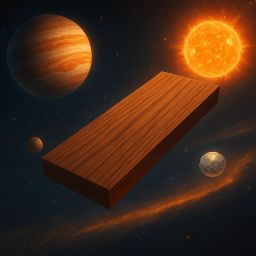
This nib explores the surprising reality that wood is rarer than gold, diamonds, or any precious metal in the known universe. You will learn why wood is a "biological technology" that requires millions of years of evolution to create, unlike gemstones that form through simple heat and pressure. The nib explains the role of lignin, the natural cement that allowed plants to defy gravity, and compares Earth's organic complexity to the sterile chemistry of other planets. By shifting your perspective, you will discover why a simple pencil is a greater cosmic fluke than an asteroid made of solid gold, helping you appreciate the high-tech genius of the nature right outside your door.
How to Build and Run Saturating Diving Systems: The Physics of Underwater Life Support
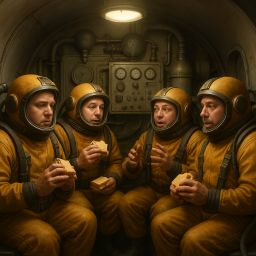
This nib takes you deep into the abyss to meet the "blue-collar astronauts" who live for weeks inside cramped steel chambers. You will learn the extreme physics of saturation diving, specifically how divers turn their bodies into pressure vessels to survive depths that would crush a soda can. The nib breaks down why these technicians must breathe helium, a gas that keeps them conscious but turns their voices into high-pitched squeaks and makes 90-degree rooms feel freezing. Beyond the science, you will discover the vital, invisible role these men play in keeping the world's internet and energy grids running from the seafloor. It is a gripping look at human grit and the engineering marvels that allow us to work at the very edge of biological limits.
William Playfair and the Birth of Modern Data Charts and Statistical Graphics
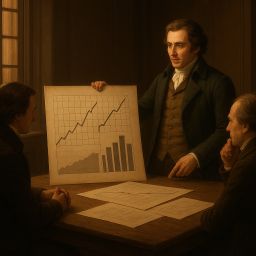
Explore how a Scottish rogue and engineer named William Playfair forever changed the way we process information by inventing the first charts and graphs. You will learn the science of visual encoding, which explains why your brain understands shapes and slopes much faster than long lists of digits. This nib reveals how to spot "pre-attentive" patterns, such as the sudden drop in a line or the width of a bar, to make faster and more accurate decisions. By understanding these visual tools, you will see how to turn dry data into a persuasive story, making complex facts impossible to ignore.
Searching for alien life: the odds and the impact of finding life across the universe
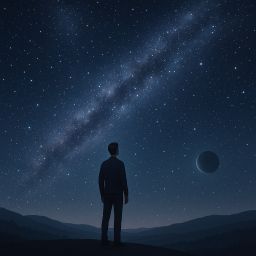
This nib explores the scientific search for life beyond Earth, turning grand philosophical questions into measurable astrophysics. You will learn how the Goldilocks zone determines a planet’s habitability, why extreme life forms on Earth suggest we might find neighbors on frozen moons, and how the Drake Equation provides a framework for calculating the odds of alien civilizations. By breaking down the Fermi Paradox, the nib explains why a vast, silent universe does not necessarily mean we are alone. Reading this nib will help you grasp the scale of the cosmos and why modern technology is bringing us closer to discovering that life is a universal norm rather than a lucky accident.
Bringing Back the Thylacine: How Gene Sequencing, CRISPR, and Synthetic Embryos Could Revive the Tasmanian Tiger
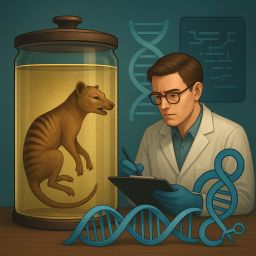
This nib explores the frontier of de-extinction, moving past science-fiction tropes to explain how geneticists are actually reviving the lost Tasmanian tiger. You will learn the difference between traditional cloning and modern "search and replace" gene editing, specifically how tools like CRISPR allow scientists to rewrite the DNA of a living relative to match an extinct blueprint. The nib also covers why marsupials are uniquely suited for this work, the mechanical hurdles of growing a prehistoric embryo in a lab, and how these breakthroughs are already being used to protect endangered species today. It is an essential look at how we are shifting from mourning lost wildlife to actively restoring the natural world.
Perovskite Solar Cells: How They Work, Why They Are Efficient, and the Struggle to Keep Them Chemically Stable

This nib explores the high-stakes world of perovskite solar cells, a breakthrough material that could revolutionize renewable energy. You will learn how these crystals outperform standard silicon by capturing more light with far less material, and why their unique "direct bandgap" structure allows them to be sprayed onto surfaces like ink. The nib also identifies the "sugar cube" problem: the chemical instability that makes these cells melt in the rain or fail under heat. By exploring how engineers use atomic "doping" and specialized barriers to protect these sensitive crystals, you will understand the practical challenges of moving this record-breaking technology from the lab to your roof.
The Odd Evolution and Anatomy of the Platypus
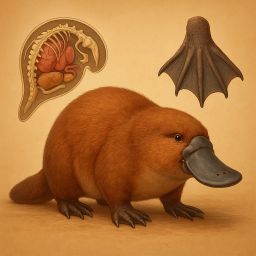
Step into the shoes of baffled 18th-century naturalists who first dismissed this creature as a taxidermy prank. This nib explores how the platypus shattered the scientific "rulebook" by blending the traits of birds, reptiles, and mammals into one improbable body. You will discover how this animal hunts using a high-tech "sixth sense" to detect electricity and learn why its complex genetic code makes human DNA look simple. By tracing the eighty-year battle to classify this "monster," you will see why nature often ignores the tidy boxes we try to put it in. This nib is a gripping look at a biological rule-breaker that forced us to rethink what it actually means to be a mammal.
Islamic Water Clocks: The Origins of Mechanical Engineering and Automation

This nib reveals how 9th-century Baghdad became the birthplace of automation and robotics. You will discover the clever physics behind Islamic water clocks, including how engineers used float valves to create the first self-regulating feedback loops. The nib explains the transition from simple tools to programmable machines, showing how "cams" served as mechanical memory to trigger complex robotic movements. By exploring these early state machines, you will see how medieval engineers solved the same systems-design hurdles we face today, proving that modern computing has its roots in the brass gears and flowing water of the Golden Age.